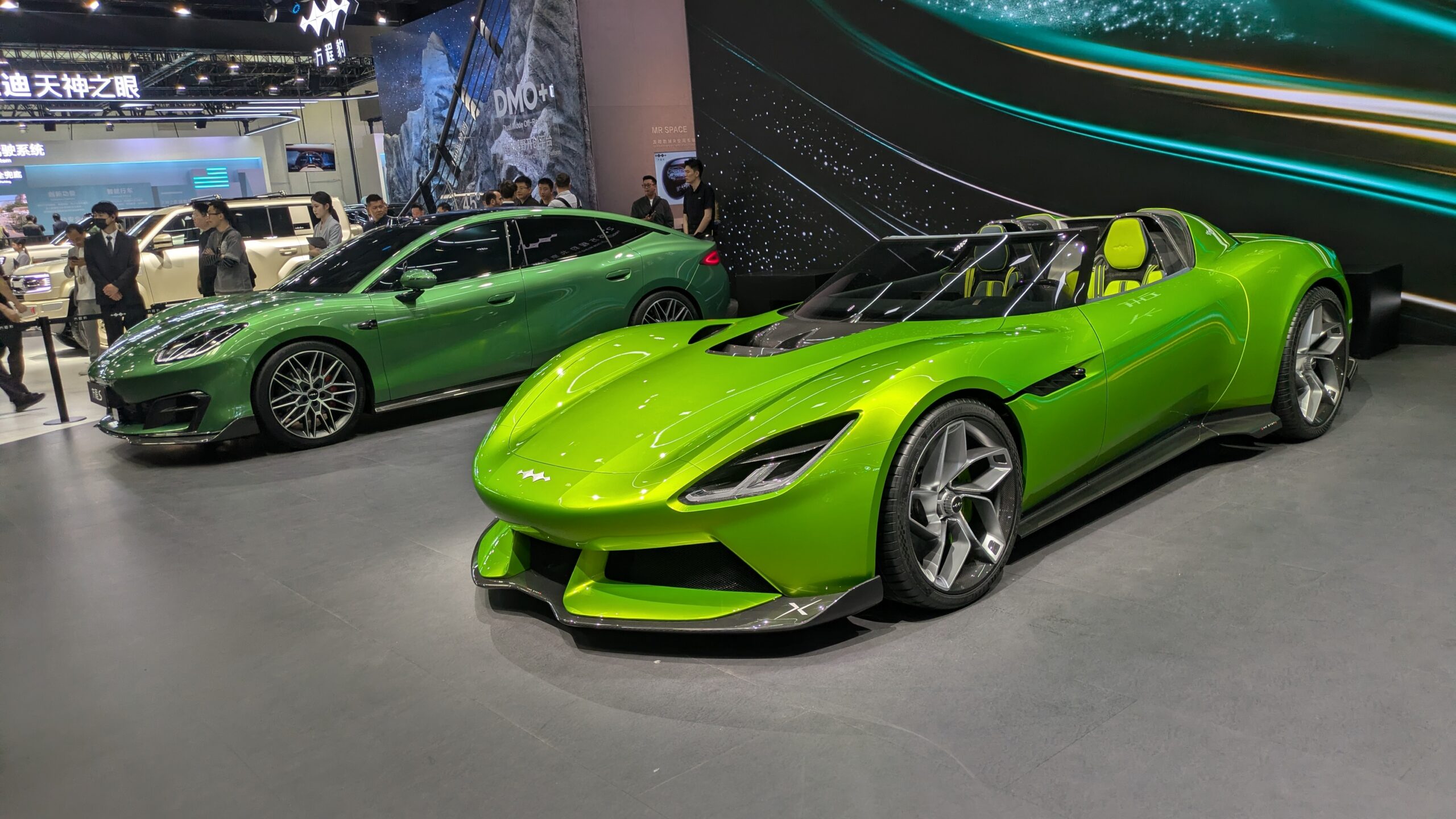
At the Beijing Auto Show this year, a quiet revolution rolled onto the show floor on four wheels—and it wasn't SUVs. Chinese electric vehicle manufacturers unveiled a stunning lineup of sports cars and performance sedans that challenge the very notion of what affordable speed means.
The standout headline: sporty sedans now offer performance that outpaced 1990s supercars, available at roughly the price of a Toyota Camry. Sports cars with sub-two-second 0–100 km/h acceleration are hitting showrooms at the average new car price in the United States. And at the hypercar end, a $2.9 million electric beast is rewriting the record books.
Xiaomi arguably ignited this shift with the breakout success of its SU7 sedan a couple of years ago. At the show, the refreshed SU7 drew crowds alongside the Vision Gran Turismo concept, hinting at future two-door possibilities. XPENG countered with the striking red next-generation P7, a car that delivers on its looks with genuinely exciting dynamics and the company's VLA 2.0 autonomous driving system.
The most dramatic reveals, however, came from BYD's corner of the show floor. The automaker—long seen as China's answer to Toyota—is clearly moving upmarket, and its sub-brands stole the spotlight. Denza unveiled its Z sports car in convertible form, while the frozen Z9GT showcased the brand's fast-charging prowess. Meanwhile, Fang Cheng Bao, formerly known for its SUVs, revealed the Formula X sports car alongside the Formula S and SL sedans—all expected to deliver over 1,000 horsepower from triple-motor setups.
But it was BYD's Yangwang stand that hosted the show's most extreme statement. Founder Wang Chaunfu personally handed over U9 Xtreme keys to a handful of the just 30 customers worldwide who own one. Priced at 20 million RMB ($2.9 million), it's the most expensive Chinese vehicle ever produced. Beneath its composite skin lies a 3D-printed aluminum chassis, a proprietary battery capable of a 30C discharge rate, and more than 3,000 horsepower distributed across all four wheels. The car already holds the quickest electric Nürburgring lap time and the production car speed record at just shy of 500 km/h (310 mph)—though engineers say it's theoretically capable of 600 km/h (373 mph) with the right rubber.
What makes this moment genuinely hopeful isn't just the hypercars. It's that the technology flows downhill. BYD's new Flash Chargers can now replenish battery power as quickly as a gasoline car takes to refuel. And across the lineup, the performance once reserved for six-figure exotics is becoming accessible to mainstream buyers.
The Beijing Auto Show made one thing clear: the future of exciting, high-performance vehicles won't look anything like the past—and it might cost far less than you think.