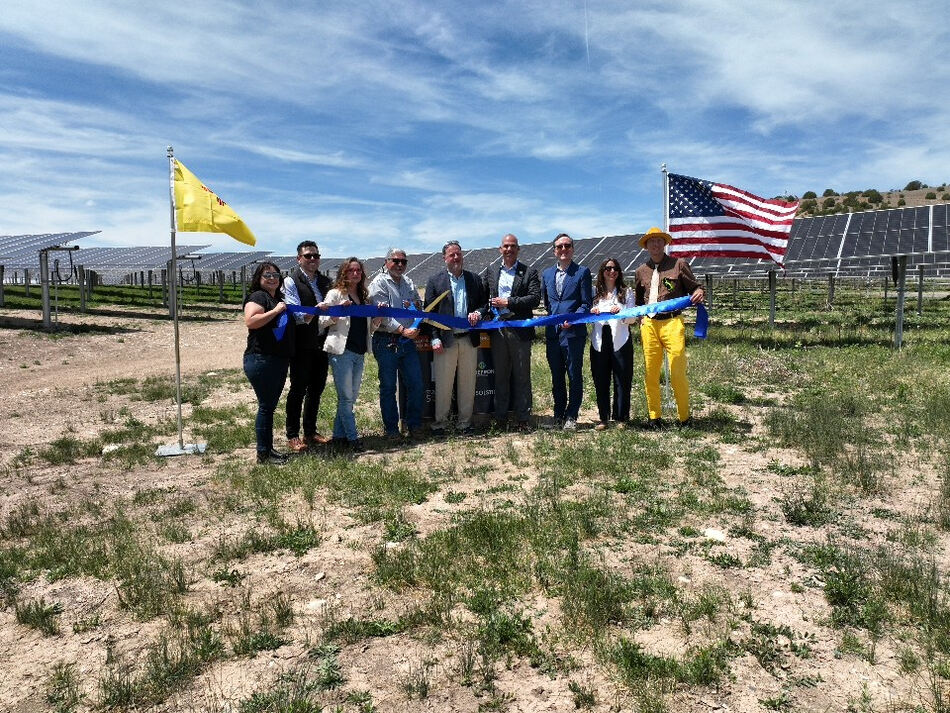
In the high desert of New Mexico, a coalition of solar firms is putting the final touches on what amounts to a small-scale revolution in community power generation. Standard Solar and its partners are nearing completion of an eight-project community solar portfolio spanning 48.4 megawatts—enough renewable energy to power thousands of homes while keeping utility bills down for residents who might not otherwise be able to afford rooftop panels.
Community solar projects matter because they democratize access to clean energy. Not every homeowner has a roof suitable for solar panels, or the capital to install them. Community solar allows renters, apartment dwellers, and those in shaded properties to benefit from renewable generation happening somewhere nearby, with credits applied directly to their electricity bills. In a region where energy costs and summer heat are both relentless, New Mexico's new 48.4 MW of community capacity represents meaningful progress toward energy independence and affordability.
The eight projects that make up Standard Solar's portfolio are scattered across the state, each one sized to serve specific communities and neighborhoods. The company brought together multiple partners to develop this coordinated network, recognizing that community solar works best when it's woven into the local fabric rather than imposed from above. That collaborative approach—thinking regionally while building locally—is becoming a hallmark of the solar industry's maturation.
What stands out about this project is its scale and momentum. Nearly complete construction on an 8-project portfolio of this size suggests serious operational capacity and investor confidence. The 48.4 MW won't transform New Mexico's entire grid overnight, but it will shift the needle meaningfully. For perspective, a 48.4 MW community solar portfolio typically generates enough electricity annually to offset the consumption of roughly 5,000 to 7,000 homes, depending on local climate and usage patterns.
The timing also matters. As extreme heat becomes more common across the Southwest, having diverse, distributed renewable energy sources takes pressure off aging grid infrastructure. Community solar reduces peak demand during brutal afternoon hours and can improve grid stability when conventional power plants strain under load. For New Mexico, already vulnerable to drought and heat, this portfolio is both a climate adaptation strategy and a climate mitigation investment.
Beyond the immediate benefits to participating residents, this project signals something larger about how the solar industry is maturing. Five years ago, most solar development was concentrated on utility-scale farms or affluent residential rooftops. Today, developers like Standard Solar are deliberately building portfolios that serve middle-income and lower-income communities, recognizing both that this is the ethical path forward and that it's increasingly the profitable one. Community solar subscribers pay monthly, creating reliable revenue streams. Policy support at state and federal levels has made the financial math work.
Looking ahead, New Mexico's solar momentum shows no signs of slowing. The state has strong sunlight resources, improving tax incentives, and growing demand from both residents and businesses seeking energy independence. Standard Solar's eight-project completion will free capacity and attention for the next wave of community solar development already being planned across the state. In a region defined by wide-open spaces and abundant sunshine, the question is no longer whether community solar will proliferate, but how quickly the infrastructure can be built to capture that potential.