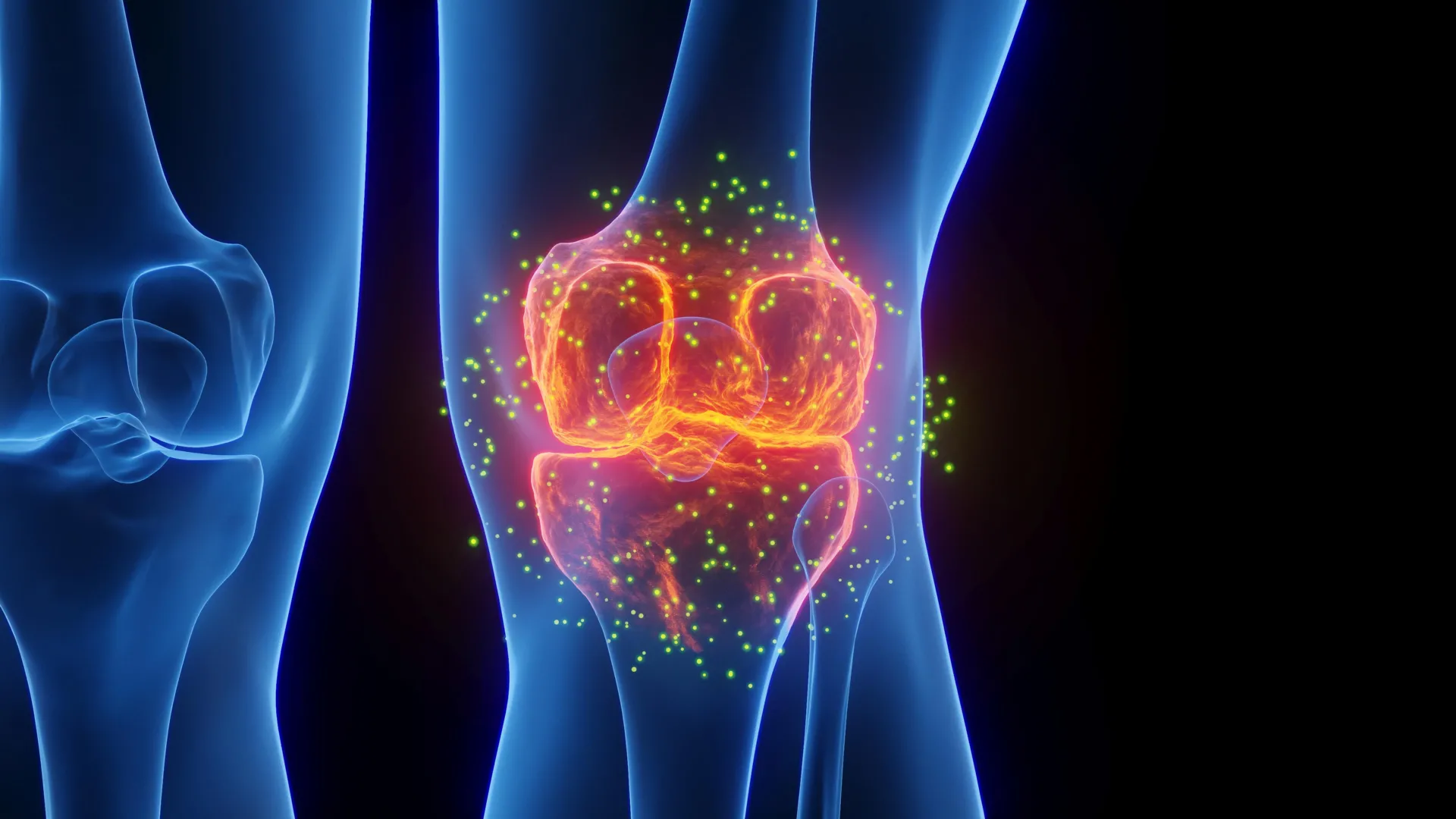
In the cartilage of aging mice, Stanford researchers discovered something remarkable: a simple molecular switch, when flipped, could restore what osteoarthritis had taken away. By blocking a single protein called 15-PGDH, scientists have regrown lost knee cartilage and prevented arthritis from developing after serious joint injuries—a breakthrough that offers hope to millions struggling with the wear and tear of aging joints.
The work matters because osteoarthritis is the most common form of arthritis, affecting roughly one in five adults in the United States and generating about $65 billion in direct healthcare costs annually. Until now, medicine has had no answer beyond pain relief and, in severe cases, the knife: joint replacement surgery. No approved medication has ever slowed, stopped, or reversed the underlying disease. The Stanford team has changed that calculation.
The research, led by Helen Blau and Nidhi Bhutani at Stanford Medicine and published in Science, targets a protein that becomes more abundant with age. Blau's group first identified this class of proteins, called gerozymes, in 2023—enzymes that drive the decline we associate with growing older. Previous work showed that 15-PGDH plays a major role in age-related muscle decline in mice. When researchers blocked it, older animals gained muscle mass and endurance. When they artificially increased the protein in young mice, their muscles weakened. Now the same principle has proven powerful for cartilage.
The team compared cartilage from young and old mice and found that levels of 15-PGDH approximately doubled with age. They tested their hypothesis by exposing cartilage-producing cells called chondrocytes to a treatment that blocked the protein. The results were striking: the cells shifted their gene activity and returned to a more youthful state, regenerating cartilage in ways no drug or intervention has achieved before.
What makes this regeneration distinctly exciting is how it works. Most tissue repair relies on stem cells multiplying and developing into new specialized cells. Cartilage appears to operate differently. Rather than calling on stem cells—which researchers have struggled to identify in articular cartilage—the tissue's own cells simply remember how to be young again. "This is a new way of regenerating adult tissue, and it has significant clinical promise for treating arthritis due to aging or injury," Blau said. "We were looking for stem cells, but they are clearly not involved. It's very exciting."
The researchers tested their approach not just in aging mice but in human tissue. Cartilage samples collected during knee replacement surgeries began producing new, functional cartilage when exposed to the treatment. That step from laboratory to human biology is crucial, and it points toward a practical future.
An oral version of this treatment is already being tested in clinical trials for age-related muscle weakness. If the approach proves safe and effective in people, the implications are profound: damaged cartilage caused by aging or osteoarthritis could one day be repaired with either a local injection or oral medication. The need for knee and hip replacement surgeries could diminish. Millions of people living with joint pain and swelling might finally have not just relief, but repair.