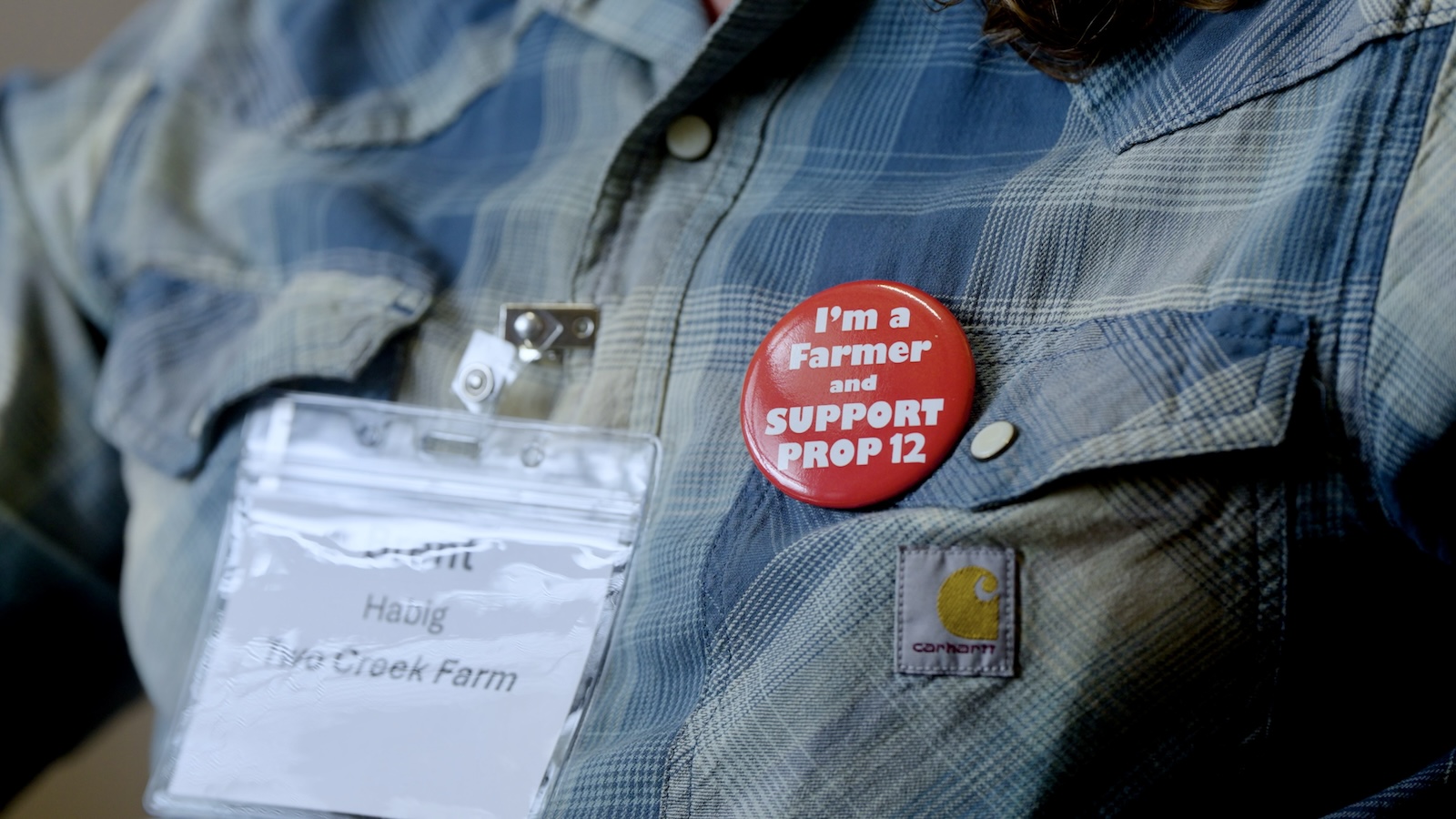
In a rare moment of bipartisan agreement, the U.S. Senate has rejected a federal measure that would have overridden state laws requiring more humane treatment of farm animals — and farmers who already made the transition say they're breathing easier.
For nearly eight years, Congress has failed to pass a new farm bill, the massive legislative package that typically funds agricultural programs every five years. The latest stalemate centers on the Save Our Bacon Act, or SOB, which would have invalidated state laws like California's Prop 12 — measures that ban the sale of pork, chicken, and veal from farms using extreme confinement practices, such as gestation crates for hogs. The House included SOB in its draft farm bill with vocal support from Representative G.T. Thompson, who chairs the House agricultural committee. But when the Senate released its own draft this week, the measure was conspicuously absent.
The distinction matters. According to the American Meat Producers Association, or AMPA, 14 states currently have laws similar to Prop 12 on the books. And the transition is already well underway: a recent USDA analysis found that 27 percent of hog farmers — roughly 1 in 4 — are already compliant with the stricter standards. For farmers like Brent Hershey, a Pennsylvania hog farmer and AMPA member, that's evidence the market is moving in the right direction. Hershey's farm has been crate-free for three years, a shift he initially resisted but now credits with keeping his operation viable. "It's helped them keep their heads above water at a time when consolidation has increasingly driven out farmers," said Holly Bice, president of AMPA, which was founded last year to defend state transparency laws.
Molly Armus, who works on animal agricultural policy at Friends of the Earth, said laws like Prop 12 reflect what voters want: to know where their food comes from and how it was produced. Transitioning away from extreme confinement also carries environmental benefits, she noted, since industrial operations that confine animals in tight spaces generate concentrated manure that can pollute nearby air and waterways.
Still, advocates say the fight isn't over. While the Senate's exclusion of SOB is a win, the House may still push for the measure in conference negotiations. "That's why it's critical to keep up the noise on it," said Sara Amundson, president of the Humane World Action Fund. Experts also warn that weakening state authority could set a troubling precedent for other environmental and public health protections. "When you're doing something that erodes states' abilities to rollback some of the more harmful aspects of massive commercial agricultural operations, how does that impact any law that could impact agriculture?" asked J.W. Glass, a senior policy specialist at the Center for Biological Diversity.
For now, though, farmers who've already made the switch are holding their ground. "The industry is completely divided on this," said Hershey, but for those who've invested in more humane systems, the message to Congress is clear: don't undo progress that's already working.