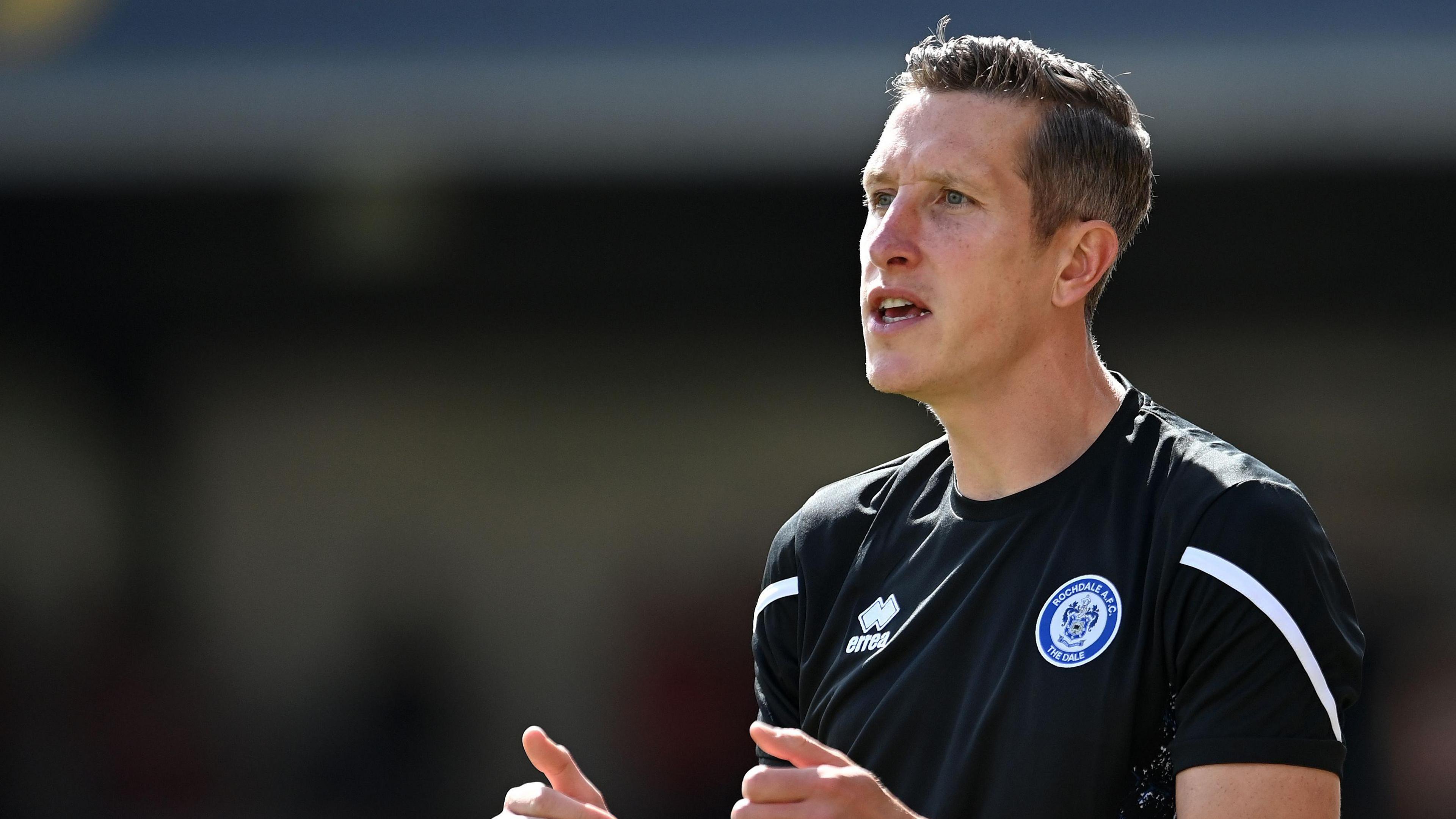
Jim McNulty stood in the Wembley sunlight last month as Rochdale's players lifted the National League promotion trophy, but his celebration was bittersweet. The 41-year-old had just guided Dale back to the English Football League after three years away, winning a dramatic penalty shootout against Boreham Wood in the play-off final. Within weeks, he was packing his bags again—this time to return to a place that had shaped him as a young player nearly two decades earlier.
Stockport County announced McNulty as their new manager on a three-year deal, asking him to lead a club that had fallen short in its own promotion bid. The appointment closes a circle for McNulty, who played for the Hatters in 2008-09 and watched the club's trajectory from a distance. He arrives at Edgeley Park to replace Dave Challinor, who departed after Stockport's League One play-off final defeat to Bolton Wanderers in May—a near neighbor that made the loss sting more sharply.
McNulty's credentials speak loudly. At Rochdale, he transformed a club in freefall into a National League title contender. When he took over initially on an interim basis in 2022-23, just as Rochdale dropped out of the EFL, the task seemed insurmountable. He signed a two-year deal and steered them to an 11th-place finish in their first National League season. Then came the 2024-25 campaign: a thrilling tussle with York City for automatic promotion, culminating in a dramatic final-day draw where York snatched the title with a 103rd-minute equaliser. Undeterred, McNulty's side charged through the play-offs, coming back from 2-0 down against Boreham Wood to force extra time and eventually win on penalties.
The manager himself views the Stockport opportunity as written in the stars. "Some opportunities feel meant to be, and there's so much alignment and connection here for me, so there's amazing pride here for me and my family," he told the club website. His words carry a hint of homecoming—a chance to replicate the football philosophy he'd cultivated at Rochdale, where success married attractive play with results. "We celebrated so much during my time here as a player, because we played a brand of football that we were so proud of as players and we knew the fans loved," he reflected, referring to Stockport's golden era. "That is the idea that I want to cultivate for our supporters again."
Stockport's recent history has been one of near-misses. Under Challinor, who became the fifth longest-serving manager in the English Football League before his departure, the club climbed from the National League to League One and won two promotions. Yet in the past two seasons, they finished third in the third tier both times, only to stumble in the play-offs. Bolton's emphatic victory at Wembley in May left supporters wondering whether this cycle could ever break.
McNulty arrives with Rochdale's blessing. The club issued a statement thanking him for his "fight, honesty and love" and acknowledged he had left them "in a stronger place." His task now is to channel that same determination and football philosophy into Stockport's push for automatic promotion—to prove that the connections he feels to the club can translate into the kind of sustained success that has eluded them in recent years.