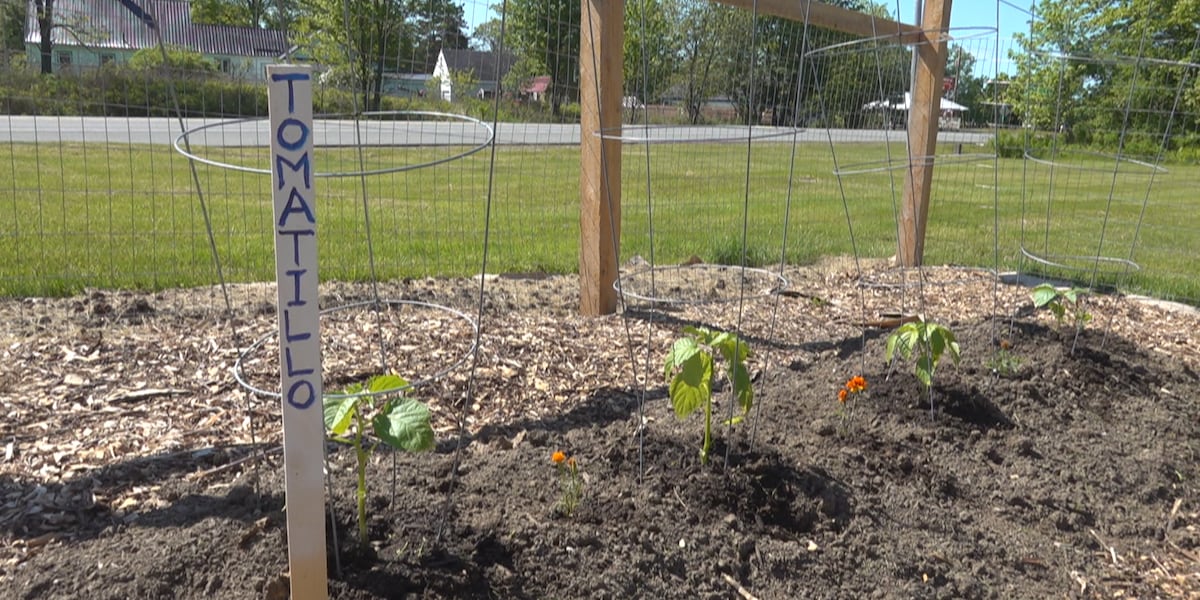
Every Wednesday morning from April through October, a cluster of volunteers gathers by the Little League field in Stockton Springs, Maine, to tend beds overflowing with herbs, peas, and possibility. By the second year of its operation, the community garden along Route 1 has become proof of something simple but profound: when you give people a place to grow things together, they come. And they bring their neighbors.
The garden's volunteer roster nearly doubled in just twelve months. Last year, six to seven core volunteers showed up regularly. This year, ten to twelve people typically appear on a Wednesday morning, according to Linda Meadows, one of the garden's steadfast tenders. Serena Cole, another volunteer, described the experience with the warmth of someone who has found something she didn't know she needed: "It's wonderful. It's lovely. It's a nice place to be on a Wednesday morning."
That growth matters less for the hands available and more for what it represents. Cole was explicit about the garden's original purpose: "Part of the garden was to build community in Stockton Springs. A venue for people to meet, have common ground in what they enjoy doing and share." The doubling of volunteers suggests that Stockton Springs residents recognized that invitation and accepted it.
The project runs on funding from a Community Resilience Partnership Grant, a federal program routed through the state to help communities prepare for climate change and weather extremes. The garden embodies that mission in practical form—it's not just about resilience in the abstract. It's about neighbors knowing neighbors, about having access to fresh herbs and soon-to-come peas, about building the kinds of bonds that hold communities together when real challenges arrive.
The physical garden itself reflects thoughtful design. Most of the beds are free for anyone in the community to harvest from—volunteers ask only that people pick with restraint, leaving some for others. It's a system that works. "There's been no issue for us," Cole said. A handful of clearly marked red beds belong to individual gardeners, giving those with the inclination space to claim something as their own. The garden also features a pavilion with a rain-catching roof that supplies water for the plants, and birdhouses that have already attracted resident bird families—small touches that turn a functional space into a place worth visiting even when your hands are empty.
There's room for expansion. When the town of Stockton Springs approved the project, volunteers staked out more ground than they initially needed. Meadows envisions the possibility: "If people want these, these are great. We want a lot of community beds. So if those get taken by individuals, we will just keep growing." The garden's growth could accelerate as more residents discover what Wednesday mornings feel like at the Little League field.
For now, Cole has a simple invitation for anyone passing through: come for the herbs, which are growing now. Stay to see where this is headed. Follow along on the Stockton Springs Community Garden Facebook page. What began as a resilience initiative has become something more immediate and real—a place where a dozen people who might otherwise stay strangers have found common ground.