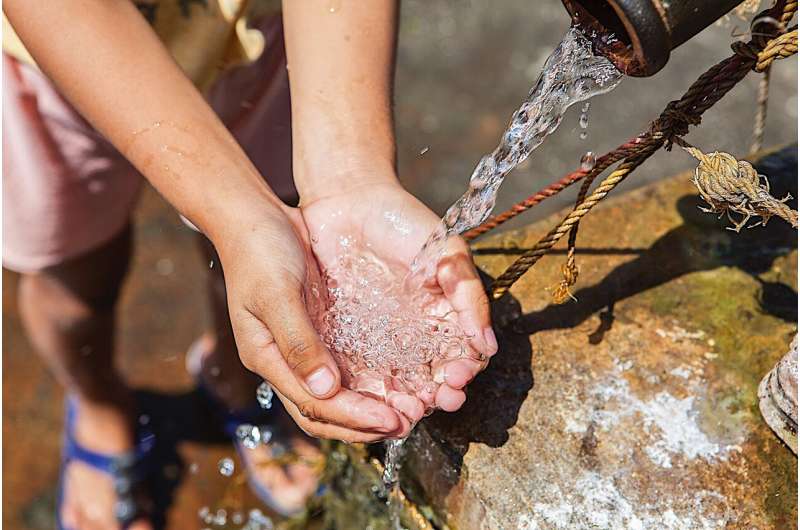
Every morning in Bihar, India, millions of people wake up and drink water from a hand pump in their own backyard. But that water is not always safe to drink. It can contain harmful substances like arsenic, iron, manganese, nitrate, and uranium that can make people sick over time. Now, a group of researchers has found a simple solution: teach local teenagers and adults to test their own water and send the results to scientists far away.
The study, published in the journal Community Science, took place in Bihar because more than 90% of the state's population relies on groundwater for cooking, cleaning, and drinking. Scientists have known for years that some of that water contains dangerous chemicals, but they simply do not have enough people to test every well, pump, and tap. That is where the community comes in.
Laura Richards and her team at the University of Manchester recruited 583 people from one secondary school, three colleges, and one professional institution to learn how to collect water samples properly. Many of the participants were teenagers, though some were adults who worked at the schools. The researchers taught them how to fill special containers, label them correctly, and send them via commercial flights back to Manchester, where scientists analyzed the samples in a laboratory.
The results surprised even the researchers. The data collected by these everyday citizens matched the quality of readings taken by professional scientists. This means that ordinary people, with just a little training, can produce trustworthy information about their own environment.
The implications are significant. With more people collecting data across larger areas, scientists can spot patterns they might otherwise miss, such as which neighborhoods have the most contaminated water or where the pollution is getting worse. Participatory science, as this approach is called, can also spark curiosity and inspire young people to pursue careers in research, potentially opening doors for more women and minorities in a field that has traditionally been dominated by men from wealthy countries.
For communities in Bihar and beyond, this study offers something rare: a way to take charge of their own health. No longer do people have to wait for outside experts to tell them if their water is safe. With the right tools and training, they can find out for themselves.