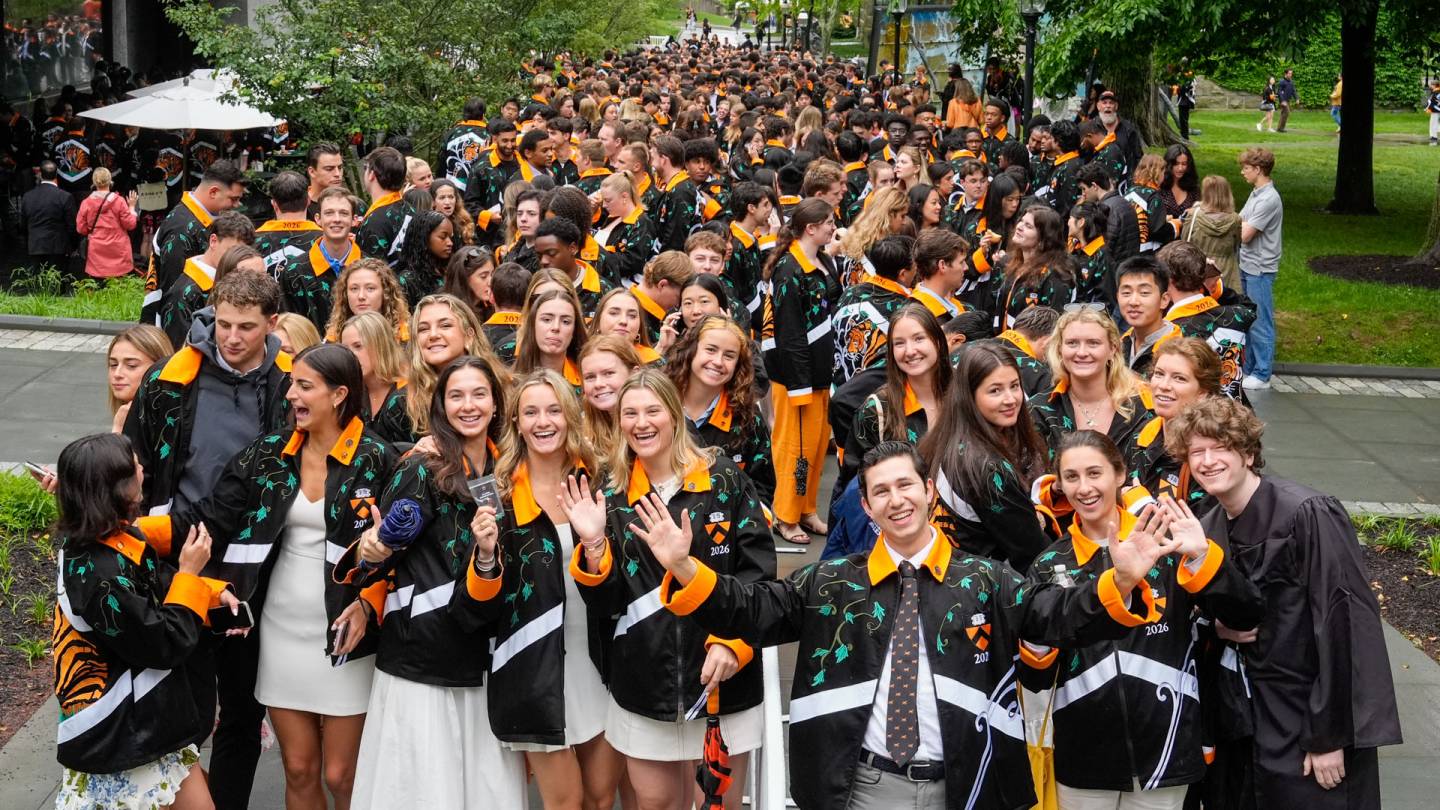
On a Monday afternoon in May, five seniors walked across a Princeton University stage to receive the honors that would bookend their undergraduate years—recognition not for the highest test scores or the most prestigious internships, but for having shown up for their classmates and communities in ways both visible and lasting. The Class of 2026 Class Day ceremony on May 25 celebrated the end of an era with five major awards that tell a story about what happens when ambition becomes service.
The Allen Macy Dulles '51 Award, which honors work that exemplifies Princeton's founding mission of serving the nation and humanity, went to George Tidmore of Valdosta, Georgia. Tidmore, a German major with minors in African American studies and creative writing, founded and edited GLOSSA, a multilingual student magazine, while juggling peer health advising, a cappella leadership, and work with the Oxalosis and Hyperoxaluria Foundation's Youth Executive Leadership Program. His was a quiet but total commitment—the kind that spreads across multiple corners of campus without fanfare.
The Frederick Douglass Service Award, established in 1969, honors students who demonstrate courage and intellectual achievement in advancing understanding of racial minority experiences. This year's recipient, Brian Mhando of New York City, is an ecology and evolutionary biology major who chaired Princeton's Undergraduate Student Government's Diversity, Equity and Inclusion committee while serving as an Outdoor Action leader and camp counselor for Princeton's Camp Kesem. His recognition as a Gates Cambridge Scholar and earlier recipient of the Princeton Prize in Race Relations reflects a trajectory of building bridges across difference.
Nadia Makuc of Monterey, Massachusetts, received the Harold Willis Dodds Achievement Prize, an award named for Princeton's 15th president and given to students exemplifying clear thinking, moral courage, and devotion to the life of the mind. A classics major with minors in medieval and Hellenic studies, Makuc chaired the Princeton Honor Committee, founded Caring for Kids—a program supporting mothers and young children—and served as president of Princeton Pro-Life. Her work ranged from the archival to the intimate, from digital imaging for the university's "Connecting Histories" project to direct service alongside young families.
The W. Sanderson Detwiler 1903 Prize recognizes the senior whom classmates judge to have done the most for their class. The award went to Minna Abdella of Khartoum, Sudan, and Edison, New Jersey, a politics major who served as class president for three years and chaired the Commencement committee. Her work spanned institutional governance and lived experience—coordinating summer engagement for the Dean of Undergraduate Students' office while lifting up the Black Premedical Society.
Enzo Kho of Negros, Philippines, received the Walter E. Hope Class of 1901 Medal, the highest recognition from peers for service to the university itself. A sociology major who served as president of the Undergraduate Student Government and organized events, community outreach, and peer career advising, Kho embodied the kind of structural leadership that shapes the daily experience of hundreds of students. His work suggested that institutional service is not separate from human connection—that running an organization well is itself an act of care.
Together, these five awards tell a story about a generation choosing to build rather than accumulate, to lead rather than rise alone.