In a suburb an hour north of Accra, film curator Jacqueline Nsiah is building a home for Africa's cinema—one that will gather scattered film reels from across the globe and return them to a place committed to their long-term preservation. The Falcon Cinema, designed by Studio NEiDA and set to open in Berekuso in 2027, represents a defiant answer to the age of streaming: a purpose-built community art centre that champions African and diaspora cinema at a moment when traditional cinemas face an uncertain future.
This project matters because cinema is memory, and right now, Africa's cinematic legacy is scattered. The Falcon's mission is to create a pan-African institution that doesn't just show films—it preserves them, educates the next generation of filmmakers, and positions African cinema as central rather than peripheral to global film discourse. As streaming platforms capture viewership worldwide, cultural institutions and communities are stepping in to offer what screens at home cannot: embodied, collective experiences rooted in place and purpose.
The design reflects this commitment in every detail. Studio NEiDA has created a complex of four buildings arranged around a central courtyard, inspired by the communal compounds of Asante architecture. The cinema itself is an outdoor planted amphitheatre, a radical choice that invites audiences to watch films under the sky while rainwater naturally drains into the surrounding land, supporting local vegetation. The 250-seat and 150-seat screening rooms sit alongside a restaurant, an archive, communal spaces, and an education hub—everything a serious film institution requires. A second phase, planned for the future, will add living quarters for visiting filmmakers in residence, turning The Falcon into a genuine creative hub rather than a one-way cinema.
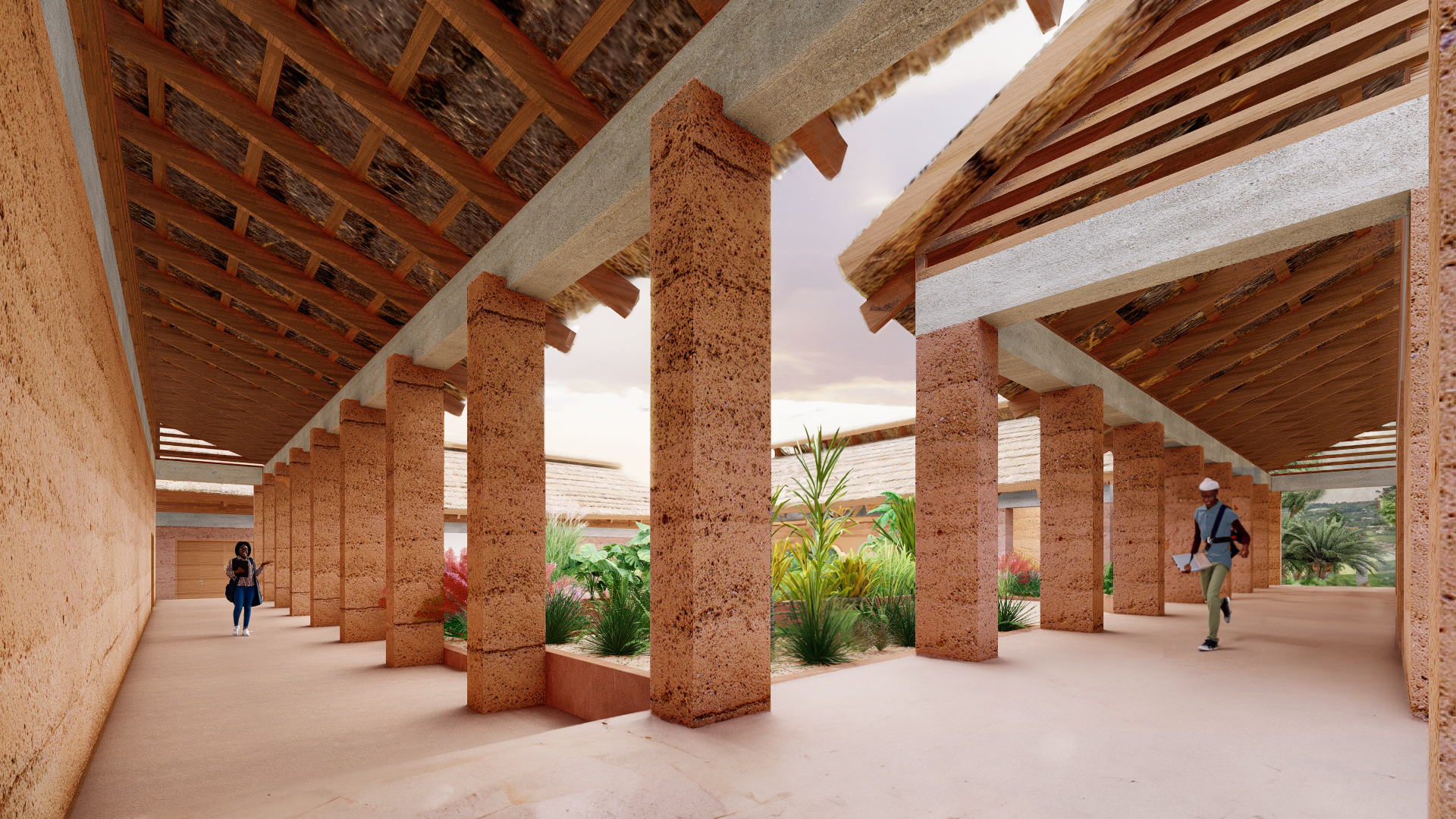
The architecture responds directly to Ghana's climate and building traditions. Materials chosen for passive cooling and thermal comfort—earth walls in the community space, a specially designed roof assembly that lets hot air escape—reference local constructive wisdom rather than imposing external solutions. The community space features a thatched roof of palm leaves, nodding to Asante traditional buildings. Even the undulating courtyard seating landscape will be built partly from repurposed construction waste, a commitment to resource efficiency that extends the project's logic from preservation inward to its own footprint.
The Falcon Cinema is already being recognized for its ambition. In 2026, it received the Europe 40 Under 40 Architecture and Design Award, celebrating the world's most promising talents in architecture and design—validation that this isn't a local initiative but one speaking to global conversations about how culture survives and thrives in a digital age.
The project began in 2024 and is expected to complete in 2027, meaning The Falcon's opening will arrive at a crucial moment. Across the world, from Panama's Museum of Contemporary Art to Seoul's new Hanwha Centre, institutional and community efforts are building new cultural venues precisely because cinema—real, shared, embodied cinema—remains irreplaceable. In Berekuso, The Falcon will stand as both archive and gathering place, promising that Africa's film voices, once scattered across the globe, will finally have a home.