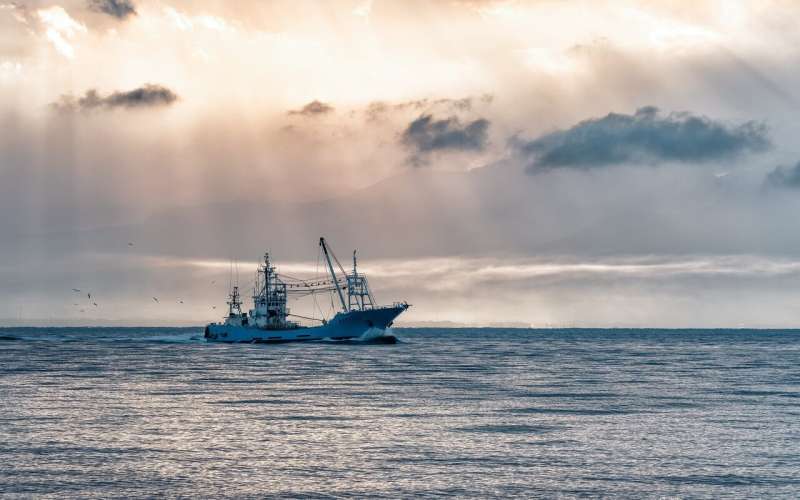
Off the rocky coastline of Garraf, where fishing boats have set out before dawn for generations, something unexpected is happening beneath the waves: the sea is holding up remarkably well. A two-year research project called Garraf At Sea has found that the fishery resources in the Garraf and Plana de Foix Marine Area are in good biological and health condition, with low levels of pollutants and an overall healthy state — despite the pervasive presence of microplastics that has become a global marine challenge.
The project, launched by the research group on the Health of Ecosystems and Aquatic Animals (SEAaq) at the Universitat Autònoma de Barcelona, took an unusual approach: researchers worked directly with local fishermen, creating what they call a co-management model that integrates scientific data with the practical knowledge of those who have spent their lives on these waters. Together, they analyzed marine habitats, surveyed species of fishing interest, and examined the health of organisms — checking for parasites, injuries, and pollutants.
"Collaboration between science and the fishing sector is consolidated as the alternative to protect the sea, the primary sector and the Mediterranean diet," said Anna Soler Membrives, coordinator of the project and a researcher in the Department of Animal Biology, Plant Biology and Ecology at UAB. "Without local fishing there is no sustainable future."
The findings represent more than just good news for marine life. They form the scientific backbone of a new Strategic Plan for Sustainable Fisheries (PEPS) for Garraf, which will include specific recommendations to protect marine ecosystems while ensuring the fishing sector's survival. The research identified coastal habitats of fishing interest, areas of high ecological diversity, and deeper-water zones serving as breeding grounds — alongside trouble spots where waste accumulates. It also highlighted the selective nature of certain fisheries, particularly shrimp, which show very low levels of discards.
The timing matters. Local fishing on the Catalan coast faces mounting pressures from changing European Union regulations and the widespread effects of overfishing. Yet Sara Dallarés, a professor and researcher on the project, argues that choosing local fish is itself a form of environmental activism. "Committing to local fishing and consuming local products is a strategic decision to move toward a sustainable production and consumption model," she said.
For Soler Membrives, the Garraf At Sea project demonstrates that sustainable fishing is not a distant理想 but a reality already taking shape — provided scientists and fishermen continue working hand in hand. "Local fishing on the Catalan coast faces great challenges, but it also opens up a path of hope: co-management between the scientific sector and the fishing sector as a model to guarantee its future," she said.
The question now is whether this small stretch of Mediterranean coast can become a blueprint for其他地方 — proof that the sea can stay healthy while the people who depend on it keep their livelihoods.