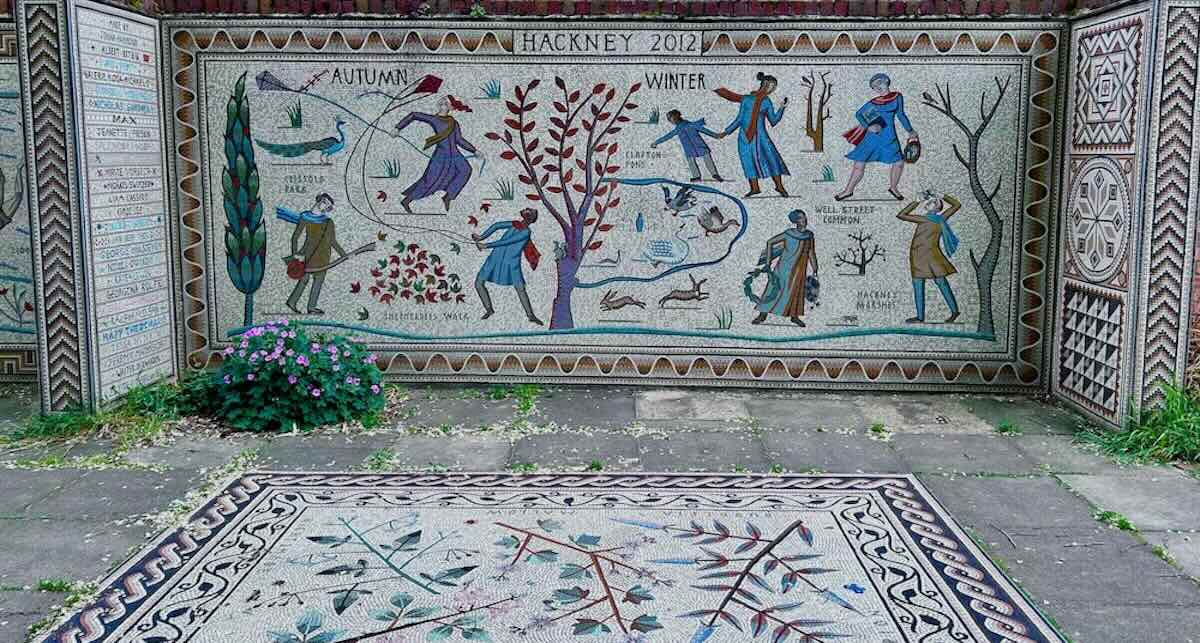
In a hidden corner of Shepherdess Walk park, tucked off City Road in East London, lies a sprawling mosaic that tells the story of something far larger than art. Broken ceramic and glass fragments—sorted, nipped, and pressed painstakingly into place—form Roman-inspired scenes of ducks and foxes, wildflowers and neighborhood dogs, all created by people transforming their own brokenness into beauty.
The Hackney Mosaic Project, founded 15 years ago by architect-turned-artist Tessa Hunkin, emerged from a simple but profound discovery: the meticulous, slow rhythm of building a mosaic offers profound healing. Hunkin's chance encounter with a mental health recovery group in Westminster sparked the realization that this ancient craft could help people living with depression, PTSD, and addiction find relief from the internal noise of trauma. Today, participants—children, recovering addicts, healthcare workers, patients, neighbors—gather in the borough's parks, concentrating intently as they sort glass shards and press each piece into mortar. The work demands focus while offering a therapeutic calm that quiets negative thought patterns and builds confidence.
"It gives people a holiday from their head," Hunkin, now 72, explained. "It is a simple task that requires concentration and produces something at the end, so it is never time wasted because you can see where your time has gone."
The results are stunning and impossible to miss. The expansive mosaics at Shepherdess Walk cover both walls and pavement, depicting intricate details of East London life across all seasons—native plants, neighborhood fauna, and modern figures with mobile phones. Two enormous walls showcase all the parks in the borough. Nearby, at Hackney Downs Park, 50 whimsical dog portraits celebrate the community's daily life, surrounded by mosaics of native wildflowers and hand-tiled circular benches where volunteers have painted vibrant patterns onto brick and concrete. At Canalside Square along Arlington Avenue, a large circular mosaic decorated with animals sits embedded in the pavement. Small circular markers have been installed into sidewalk cobblestones in Hoxton, outside Shoreditch Library and historic venue Hoxton Hall.
The project's impact extends beyond public spaces. In 2023, following the COVID-19 pandemic, Hunkin launched a project at River Place Health Centre in Islington specifically designed to combat burnout among healthcare workers and staff. A large new mural showcased the health center's name alongside plants and animals. In a second phase, over 100 local patients—including those recovering from mental health conditions—helped transform drab outdoor concrete benches into vibrant floral designs through weekly workshops unveiled a year ago.
For 15 years, participants have finished projects faster than Hunkin anticipated, and the work has never stopped. The weekly workshops, normally held on Wednesdays and Fridays from 2 to 5 p.m. and alternate Saturday afternoons, continue to draw volunteers from all backgrounds together in a shared vision. Though the current home at the Pavilion on Hackney Downs faces uncertainty this year, the mosaic installations themselves stand as permanent testimony to what happens when broken pieces—of ceramic, of glass, of lives—are carefully assembled into something whole again.