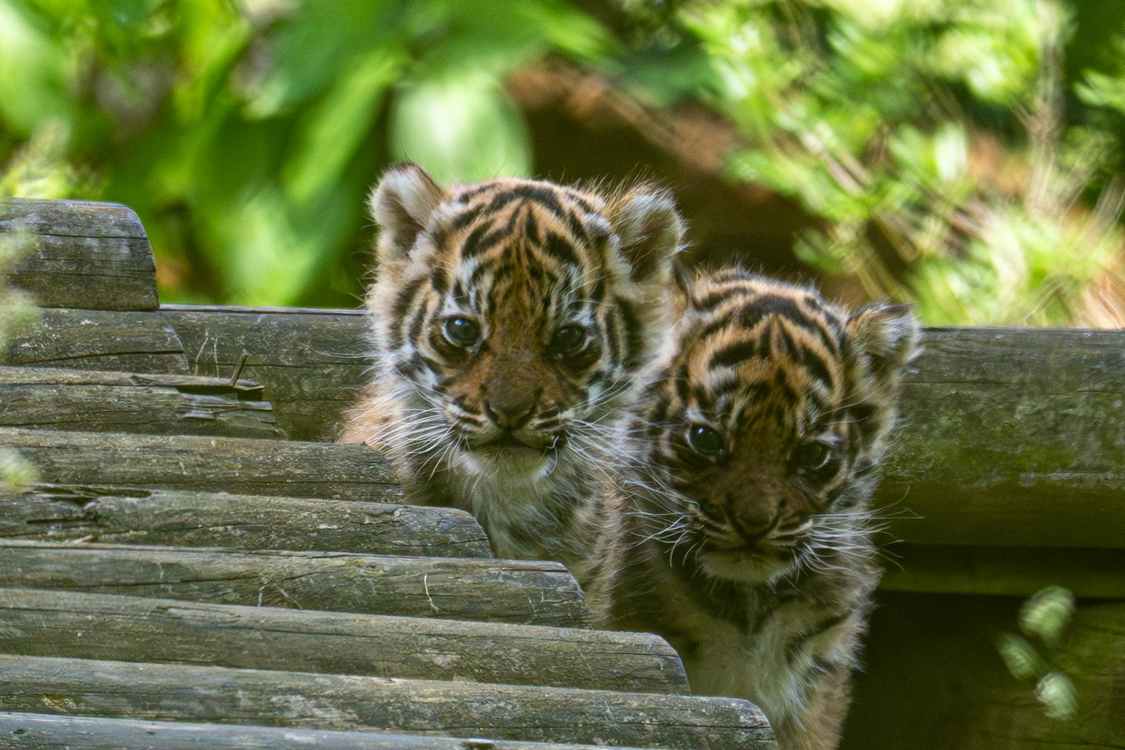
Tipah’s cubs, their fur still soft with the fluff of infancy, tumbled into the late spring sunlight at Howletts Wild Animal Park for the first time, blinking at a world far bigger than the den they’d known for eight weeks. Born on April 9th to first-time mother Tipah and father Nakal, the trio—two females and one male—are now confidently exploring their leafy enclosure in Canterbury, Kent, marking a hopeful moment for one of the planet’s most endangered big cats. With fewer than 400 Sumatran tigers left in the wild, scattered across the vanishing forests of Indonesia, every new life carries the weight of survival. Classified as Critically Endangered by the IUCN, this subspecies faces relentless threats from habitat loss and poaching, making conservation efforts beyond their native range not just valuable—but essential.
Howletts, part of the Wild Planet Trust, plays a crucial role in the European Endangered Species Programme (EEP), a coordinated breeding initiative designed to maintain genetically diverse populations of threatened animals. The birth of these cubs is more than a zoo milestone; it’s a strategic step toward ensuring the Sumatran tiger doesn’t vanish from the Earth. Head of Carnivores Richard Langston praised Tipah’s parenting, saying, “She has taken every step of this journey with calmness, patience and a natural ability to be a fantastic mom.” Perched on a high platform, she watches over her cubs as they pounce on leaves, wrestle each other, and test the boundaries of their world—behaviors that are as endearing as they are vital for their development.
The cubs are already showing distinct personalities. One, in particular, has begun venturing off on its own, a sign of emerging independence that delights the animal care team. These early explorations are not just play—they’re practice for survival, even if their lives are currently sheltered. Zoos like Howletts serve as arks, preserving genetic diversity and raising public awareness, while supporting on-the-ground conservation in Sumatra through funding and partnerships. Captive breeding programs have pulled species like the Arabian oryx and the California condor back from extinction, and the Sumatran tiger could be next.
As the cubs grow, they’ll become ambassadors for their wild counterparts, helping visitors connect with a creature most will never see in nature. Their existence is a quiet act of resistance against extinction—a reminder that with care, collaboration, and a bit of wild joy, the future for even the most endangered can still hold promise.