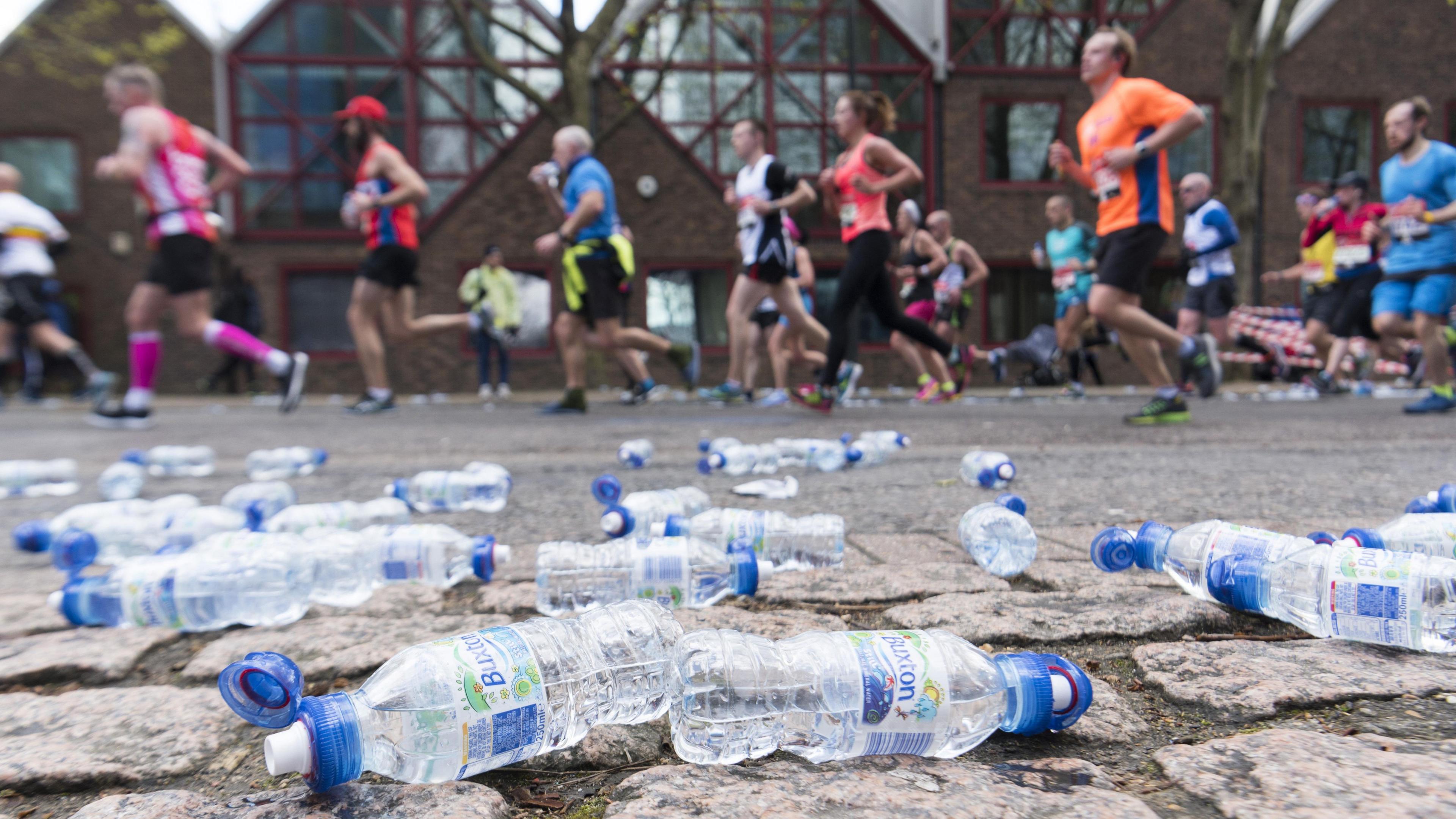
Thomas Delpeuch remembers a time when single-use plastic cups lined the course of every major marathon, a tradition so embedded in the sport that few stopped to question it. That era may be coming to an end. When thousands of runners line up in Paris this Sunday, they will be the first participants in a major mass-participation event to navigate a 26.2-mile course without a single plastic bottle or paper cup in sight. Instead, each runner must carry their own hydration vessel — a soft flask, collapsible cup, or backpack reservoir — and refill it at one of 13 aid stations now dotting the route, up from the traditional eight. Organisers say the change could eliminate waste equivalent to 660,000 plastic bottles over the course of the race.
The decision, prompted by a city-wide ban on single-use plastics at Parisian races two years ago, has divided the running community. Cari Brown, an IT manager from Woking, England, who is taking on her 11th marathon this weekend, says the new system forced her to abandon her goal of a personal best time. "Any runner who has to stop and start to get water, it's going to affect your time and it's going to affect your cadence," she told BBC Sport, though she also expressed concern about runner safety on potentially warm days when dehydration becomes a real risk. She was also disappointed to learn that elite-runner exemptions allowing pre-filled bottles for those targeting times under two hours and 50 minutes — a policy borrowed from professional races — would remain in place.
But Delpeuch, director of the Paris Marathon, insists the system is already proven. A trial at the city's half marathon last month showed it could be "successful and efficient," he said, and the new setup represents not a gamble but "the future of mass participation events." Representatives from the London, New York, and Chicago marathons — events of comparable scale — will be on the ground in Paris this weekend to observe how the model performs. If it works, it could cascade across the globe.
For Tina Muir, a former Great Britain international who now runs in skirts made from recycled rubbish, the Paris move is the vindication of a personal crusade. After falling out of love with the sport following her World Half Marathon Championships appearance in 2016, Muir returned with a new purpose: founding the campaign group Racing for Sustainability last year. She has since worked with major race organisers worldwide, pushing them to reckon with the one to two million cups that studies suggest a typical large marathon generates. "I had a feeling this was coming and I was so excited to see a race as big as Paris be so bold to do it," Muir said. She acknowledges the transition is imperfect, and she does not pretend otherwise. "I'm not saying 'never use a gel again because it comes in a plastic container'," she said. "This is a small step that we can all take — I think if it is given a chance, runners will find it's actually not as bad as they think, or maybe even better than they think." Muir sees Paris not as an endpoint but as a proof of concept: "This could be easily adapted and taken on by other races. We just have to get runners to trust that change is possible."