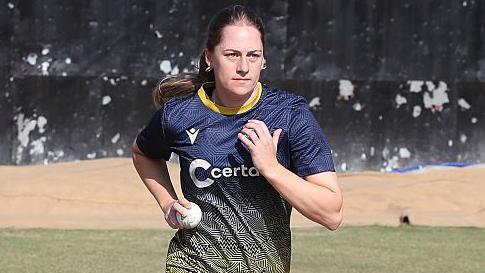
Alana Dalzell was playing cricket out the back of her house in County Tyrone when the sport still felt like a boyish pursuit—something she did for joy, not career. Now the 25-year-old from just outside Bready has become the first woman from the North West to become a professional cricketer, and she's just been called up to represent Ireland at the T20 World Cup. That shift from childhood backyard games to the international stage is a story about what happens when visibility and opportunity finally catch up with talent.
For decades, women's cricket in Ireland—especially in the North West—existed in near-invisibility. Dalzell grew up playing on boys' and men's teams from age 11, accepted and welcomed by her clubmates at Bready Cricket Club, yet surrounded by a media landscape that barely acknowledged female cricketers existed. Her father, Alan, had sparked that initial love of the game, teaching her and her brother to play as children. But when she looked around for role models, she found almost none. "There was so little coverage of women's cricket in broadcast media at that time," she reflected. For many young athletes in her position, that silence would have been a ceiling.
The turning point came in 2019. Cricket Ireland introduced part-time contracts for women—a modest policy shift with outsized impact. Among the first recipients was Gaby Lewis, who would go on to captain Ireland. Suddenly, cricket wasn't just something you did for love; it was something you could do for work. Dalzell made her international debut for Ireland in 2022 against South Africa. Then, in 2024, she achieved a milestone for her entire region: becoming the first professional cricketer from the North West, male or female.
The call-up to the T20 World Cup squad—announced after Ireland secured qualification at the global qualifiers in Nepal in February—felt "surreal and a huge honour," Dalzell said. Ireland will face Scotland, England (the hosts), New Zealand, Sri Lanka, and West Indies in the group stage. What makes this moment even more significant is its proximity to home. "Especially having a World Cup so close to home," she told BBC Radio Foyle. "It's a huge honour to pull on the green jersey."
Her parents were the first to hear the news—a fitting circle, given her father's role in launching her cricket journey. Yet Dalzell is keenly aware that her breakthrough is not just her own. Over recent years, the landscape of women's cricket in the North West has transformed dramatically. Part of that change is visibility. The media coverage of women's cricket, she notes, has "changed massively now," and young girls can now see themselves reflected in the sport. Another part is infrastructure. Kathryn Rough, Chief Executive of the North West Cricket Union, has spearheaded the introduction of younger girls' leagues that are "thriving now and growing every year," according to Dalzell.
"If someone younger can see me and know that locally I have come through the pathway—hopefully it helps them know that they can do it too," Dalzell said. That's the real measure of her breakthrough. Not just her own place at the World Cup, but the doors it opens for the next generation of North West girls who might one day be out the back of their own houses, dreaming of green jerseys.