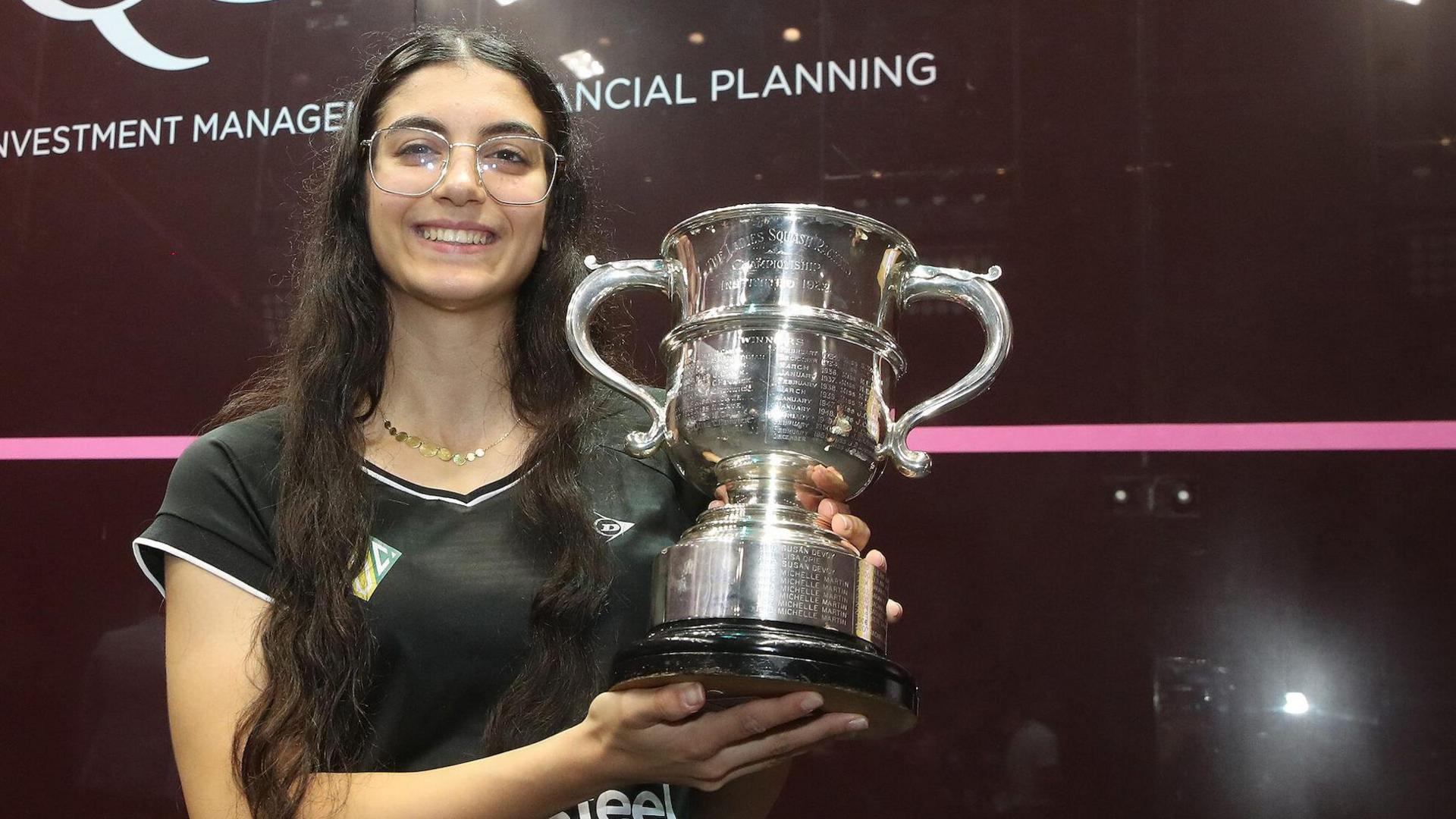
At 18 years old, Amina Orfi has already rewritten squash's history books twice in a single month. The Egyptian teenager claimed the British Open women's championship in Birmingham on Sunday with a commanding 3-1 victory over her compatriot Nour ElSherbini, etching her name into the sport forever — not as a promising young talent, but as a record-breaker with a championship pedigree.
Orfi's win matters because it shatters a record that stood unbroken for 94 years. Susan Noel held the title of youngest British Open women's champion since 1932, when she lifted the trophy at just 19 years and eight months old. Orfi, at 18, has reclaimed that crown for a new generation, signaling a seismic shift in the sport's competitive landscape. But this record-breaking runs deeper than a single title. Just weeks earlier, in May, Orfi had already become the youngest women's world champion, beating the same opponent — ElSherbini, the world number two — en route to claiming squash's most prestigious individual crown. Two major titles in two months at an age when most athletes are still figuring out their craft is extraordinary.
The path to Sunday's British Open victory was grueling. In her semi-final on Saturday, Orfi contested what became the longest women's match in British Open history: a 110-minute marathon against top-seeded Hania El Hammamy, the current world number one. It also ranks as the joint fourth longest women's match of all time across all competitions. Yet she emerged victorious, and returned to the court the very next day to face ElSherbini at the Rep Theatre in Birmingham. After dropping the opening game 7-11, Orfi rallied with a display of composure beyond her years, winning three consecutive games 11-8, 11-5, and 11-8 to clinch the title.
"I feel very happy with these two results back-to-back after the world champs," Orfi reflected afterward, understating the magnitude of her achievement with the kind of grace that suggests her breakthrough is only the beginning. "I was very tired and it was a great match."
On the men's side, New Zealand's Paul Coll claimed his third British Open crown with a 3-1 victory over Egypt's Mostafa Asal, who is ranked number one in the world. Asal, too, had endured an epic semi-final just the day before — a grueling 115-minute battle against Peru's Diego Elias — and the toll was evident. He conceded the match at the start of the fourth game, unable to recover from the physical demands of his previous outing. Coll's victory marked his 33rd PSA Tour title, a milestone that underscores his consistency at the sport's highest level.
What makes Orfi's achievement particularly striking is its timing within the competitive calendar. The British Open is one of squash's four world series events, and winning it at 18 positions her not just as a champion of today but as a potential force shaping the sport's future for the next two decades. The next major test comes in Paris later this month, where the PSA Squash Tour Finals run from June 17 to 20. But for now, Orfi has done something remarkable: broken a century-old record and proved that in squash, as in so much else, younger generations are raising the bar higher than ever before.