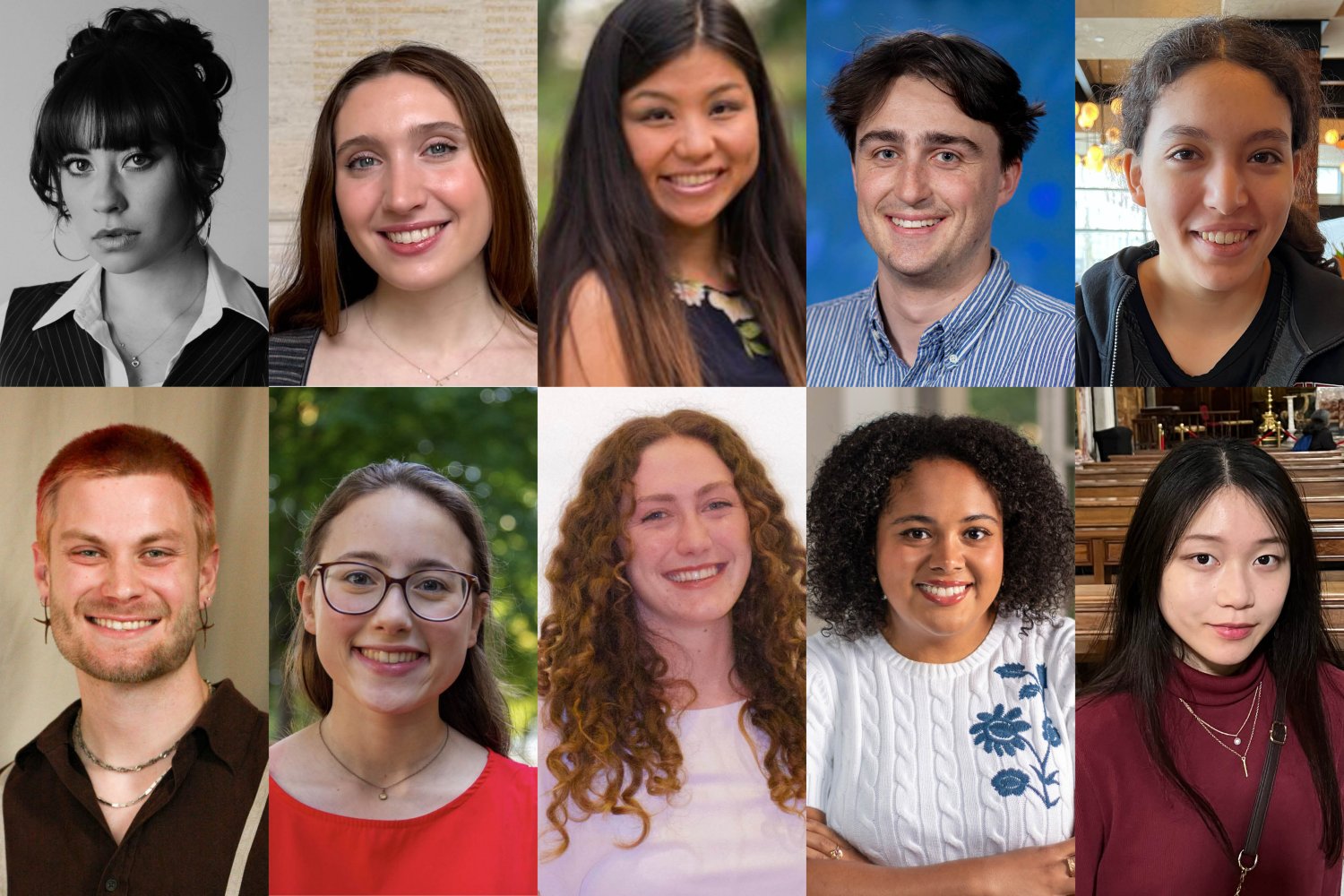
Ten MIT students and recent alumni have accepted Fulbright grants to conduct independent research across the globe—from Barcelona to Copenhagen, Reykjavík to Seoul—joining a distinguished lineage of American scholars pursuing discovery abroad. What makes this year remarkable is not just the individual achievements, but MIT's recognition this past February as the nation's No. 1 "Top Producing Institution" among special focus STEM universities by the Fulbright Program itself.
The Fulbright U.S. Student Program, funded by the Department of State with annual Congressional appropriations, opens year-long opportunities for American citizens to conduct research, pursue graduate studies, or teach English in over 140 countries. For MIT, the program has become a natural extension of the institute's global mission. Out of 30 applicants this year, 16 won awards—a striking 53 percent acceptance rate that reflects both the caliber of MIT researchers and the program's recognition of the institution's scientific leadership.
Jessica Chomik-Morales, who earned her master's in science writing at MIT after three years as a post-bac cognitive neuroscience researcher in the labs of professors Nancy Kanwisher and Laura Schulz, will investigate how narrative features in science writing shape reader comprehension and trust at Universitat Pompeu Fabra's Center for Brain and Cognition in Barcelona. She brings deep experience in making science accessible: she is the creator and host of "Mi Última Neurona," an MIT-sponsored Spanish-language neuroscience podcast that has featured more than 60 scientists across Latin America, the United States, and Spain.
Stella Gassman, graduating this month with a degree in biological engineering and a concentration in women's and gender studies, will conduct microbiology research at the University of Copenhagen, building on her MIT work on the vaginal microbiome and bacterial vaginosis. Her research journey has included clinical placements at an MGH gynecology clinic and at a trial site in South Africa, grounding her laboratory work in human context. She envisions medical school ahead, seeking to bridge scientific discovery with direct patient impact.
Chen Li, who completed her master's in system design and management at MIT, will explore how artificial intelligence and systems thinking can support health and well-being in Arctic communities as a Fulbright Iceland-NSF Arctic Research Award recipient. Her recent work has already spanned continents: developing generative AI tools for patient engagement at Novo Nordisk in Copenhagen and applying machine learning to prevent gait freezing in Parkinson's patients through the MIT–Mexico program.
Liam Moser, graduating this week with a PhD in geophysics from the MIT-WHOI Joint Program, will pursue a postdoctoral fellowship at Reykjavík University, where he plans to use earthquake recordings to study the Hengill volcano and geothermal area. His doctoral research on subduction zones—where tectonic plates collide to generate Earth's largest earthquakes—has been complemented by his dedication to mentoring: he taught incoming graduate students in the MIT-WHOI Summer Math Review for five years.
Lilia Ould-Hammou, a senior in mechanical engineering with a concentration in controls, robotics, and instrumentation, earned the Fulbright U.S.-Korea Presidential STEM Initiative Award to conduct research at Seoul National University.
Five other MIT applicants declined their Fulbright awards to pursue alternative opportunities, while another remains undecided. For students interested in applying, MIT's Distinguished Fellowships office in Career Advising and Professional Development, led by Fulbright program advisor Julia Mongo, offers guidance.