Rosa Chen drives a silver Tesla Model Y to work every day in Austin, Texas. She never expected to be part of a milestone, but she is. Along with nearly 10 million other Tesla drivers worldwide, she represents a massive shift in how people get around.
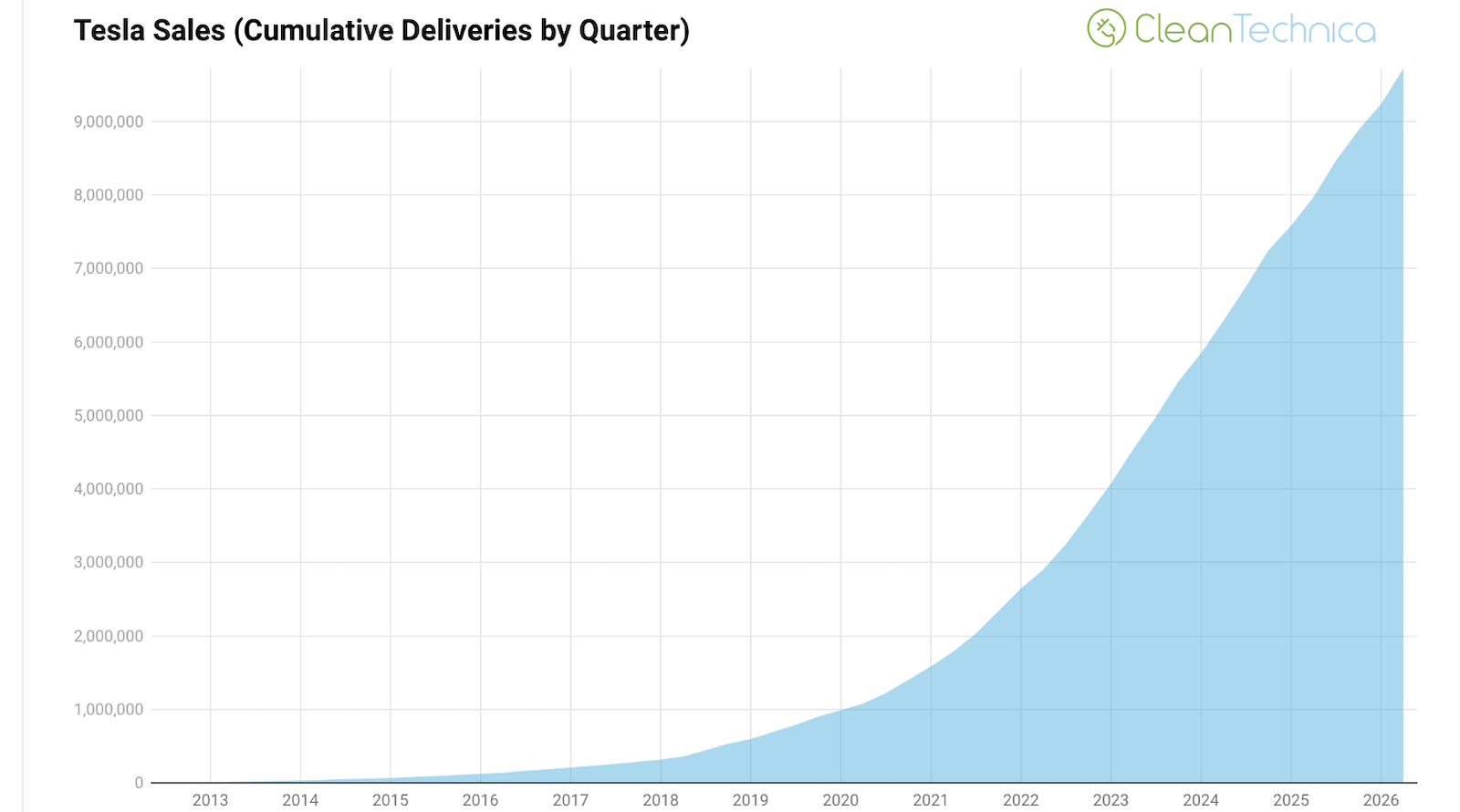
Tesla is about to hit a jaw-dropping number: 10 million cumulative vehicle sales. That's the total number of cars the company has sold since it started selling vehicles. At the end of the second quarter of 2026, Tesla had reached 9,721,070 cumulative sales. The company only needs 278,930 more sales to cross the 10 million mark — a number that seemed impossible just a decade ago.
Looking at recent performance, this milestone feels nearly certain. Tesla delivered 480,126 vehicles in the second quarter alone. That makes it the company's fourth-best quarter ever for sales. At that pace, Tesla will almost certainly hit 10 million cumulative sales in the third quarter.
Two cars are driving this growth: the Model Y and the Model 3. The Model Y, a compact SUV, leads the pack with 5,385,508 cumulative sales, making it the highest-selling electric vehicle of all time. The Model 3, a sleek sedan, has sold 3,502,363 units. Together, these two models make up the vast majority of Tesla's total sales.
Why does this matter? Electric vehicles produce far fewer planet-warming gases than gas-powered cars. Every Tesla on the road means less air pollution and less climate change. As millions more people switch to electric, cities become cleaner and air becomes easier to breathe. This isn't just about one company succeeding — it's about a global shift toward transportation that works better for people and the planet.
The transition is moving faster than many experts predicted. A decade ago, electric cars were rare curiosities. Today, they're common on streets worldwide. Tesla's 10 million milestone signals that the electric car revolution isn't coming — it's already here.