Nearly 10 years into volunteering with Snapshot Wisconsin, Tim Sparks took on a new task: helping measure snow depth, temperature and sound at a trail-camera site. His work is one example of how people outside NASA and research labs are helping scientists gather data, build tools and publish research.
NASA marked Thanksgiving by thanking its citizen science volunteers. These projects invite members of the public to take part in research, whether by reporting observations, studying data or writing code. The contributions can support work on Earth and in space, and some volunteers have helped produce findings published in scientific journals.
In the Space Cloud Watch project, volunteers Pirjo Koski, Huub Eggen and Brian Scott shared observations of noctilucent clouds, which shine in the night sky. Koski posted photographs and introduced the team to cloud databases in the Netherlands. Eggen added observations beyond the basic requests and discussed what he saw. Scott regularly supplied data and time-lapse videos. The three also helped develop a field guide to help new volunteers identify and report cloud sightings.
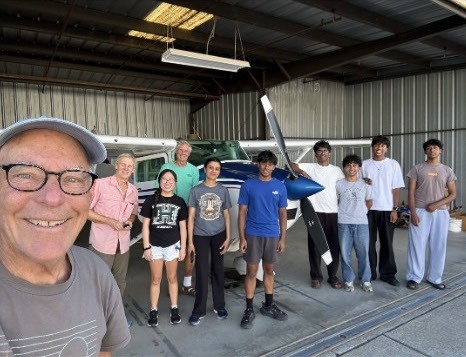
Another project turned high school students into published co-authors. After taking NASA’s free Machine Learning for Space Biology course, students volunteered with the Open Science Data Repository Analysis Working Groups. With guidance from group members, they analyzed retinal data from mice in the International Space Station’s Rodent Research-9 mission. The students trained a set of machine-learning models to tell apart signs of oxidative damage and cell death in the eyes of space-flown mice. Their study appeared in the journal npj Microgravity. Every student who co-authored the paper received authorship, and many began college this fall with a NASA publication already to their names.
Volunteers also helped researchers understand conditions closer to home. Since 2021, people taking part in Chesapeake Water Watch have submitted observations from around the Chesapeake Bay, the nation’s largest estuary. The project passed 6,000 observations this year. Though the project may be ending, its organizers say volunteers’ contributions to improving the Bay’s health will continue to matter.
Other efforts rely on steady, practical work. Sparks helped test methods for the Snapshot Phenology Project before joining its full launch. He is among a select group of volunteers maintaining extra equipment at a camera site. In the Impact Flash! project, Joerg Tomczak helped with the Artemis II campaign by sending in images of the Moon. And Backyard Worlds: Planet 9 volunteers have shared astronomy tools, brown dwarf discoveries and Python code that searches data from several sky surveys and databases.
The range of work is striking: a useful observation, a shared tool or a careful analysis can all become part of science. NASA’s message of thanks also points to what comes next. As new volunteers join and existing projects build on the data already gathered, public participation can keep opening doors to discoveries—sometimes giving students their first scientific publication before they leave high school.