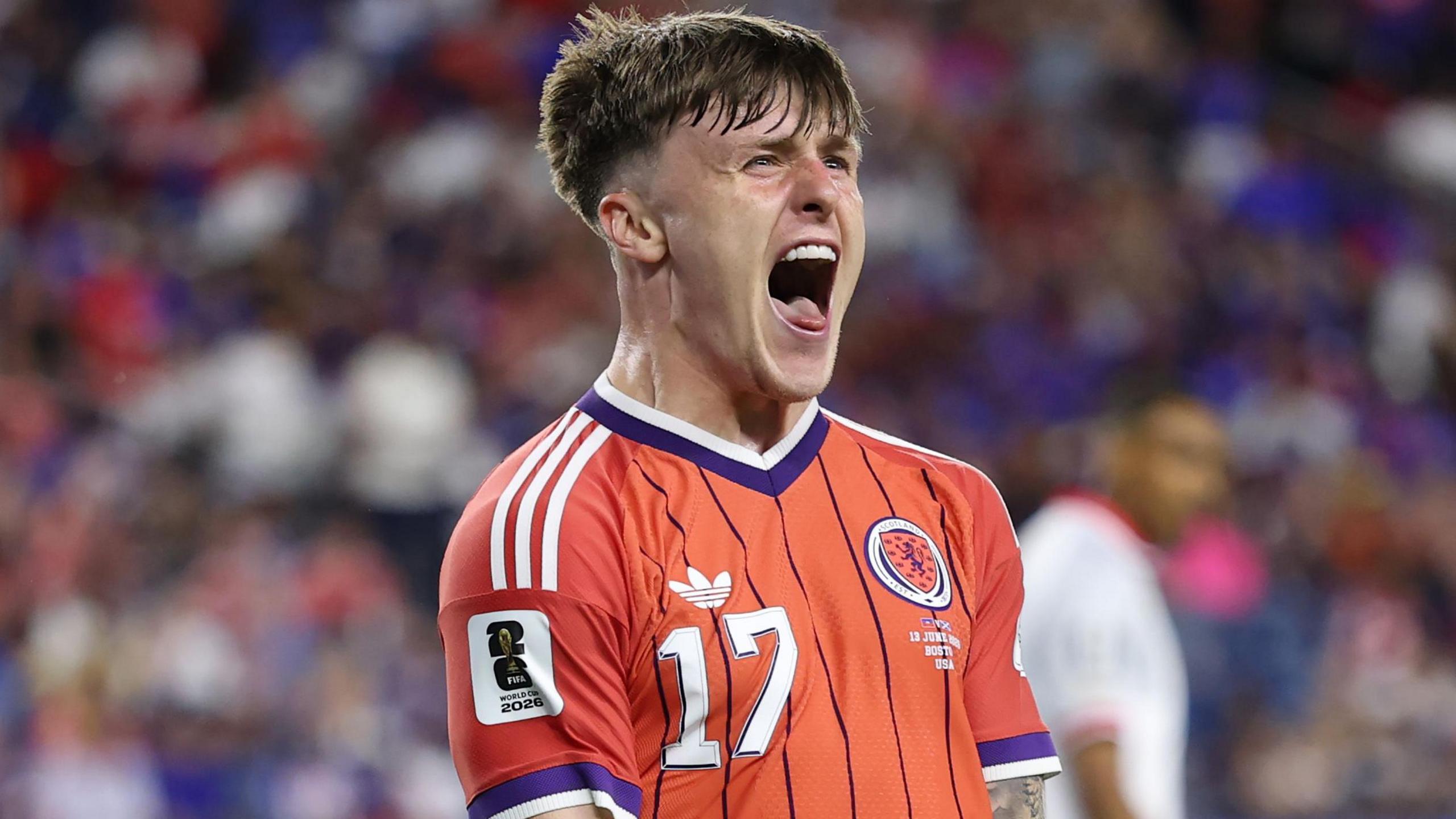
At 54 minutes, Ben Gannon-Doak clenched his fist, roared, and punched the air after shielding the ball out for a Scotland goal-kick—celebrating the moment as if he'd just scored the winning goal at the World Cup. For the 20-year-old winger from Bournemouth, this truly was that significant. Scotland hadn't tasted victory on football's biggest stage in 36 years, and here was a player who wasn't even born the last time his country stepped foot on a World Cup pitch, electrifying Boston Stadium with the kind of hunger and passion that had been sorely missed.
The Tartan Army packed into the stands in Massachusetts needed that lift. Their tournament opener against Haiti felt weighted with decades of disappointment—Scotland's first men's World Cup match in 28 years, and it showed in the anxiety rippling through the crowd. But Gannon-Doak got it. He understood what it meant to the travelling Scots, and his authentic outburst galvanised them in a way that belied his youth and inexperience at this level.
Alongside him on the pitch were seasoned names like Scott McTominay, who had recovered from a stomach bug to start, and John McGinn, who would eventually score the winning goal. Lawrence Shankland, Scotland's prolific striker, led the line. Yet somehow, on his major finals debut, the teenager stole the show entirely. Electric and exciting, Gannon-Doak was the creative spark Scotland needed—keeping it simple when he received the ball down the right, always looking to attack in a manner that has become regrettably rare in modern Scottish football. When McTominay struck a post, it came at the end of one of his dazzling bursts. Moments later, he set up Che Adams for a shot that was parried right into McGinn's path as Scotland scored their first World Cup goal since 1998.
The road to Boston hadn't been straightforward for Gannon-Doak. Two years ago, he was a surprise inclusion in Steve Clarke's Euro 2024 squad but was forced to withdraw through injury before the tournament even began. That pattern has defined much of his young career—three major injuries in as many years, including a hamstring that was, by his own account, "hanging on by a thread" when he limped off against Denmark in November's final qualifier. Such spells on the sidelines have kept the world's gaze at a distance, but on this stage, he commanded full focus.
Away from the pitch, Gannon-Doak has found grounding in faith. Brought up Catholic but having drifted from it, he felt "God calling me, with an urge to get back into it" during his lonely spells away from home at Liverpool, where he'd moved from Celtic at just 16. Now he prays before games and reads the Bible privately, keeping his faith at "the root of everything, including my football," while respecting the diverse beliefs within the dressing room.
For 83 minutes, he was the youngest Scotland player ever to appear at a World Cup—until his 19-year-old teammate Findlay Curtis came on. The pair play without the weight of decades of missed qualifications, and it shows in their fearlessness. When Gannon-Doak departed with 15 minutes remaining, a collective gulp rippled through the stadium. Former Scotland winger Pat Nevin called it "a cracker," while ex-captain Scott Brown simply said: "He's what you want a Scotland player to be." On a night Scotland finally broke their World Cup drought, a 20-year-old showed the nation what could be coming next.