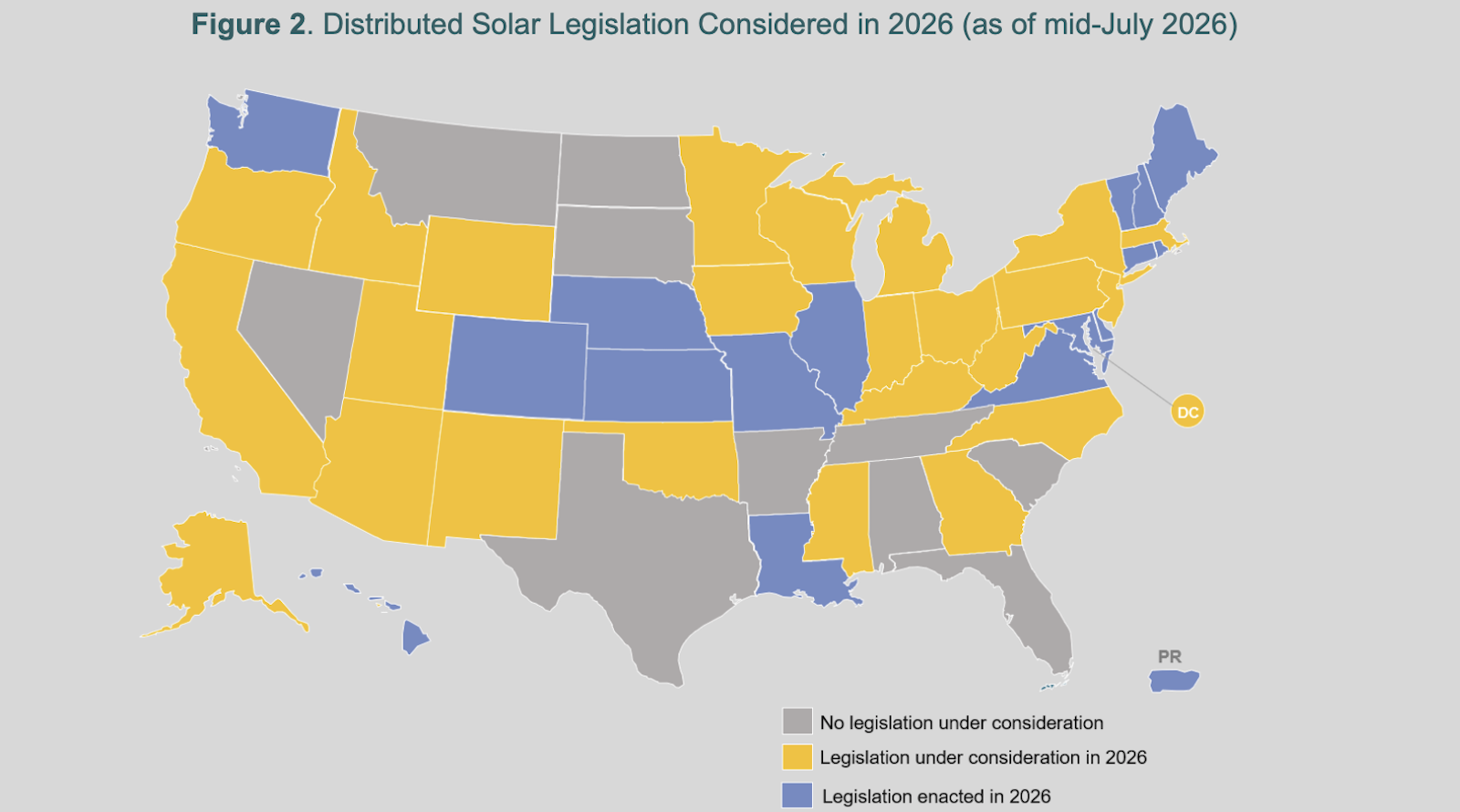
In the second quarter of 2026, solar power hit a milestone that would have seemed impossible just a decade ago: 47 different U.S. jurisdictions — 45 states plus Washington, D.C., and Puerto Rico — took concrete steps to change their solar policies. That is nearly the entire country, and the total number of actions came to 284.
The finding comes from "The 50 States of Solar" report, published quarterly by the NC Clean Energy Technology Center. The report tracks how states are shaping rules around distributed solar — the kind that powers homes and small businesses rather than massive utility plants.
The most common topic on the table was net metering, a policy that lets solar owners sell extra electricity back to the grid. Fifty-three separate actions on net metering appeared across the country. Close behind was community solar, which allows people who cannot put panels on their own roofs to invest in shared solar farms. Forty-eight actions addressed community solar.
Brian Lips, a senior project manager at the center, said one trend stood out: "This quarter saw a flood of bills addressing plug-in solar, with half of all states considering bills that would lessen the regulatory burden for these systems." Plug-in solar refers to small, portable solar panels — a technology often used in RVs, boats, and camping setups.
Other notable actions from the quarter include Connecticut lawmakers requiring new programs for both net metering and community solar, Maryland legislators adopting a successor net-metering program, and Arizona courts throwing out a utility fee that would have made it more expensive for solar customers to stay connected to the grid.
The report also highlighted a broader theme: states working to split the costs of solar programs fairly. As more customers generate their own power, regulators must decide how much non-solar customers should contribute to keeping the grid running. Rebekah de la Mora, another project manager at the center, noted that "states are using a variety of tools at their disposal to prevent cost shifting" between solar users and their neighbors.
Looking ahead, the report identifies three areas where policy activity is likely to keep growing: rules for plug-in solar devices, balancing program costs for all ratepayers, and making it easier for homeowners and public buildings to connect solar to the grid. With half the nation weighing new solar bills in a single quarter, the momentum appears only to be building.