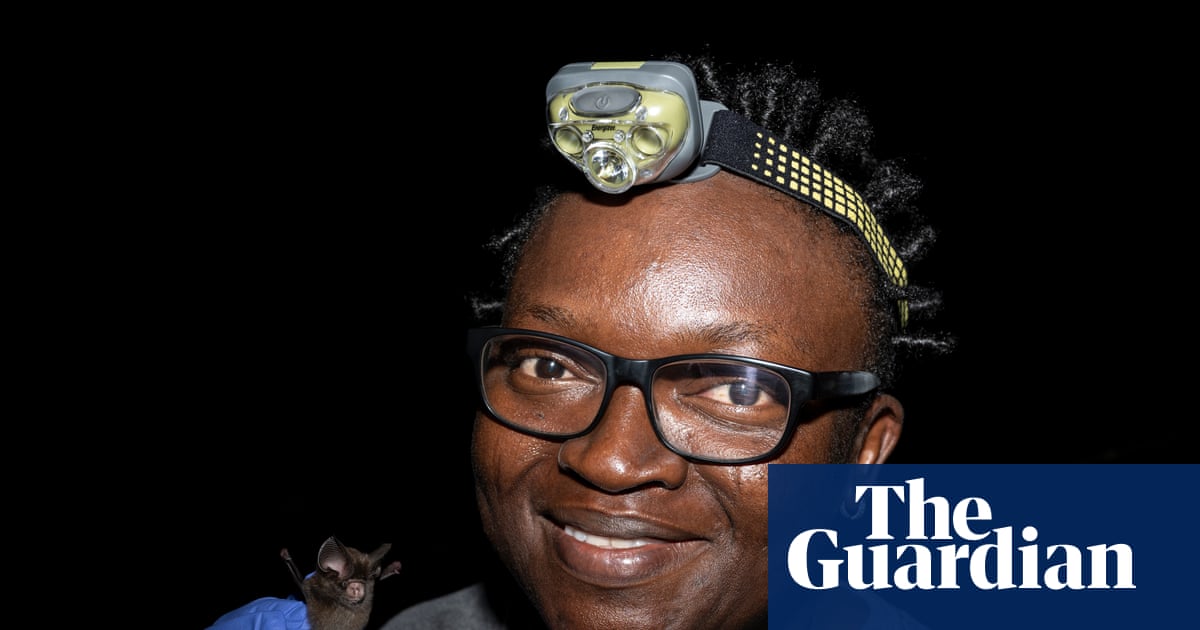
Just after sunrise in the Afi Mountain Wildlife Sanctuary, the air hums with the calls of drill monkeys and the rustle of unseen creatures in the dense Cross River rainforest. It was here, in 2016, that Nigerian biologist Iroro Tanshi held a bat so rare it had not been seen in the wild since the 1970s—a creature weighing just 5 grams, about the same as a level teaspoon of salt. As she cradled the small-eared, big-nosed bat with its intricately folded face, her identification guide confirmed what she suspected: this was Hipposideros curtus, the short-tailed roundleaf bat, a species long feared extinct. Tanshi’s discovery in the sanctuary, an area roughly the size of central Paris, revealed a fragile colony of 16 individuals—the only confirmed population still roosting today. For decades, scientists believed the bat existed only in remote caves in Cameroon and Equatorial Guinea, but deforestation and hunting had erased all known roosts by the 2010s. Tanshi’s find wasn’t just a scientific triumph; it was a lifeline. Yet, even in a protected area, the bats faced relentless threats. While local communities respected primates like gorillas and drills, bats were often hunted as bushmeat—seen as fair game despite conservation laws. In villages like Abia, 70km away, straw-coloured fruit bats are sold in bundles of four for 5,000 naira (about £2.70), treated like fish or chicken. Bats, Tanshi says, “can’t catch a break,” burdened by myths linking them to witchcraft and disease. Determined to shift perceptions, she co-founded the Small Mammal Conservation Organisation (Smacon) in 2016 with fellow biologist Benneth Obitte, launching the Zero Wildfire Campaign the following year. Through color-coded alert systems and the Forest Guardians—a local team trained to monitor and respond to bushfires—wildfire incidents in the sanctuary have plummeted over the past five years. In April, Tanshi’s leadership earned her the Goldman Environmental Prize, one of just six women worldwide to receive it that year. She’s also been named a National Geographic Explorer and Whitley Award winner. A decade on from her groundbreaking find, Tanshi—now a postdoctoral fellow at the Washington Research Foundation—remains driven by the hidden wonders of Nigeria’s forests. “Something that we thought was extinct was in this beautiful place that nobody goes to,” she reflects. Her work proves that even the most overlooked creatures can inspire a movement.
← News
Conservation Wins Conservation Wins Planet
The bat that weighs the same as a teaspoon of salt – and the biologist who rediscovered it
Short-Tailed Roundleaf Bat Species
1 Teaspoon Of Salt Weight
1970s Last seen
16 Bats Population found
Afi Sanctuary, Nigeria Location
16 bats found
40+ years missing