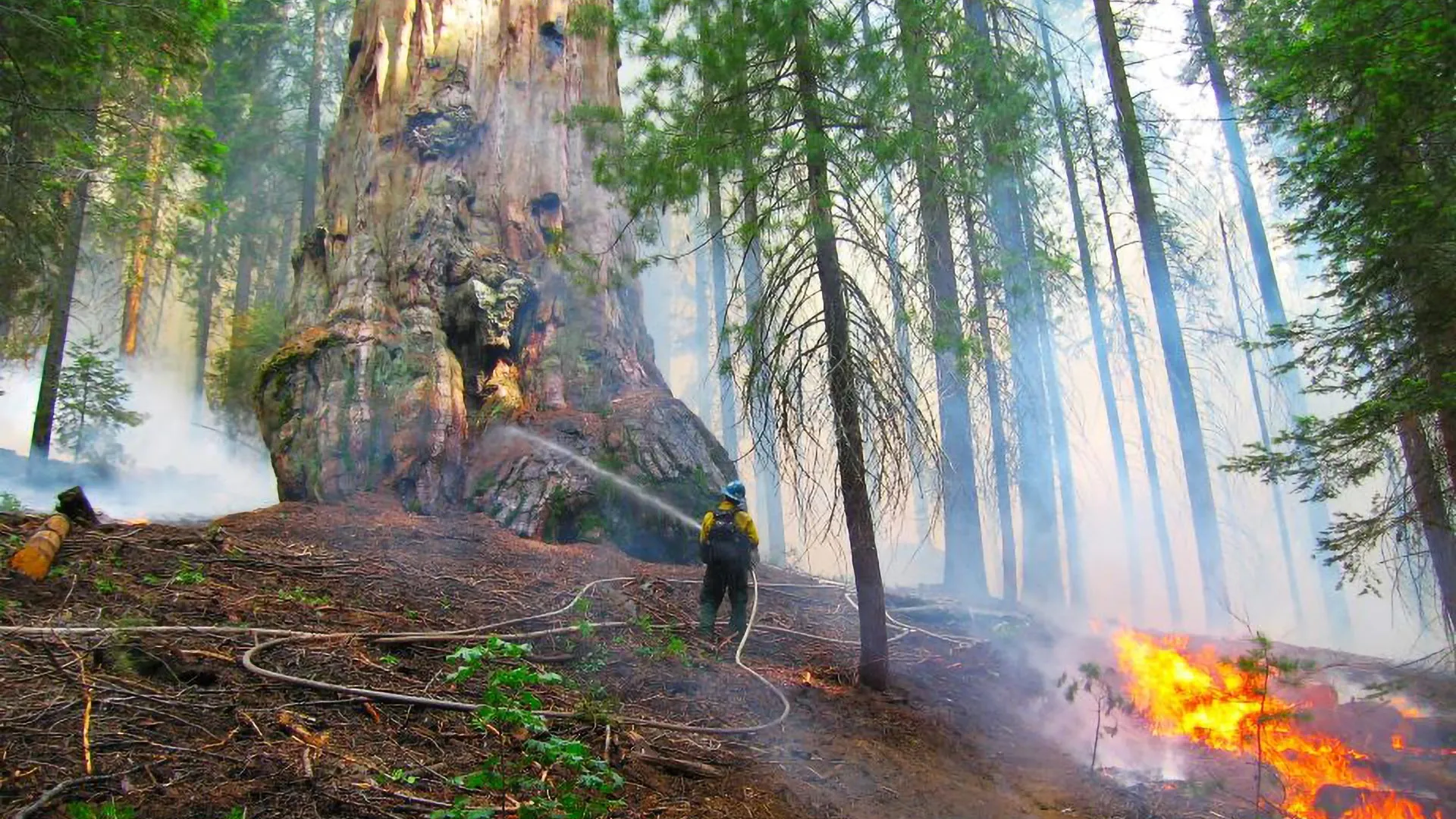
In the summer of 2020, wildfire tore through the Sierra Nevada mountains of California with a force rarely seen before. By the time the flames died down, thousands of ancient giant sequoias — trees that had stood for hundreds, even thousands of years — were reduced to blackened skeletons. Then it happened again in 2021. But a new study reveals that a simple, centuries-old practice could have saved most of them: lighting fires on purpose.
Giant sequoias are among the most remarkable living things on Earth. A single mature tree can weigh as much as 15 blue whales and live for more than 3,000 years. They grow naturally only along the western slopes of California's Sierra Nevada, in groves that have witnessed the rise and fall of human civilizations. For a long time, people assumed these giants were basically fireproof. That belief shattered when the 2020 and 2021 fire seasons proved otherwise.
"These trees live for so long and have experienced so much variability of climate, differences in wildfire, drought — they've seen it all," said Dan Dixon, a researcher at the University of California, Davis who led the study. "Having so many die in just two years was unprecedented."
What the study discovered, however, offers genuine hope. Researchers found that giant sequoias growing in areas where controlled, or prescribed, burns had been carried out in the previous decade were nearly four times more likely to survive the catastrophic wildfires than trees in untreated areas. Prescribed burns cut a sequoia's chances of dying by about 77%.
The researchers examined roughly 26,400 giant sequoias spread across 19 different groves affected by two massive wildfires: the 2020 Castle Fire and the 2021 KNP Complex Fire. Using laser-scanning technology and high-resolution satellite images, they compared trees in parts of the forest that had been deliberately burned in recent years against sections that had been left untouched for a century or more. The difference in survival rates was dramatic.
Scientists estimated that prescribed burns carried out before the disasters prevented approximately 1,900 sequoia deaths. Even more striking, another 3,900 trees might have survived if every sequoia in the affected groves had received similar treatment.
The good news is that some land managers have been practicing prescribed burning for decades. Sequoia and Kings Canyon National Parks have run one of the most extensive controlled burn programs in the country since the 1960s. That long-term effort created natural conditions for the study: a patchwork of forests with very different fire histories, giving researchers a rare real-world experiment.
Giant sequoias actually evolved alongside fire. Their thick bark shields them from ordinary flames, and periodic burning helps clear dead wood and dense undergrowth that would otherwise fuel megafires. The problem today is that decades of putting out every fire have allowed dangerous amounts of combustible material to build up in sequoia groves. When wildfires do start, they burn far more intensely than the gentle fires these trees evolved with.
The study, published in the journal Nature Communications, offers a clear path forward for protecting these living monuments. "If the goal is protecting giant sequoias, prescribed fire is an essential tool available to managers," Dixon said. With climate change making wildfires more severe each year, controlled burning may be the best way to ensure these ancient giants are still standing for generations to come.