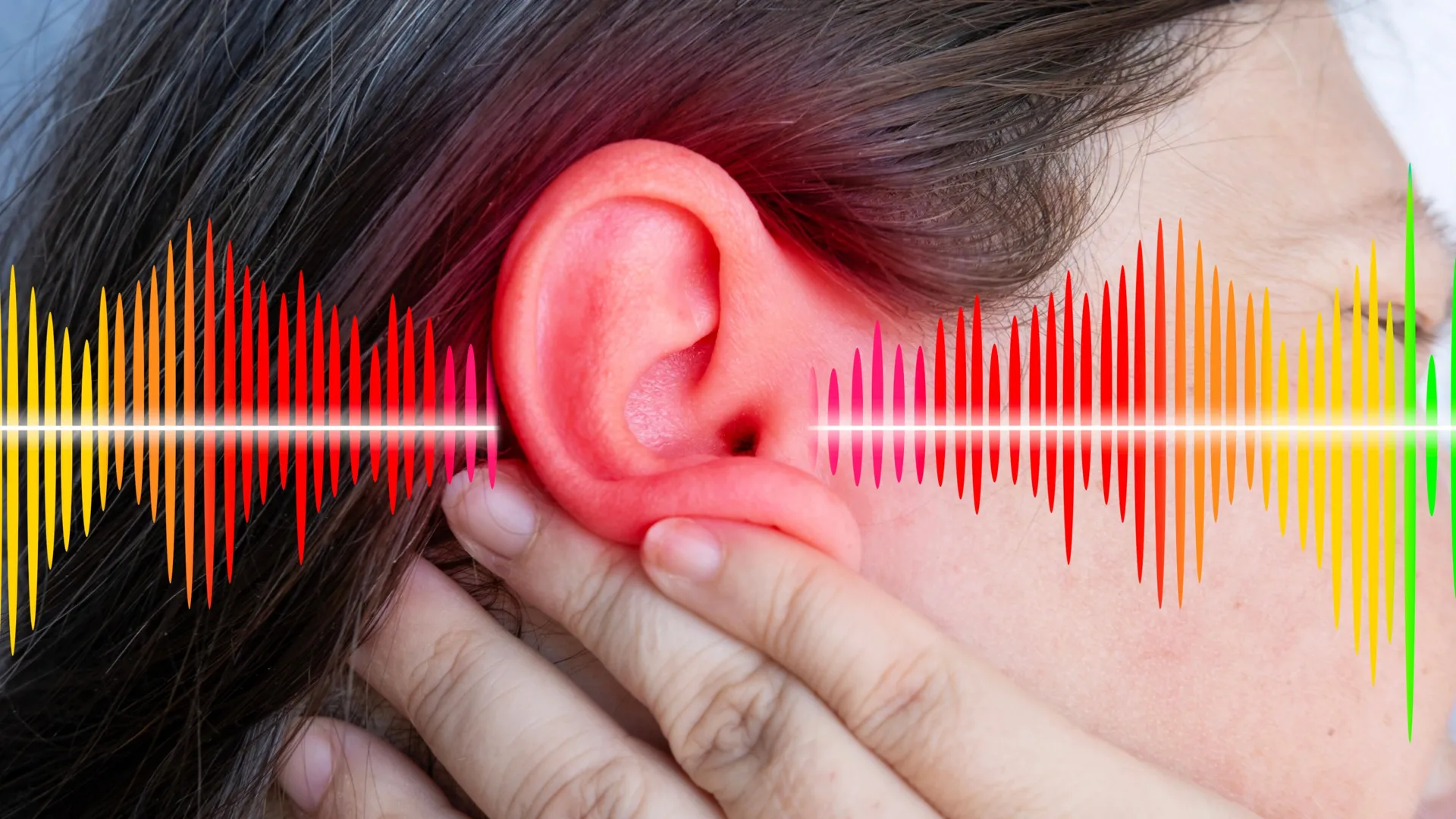
A brain circuit quietly controlling mood may also be turning up the volume on tinnitus, according to surprising new research from Oregon Health & Science University. Scientists there have identified how serotonin—the "feel good" chemical long celebrated for easing depression and anxiety—can simultaneously amplify the persistent ringing and buzzing that plagues roughly 14% of people globally.
The discovery matters because millions of people take serotonin-boosting antidepressants called SSRIs without knowing these medications might worsen their tinnitus. For someone already struggling with the condition, which ranges from mildly distracting to severely distressing, this hidden trade-off can mean trading relief from one condition for intensification of another. Tinnitus creates more than noise—it creates anxiety, disrupts sleep, and derails daily life for those affected most severely.
Working with colleagues at Anhui University in China, the Oregon team used optogenetics, a technique that uses fiber optics and light to activate specific neurons, to trace exactly how serotonin influences hearing. When they stimulated neurons that produce serotonin in mice, activity surged in the brain's auditory regions. The mice then behaved as if they were experiencing tinnitus themselves, measured through a modified auditory startle test. "When you stimulate these serotonergic neurons, we can see that it stimulates activity in the auditory region in the brain," said Laurence Trussell, co-senior author and professor of otolaryngology at OHSU. "Animals then behaved as if they were hearing tinnitus."
The findings, published in the Proceedings of the National Academy of Sciences, confirm what some patients have long reported: their tinnitus intensifies while taking serotonin-boosting medications. This isn't a reason to abandon SSRIs—psychiatric symptoms like depression and anxiety matter profoundly—but it does demand a conversation between patients and their doctors. "People with tinnitus should work with their prescribing physician to find a drug regimen that gives them a balance," Trussell said, emphasizing that clinicians must take seriously when patients report medication-linked increases in tinnitus.
The research points toward a more nuanced future. Rather than choosing between mental health relief and hearing peace, Trussell suggests developing drugs that can elevate serotonin in some brain regions while sparing others. "It may be possible to develop cell- or brain region-specific drugs that steer the elevation of serotonin in some brain regions but not others," he explained. "In that way, it may be possible to separate the beneficial and important effects of the antidepressant from the potentially harmful effects on hearing."
Co-author Zheng-Quan Tang, now at Anhui University but formerly a postdoctoral scholar in Trussell's lab, echoed that optimism. "We've suspected that serotonin was involved in tinnitus, but we didn't really understand how," Tang said. "Now we've found a specific brain circuit involving serotonin that goes straight to the auditory system. When we turned that circuit off, we were able to ameliorate the tinnitus significantly." For the millions living with tinnitus, these findings represent something rare: clarity about what's happening in the brain, and real possibility for better treatments ahead.