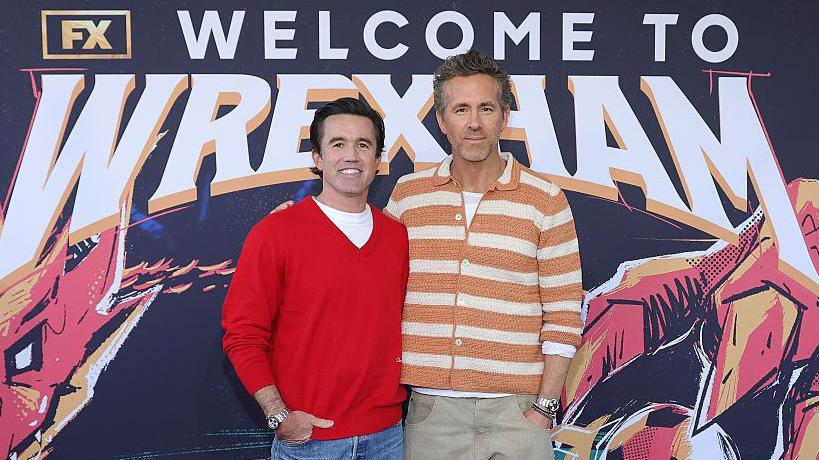
When Ryan Reynolds and Rob McElhenney took over Wrexham, a lower-league Welsh football club with little fanfare beyond its own pitch, few could have predicted that a documentary about their venture would become one of television's most-watched sports series and reshape the town's global standing.
Welcome to Wrexham premiered to modest expectations — a story about a club far removed from the Premier League's glamour hardly seemed like obvious television gold. Yet the series has evolved into something rare: a sustained cultural phenomenon that transcends sports fandom. Season 5 arrives on Disney+, FX, and Hulu on Friday, 15 May, marking the continuation of a franchise that has already won 10 Emmy Awards and secured a multi-season renewal.
The documentary's power lies not in slick production or manufactured drama, but in what Humphrey Ker, the club's director and an executive producer on the series, describes as "authenticity." Rather than presenting a tightly controlled narrative centred on match results, the series immerses viewers in the lived experience of the community — from Wayne Jones, who runs the Turf pub, to Kerry Evans, the club's disability liaison officer, to manager Phil Parkinson and his staff. These are the genuine stars audiences have come to know and trust. "It is the authenticity that keeps people coming back," Ker explains. "Lots of sports docs present a polished and anodyne version of the 'product'… I think that veracity is what got people hooked."
That emotional foundation has allowed Welcome to Wrexham to reach far beyond traditional football audiences. Academic research by Professor Jan Boehmer from the University of Michigan, who co-authored the study "Did Deadpool Save a City? The Socio-Economic Impact of Welcome to Wrexham," reveals how viewers develop personal bonds with the town itself. "They might feel as if they knew the people of Wrexham personally, making them part of the community," Boehmer notes. "It doesn't feel like marketing. It feels like a good story."
The series has become the most-watched docuseries on FX Entertainment, with less than half its audience coming from North America and the UK representing its largest secondary market. That global reach has translated into tangible economic transformation. According to Dr Christina Philippou, an Associate Professor in sport finance, the club's income has increased more than five-fold between 2022 and 2025. Commercial revenue has surged particularly dramatically, rising more than 14 times over the ownership period — a surge that far outpaces matchday income. "The Hollywood glamour in action has played a big part in pushing global appeal and bringing in global sponsors," Philippou explains.
Intriguingly, adversity has been as central to the series' appeal as success. The club's failure to secure promotion in the first season, rather than derailing viewer interest, became a crucial driver for sustained engagement. As Ker observes, "Adversity makes for more interesting television." That willingness to embrace unpredictability, to avoid the polished false narrative that most sports documentaries rely upon, may be the most important ingredient in the show's success.
The documentary's impact on Wrexham itself extends beyond balance sheets. The town has gained sustained global visibility and a newfound sense of pride. "People are very proud to see the club and the city represented this way," Ker says. "I'm honestly astonished by the lack of naysaying." That collective transformation — from underdog club to global brand, from local institution to worldwide conversation — represents something more profound than entertainment success. It is a blueprint for how authentic storytelling can reshape not just perceptions, but communities themselves.