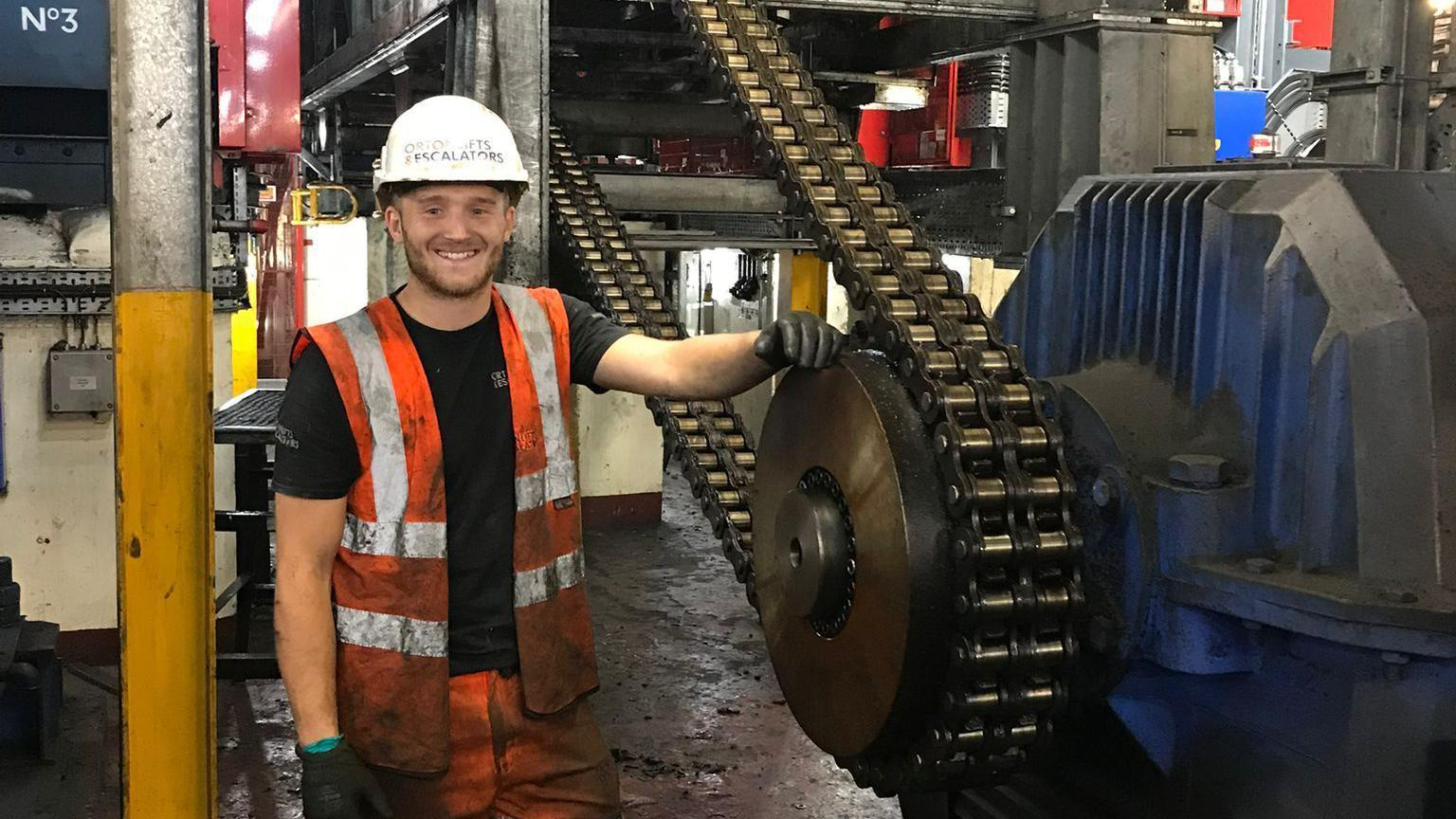
Jay Lovell is swapping his toolkit for his captain's armband this Sunday, trading the escalators of Wembley Stadium for its pitch in one of football's most unlikely crossovers. The 33-year-old escalator engineer, who maintains the moving staircases at the national stadium, will instead captain Cockfosters FC in the FA Vase final against AFC Stoneham—and he's calling in his colleagues to cover the shift he'd normally be working.
For most people, playing football at Wembley is a once-in-a-lifetime dream. For Lovell, it's a collision between two worlds. As an engineer for the company responsible for installing and maintaining Wembley's escalators, he's usually required on site during major events in case anything goes wrong. This Sunday, something wonderful is going wrong with the schedule: he'll be lining up for Cockfosters instead, the north London club he captains, with the entire crew—colleagues included—coming to watch.
Lovell's journey to the final has been gruelling. Cockfosters, competing in the Spartan South Midlands League Premier Division, have played more than 60 games across all competitions this season, including a particularly brutal 11 matches between April 4 and May 4. The father-of-two has juggled it all—the day job, the commute home, then back out again for evening matches. During one December fixture, the temperature dropped to minus 1 Celsius, rain pelting his face, and he found himself wondering why he wasn't at home watching television instead. Yet he kept showing up.
"We do it for the love of the game," Lovell told BBC Sport with quiet conviction.
To reach the final, Cockfosters beat Kent-based Punjab United 3-1 over two legs in last month's semi-finals. Now they face AFC Stoneham, representing the Hampshire town of Eastleigh, in what will be the Spartan South Midlands League side's first FA Vase victory if they can pull off the upset. Lovell is acutely aware of the gap between his team and higher-tier competitors. "Comparing us to even the Conference South level is ridiculous," he explained. "We might be getting paid a bit of money, but we don't have half the recovery available as what they do. Our training is probably a lot different."
The real testament is that Cockfosters managed eight games in fourteen days near the season's end, rotating from a bigger squad to keep legs fresh. Most professional clubs would struggle with that schedule; these players managed it while maintaining day jobs and ordinary lives.
When Lovell walks out of that tunnel on Sunday as captain, he'll join a small, illustrious group—though he's quick to deflect the comparison. When someone mentioned his name alongside Steven Gerrard and Wayne Rooney, former captains who've led teams at Wembley, Lovell was genuinely taken aback. "Don't put me in the same category as those two!" he said.
Yet there's something undeniably special about what he's about to do. In an age where football at the grassroots is increasingly squeezed by time, money, and competing demands, here's a man who chose to show up, season after season, in rain and frost, before clocking out from his day job. Sunday isn't just the pinnacle of his playing career—it's vindication for every decision to keep going.
"I don't think you can beat it," Lovell said of playing at Wembley. "It's the pinnacle, isn't it?"