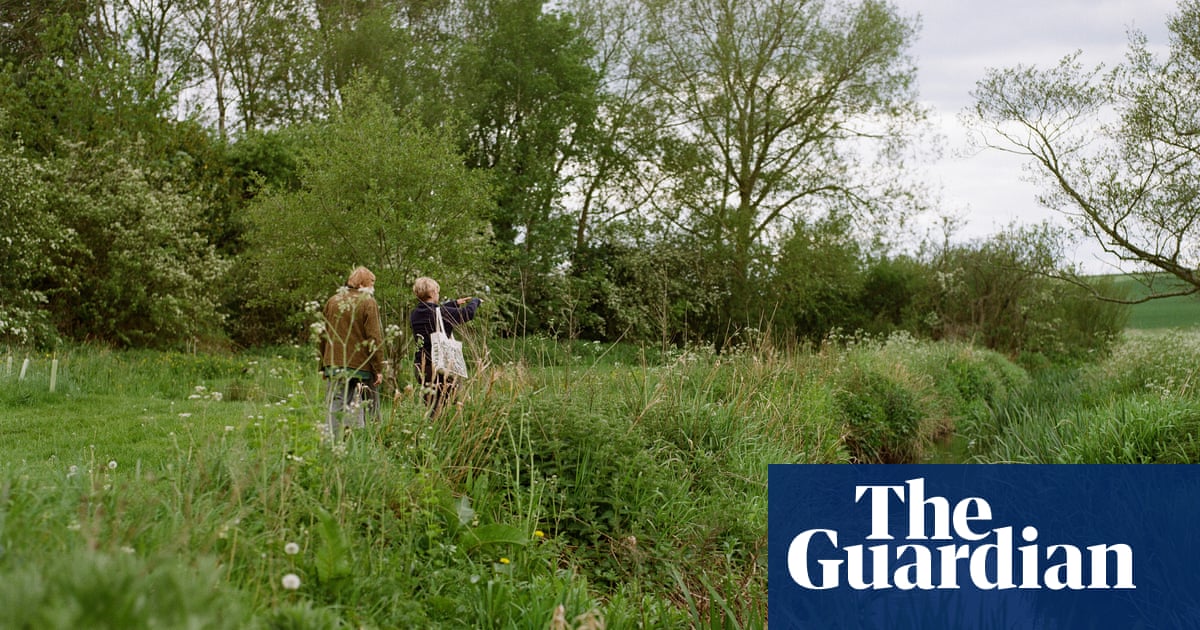
Ruth Needham's phone glints in the spring sunshine as she captures shoals of fry darting through riffles on the Mease, a 27-kilometre lowland river in England's Midlands. Those tiny fish would have been unimaginable here a decade ago. Last month, the Mease won the UK River Prize 2026, marking a remarkable turnaround for a waterway that had been devastated by 150 years of human engineering designed to squeeze every drop of productivity from the landscape.
The story of the Mease is the story of Britain's rivers writ small. For centuries, agricultural priorities turned these living systems into mere drainage channels. The Mease rises in Leicestershire, passes through south Derbyshire and Staffordshire, and flows into the River Trent at Croxall, meandering through farmland where more than 400 farmers work the land. Over decades, the river was straightened, deepened, and channelled through engineered ditches and weirs. Water that naturally spreads across floodplains was forced into a straitjacket, causing sediment, soil, and phosphates to wash directly from fields into the river. Algal blooms bloomed, strangling the water of light and oxygen. Two rare species—the spined loach and the European bullhead, which made the Mease a designated site of special scientific interest—barely survived.
In 2013, the Trent Rivers Trust (TRT), led by Needham, launched a restoration campaign that turned the logic of land management upside down. Instead of asking farmers to drain better, they asked them to drain less—to surrender the obsession with control and let rivers reclaim their natural character. "Water needs space," Needham explains simply. "For too long, water has been seen as a problem: drain it, dredge it, get it away."
The shift required more than philosophy. It required farmers to leave buffer strips of land untilled, to abandon the straightforward efficiency of agricultural sprawl. Trust takes time to build, and compensation had to flow through government environmental land management schemes. Yet 111 farmers have now signed on, covering just over half of the Mease's catchment area.
At Culloden Farm in Leicestershire, where Jo and Tony Thorp raise dairy cows and make ice-cream, a tributary of the Mease was transformed. Instead of being diverted into ditches, the water now meanders as a natural stream across the field, slowing down pollutants before they reach the river and creating a wetland bursting with life. Even in its first year, the restoration is working visibly. Reed buntings, little ringed plovers, yellowhammers, and green woodpeckers now nest here—species thought lost to intensive farming.
The ripple effects stretch far beyond Leicestershire. As climate change intensifies flooding in lowland agricultural regions, the Mease shows an alternative to the century-old playbook of faster drains and higher banks. By slowing water's journey, capturing its nutrients, and letting it spread naturally, the river begins healing itself. The fish return. The rare species recover. Downstream communities face fewer catastrophic floods.
"If we can get the Mease into better condition," Needham says, "we can improve other rivers, too." Her confidence isn't mere optimism. It's rooted in 13 years of patient work, 111 farmers choosing a different path, and those fry darting through clean water once more.