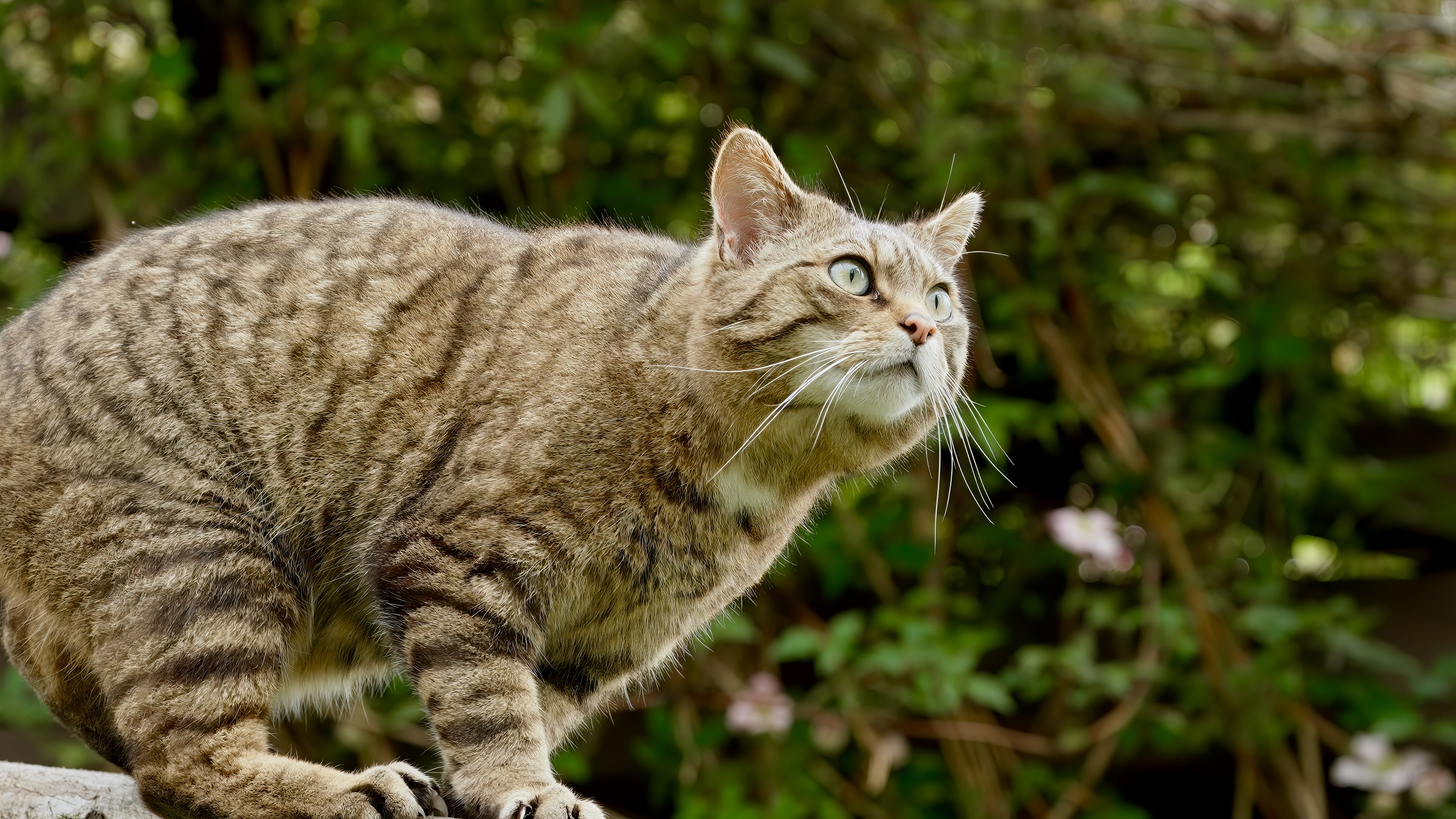
In the Lusatian Mountains of the Czech Republic, two wildcats named Jonáš and Tonka have quietly rewritten what seemed like a finished story. The male and female pair represent the first European wildcats recorded in that region in nearly a century—and Tonka has since given birth to at least three kittens, a small miracle for a species once thought lost to these forests forever.
The European wildcat's disappearance was never dramatic. Roughly the size of a large housecat, Felis silvestris slipped out of sight gradually, driven by habitat loss, hunting, and the relentless spread of domestic cats across Europe. The species survives across the continent and carries a "least concern" designation on the IUCN Red List, a label that masks a far more complex reality: somewhere between genuine recovery and genuine extinction, depending entirely on where you look.
In parts of Central Europe, the story is genuinely hopeful. Germany and France have demonstrated what becomes possible when habitat protection, legal safeguards, and time align. As forests recover and hunting pressure falls, wildcats are moving back into territories their ancestors abandoned. Italy has seen enough progress that the species was downlisted nationally. The sight of Jonáš and Tonka raising kittens in the Lusatian Mountains belongs to this chapter of restoration—proof that ecosystems can heal and species can return.
But the European wildcat is not one conservation story; it is several, each with its own trajectory. In Scotland, the picture darkened into crisis. The wildcat was declared functionally extinct in the wild in 2018. Now, a breeding and release program in Cairngorms National Park is attempting something far harder than managing a recovering population—rebuilding one from scratch. Forty-six captive-bred wildcats have been released as part of the effort, a patient intervention that shows what happens when attention arrives late.
Portugal faces a similar cliff edge. Somewhere around 100 animals remain, and their numbers are still declining. In southern Spain, fragmented wildcat populations are besieged by roads, disease, prey scarcity, and a lack of official recognition of their precarious status.
One threat haunts recovery efforts across the continent: hybridization with domestic cats. In some landscapes, genetic mixing remains limited. In others, it threatens to dissolve the distinction between wildcat and housecat entirely, erasing a species even as living animals remain. A more immediate danger comes from the roads themselves. One European study found that collisions with vehicles were the leading cause of recorded wildcat deaths—a banal, relentless killer that few people notice.
The paradox is hard to escape. A species can appear secure when measured at the continental level while vanishing locally, region by region. For the European wildcat, this means the recovery cannot stop at symbolic victories. It demands connected habitat that allows populations to move and interbreed, better monitoring to catch declines before they become irreversible, management of feral cats that compete with and hybridize with wildcats, and protective action before reintroduction becomes the only option left.
Jonáš and Tonka show that recovery is still possible. Scotland shows the cost of waiting.