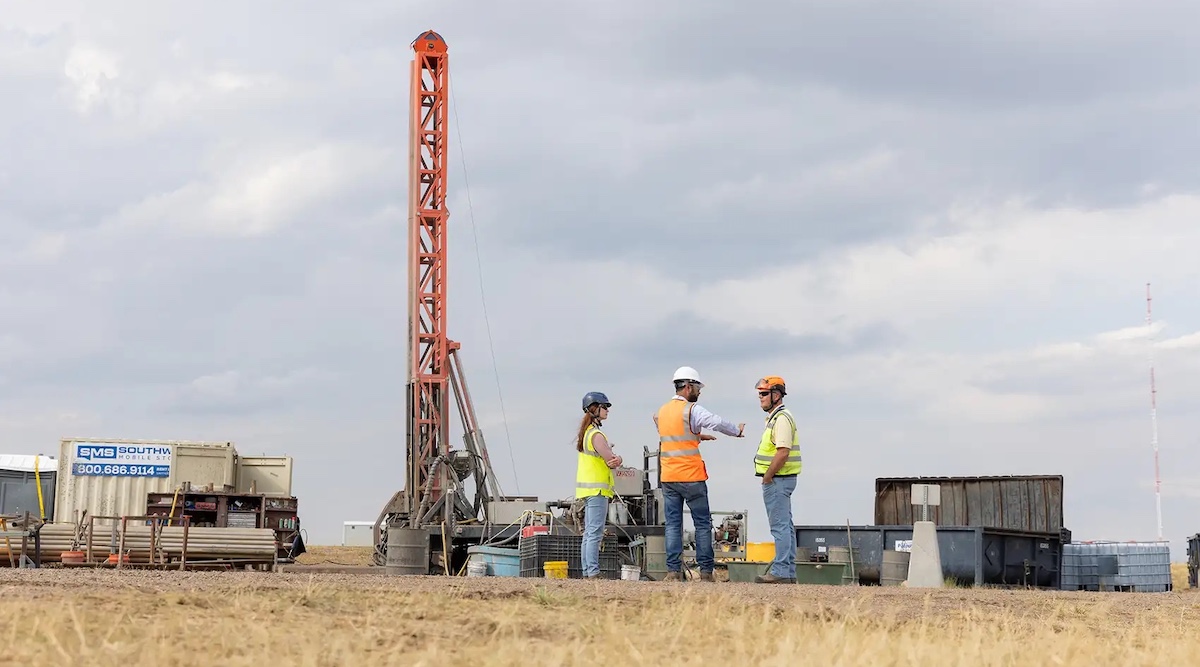
Back in 1970, a team of Russian engineers started digging a hole so deep it would become the deepest human-made hole on Earth. Two decades later, after reaching more than 7.5 miles beneath a red-tinged Russian tundra, they finally had to stop. At that depth, temperatures had climbed above 350 degrees Fahrenheit. Rock behaved more like honey than stone. Drills got stuck. Equipment shorted out. The team ran out of money. The Earth, it seemed, had finally won.
But here's the hopeful part: engineers haven't given up on reaching those scorching depths. And now, researchers at the National Laboratory of the Rockies have built new tools that could finally crack the code on drilling into the planet's extreme underground heat.
Geothermal energy—heat trapped beneath Earth's surface—currently accounts for just 1 percent of the United States' total energy generation. That sounds small. But experts say the potential is anything but. Resources found less than three miles underground could generate about 42 terawatts of power over 20 years, according to research cited by the lab. That's more than double the energy demand of the entire planet. And if companies could dig even deeper? The International Energy Agency estimates that figure could rise to 550 terawatts.
The problem is getting there without going broke. Deep underground, super-hot temperatures destroy ordinary wires. Hard rock chews through drill bits. Tight spaces limit what kind of equipment can fit. One Norway project recently managed to drill six miles below the surface, but many companies struggle to go even a fraction of that depth profitably.
That's where the National Laboratory of the Rockies comes in. Its researchers have created three new technologies already available for companies to license today. One of the most promising is a high-temperature alternator—a device that transforms mechanical energy into electricity and can function reliably in temperatures up to nearly 500 degrees Fahrenheit.
Currently, many geothermal companies must send electricity down through wires that dangle into the well. But those wires fail quickly in extreme heat, lose energy over distance, and cost a fortune to replace. The new alternator instead generates electricity right at the drill bit using the steel drill string itself, which rotates as it digs. Because steel holds up well in harsh conditions, companies could drill deeper and faster without constantly pulling dead equipment back to the surface.
Companies can browse thousands of licensable technologies from U.S. Department of Energy national laboratories on the Lab Partnering Service website. Those wanting hands-on help can also partner directly with the lab to access its researchers and facilities.
So while the Kola Borehole project stalled decades ago, the dream of tapping Earth's deepest heat is very much alive—and getting closer to reality every day.