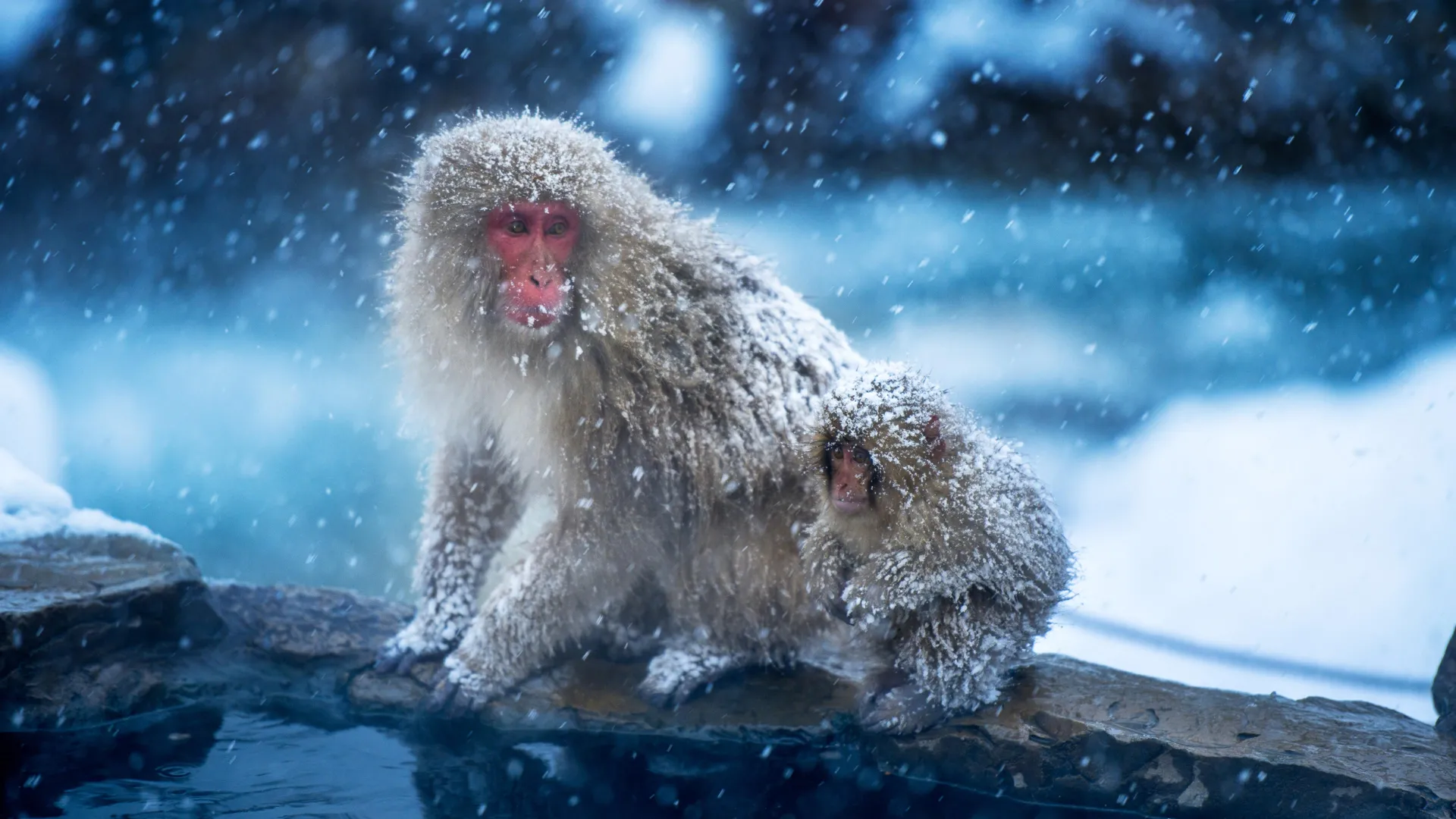
Teilhardina, a tiny primate no heavier than a sheet of paper, scampered across a frost-dusted forest floor in North America 56 million years ago—a world away from the steamy jungles we long imagined as our ancestral home. This 28-gram pioneer, barely larger than today’s Madame Berthé’s mouse lemur, was one of the first primates to walk the Earth, and new research reveals it did so not in tropical warmth, but in cold, dry, and highly variable climates. For decades, scientists assumed primates evolved under the lush canopies of equatorial forests, drawn by the fact that most living primates—from gorillas to tamarins—now inhabit the tropics. But a groundbreaking study led by Jorge Avaria-Llautureo at the University of Reading challenges this narrative, using fossil pollen and spore data to reconstruct ancient climates where early primates lived. The evidence points decisively to North America as the cradle of primate evolution, a region that at the time experienced seasonal cold and dramatic shifts between wet and dry periods.
This revelation reshapes our understanding of human origins. Rather than thriving in stable warmth, our earliest ancestors evolved under pressure—facing food scarcity, temperature swings, and environmental instability. These challenges likely drove key adaptations: grasping hands with fingernails instead of claws, high mobility to track resources, and possibly even hibernation behaviors akin to modern dwarf lemurs. Teilhardina and its kin dispersed rapidly from North America to Europe and China, not because the world was warming, but because they were uniquely equipped to survive in unpredictable conditions. Crucially, the study finds that rapid climate fluctuations—not warmer temperatures—were the engine of primate evolution.
Today, this deep-time perspective carries urgent lessons. With over 60% of primate species now threatened with extinction, their ability to adapt is being tested once again. But unlike in the past, today’s primates face barriers: deforestation fragments their habitats, bushmeat hunting depletes populations, and climate change accelerates faster than ever. Without the freedom to move and evolve, even the most resilient lineages may not survive. The same forces that forged our ancestors are now working against us. Yet understanding this history offers a path forward—not just for saving lemurs, monkeys, and apes, but for securing the future of our own species. As the planet changes, our survival may once again depend on adaptability, mobility, and the courage to confront an uncertain world.