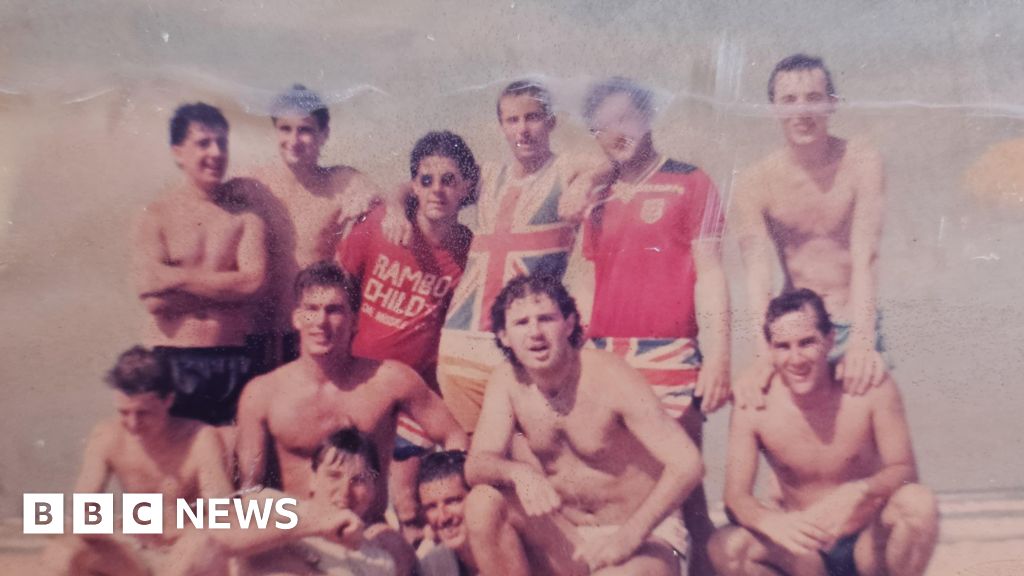
When five unemployed Wolverhampton Wanderers fans boarded a plane to Mexico's 1986 World Cup, they thought they were taking a two-week escape from the economic hardship of Thatcher-era Britain. They were wrong—forty years later, they're still gone, and their decision to stay has become the subject of a BBC documentary that celebrates one of life's most extraordinary detours.
The story begins in the depths of recession. Gary Allen, known to his mates as Adder, was among the group of men from Stourbridge and Lye in the West Midlands who had lost their jobs. Football provided the escape route: attending the World Cup 5,000 miles away in Mexico seemed like the ultimate adventure for working-class lads with nothing to lose. They flew to Houston, made their way to Monterrey, and stepped into heat so intense that Allen described it simply as "insane." None of them spoke Spanish. Some didn't even know which language was spoken there.
What happened next changed everything. The World Cup was, as Allen told the BBC, "the best thing we'd ever seen." But more than that, Mexico showed them a glimpse of possibility. After the tournament ended, instead of heading home, the group pressed north to Dallas and beyond. In Texas, they discovered something more powerful than nostalgia: opportunity. "You could get a job anywhere," Allen recalled. "I had three jobs in the first three or four weeks."
The five became fixtures in America. Adder (Gary Allen) settled in Atlanta, where he eventually built his own company before retiring last year. Rabbithead (Garry Hardwicke), Batesy (Stuart Bates), Arnie (David Arnold), and Texas Steve (Steve Dawson) scattered across Texas and beyond, each carving out a new life. They found work easily. They met their wives. Dawson called it "the funnest summer of my life"—a summer that never ended.
The documentary, Lost Down Mexico Way, directed by Jack Leigh of production company Eight Engines, captures not just the improbable adventure but the friendship that bound these men across four decades. Allen admits to homesickness in the early years, particularly for Stourbridge. Yet he never looked back. "The jobs were here, the money was here, we all got wives here," he said. "Everything here was 10 times better than we had in Stourbridge, but I miss Stourbridge like I wouldn't believe."
What struck Leigh about Allen's initial pitch was its authenticity. Among hundreds of documentary inquiries, this one stood out because of something harder to quantify than a premise: the genuine warmth of the storytellers. "They're just working-class lads, going on this truly incredible adventure," Leigh said. "I just think there's such a level of charm to the guys, and they're so relatable."
Today, the bonds forged in that pivotal summer remain unbroken. Allen visits Houston and Dallas once or twice a year to see Batesy and Steve, and they still talk on landlines—a detail that says everything about men who chose to stay connected across decades and geography. Their story is a reminder that sometimes the best decisions are the ones we don't plan for, made by people with nothing left to lose and everything to gain.