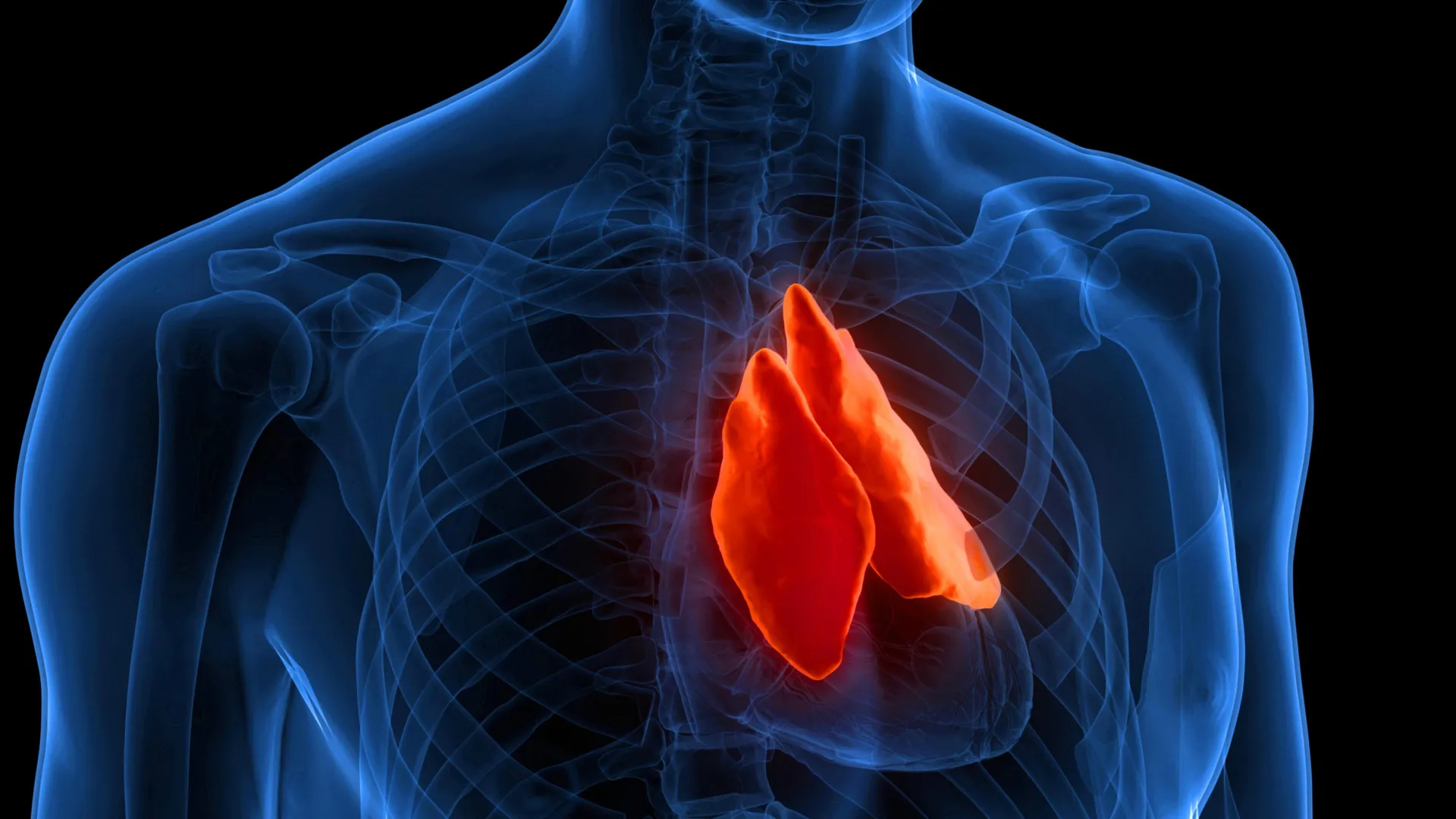
A small organ tucked in the chest, overlooked by medical science for decades, may hold the key to understanding why some people live longer and healthier lives than others. Researchers at Mass General Brigham in Boston have discovered that the thymus—long dismissed as important only in childhood—plays a crucial role in adult longevity and disease resistance, challenging assumptions that have shaped medical thinking for generations.
The thymus trains T cells, immune soldiers that defend the body against infections and cancer. Because it gradually shrinks after puberty, scientists assumed it became largely irrelevant in adulthood. But two new studies published in Nature suggest this assumption was profoundly wrong. Using artificial intelligence to analyze more than 25,000 CT scans from adults in a national lung cancer screening trial and the Framingham Heart Study, researchers measured thymic size, structure, and composition to create a "thymic health" score—and the results were striking.
Adults with healthier thymuses experienced dramatically better outcomes. Those with higher thymic health scores had roughly 50% lower risk of death from any cause compared to those with poorer thymic health. The protection extended specifically to cardiovascular disease, where healthier thymuses corresponded with a 63% lower risk of death. For lung cancer, the reduction in risk was 36%. These associations held strong even when researchers accounted for age and other health factors, suggesting thymic health operates as an independent predictor of longevity.
The mechanism appears to work through T cell diversity. As the thymus declines, the body produces fewer varied T cells, making it harder for the immune system to recognize and respond to new threats. "The thymus has been overlooked for decades and may be a missing piece in explaining why people age differently, and why cancer treatments fail in some patients," said Hugo Aerts, PhD, director of the Artificial Intelligence in Medicine Program at Mass General Brigham and corresponding author on the papers.
The research also revealed something actionable: certain lifestyle factors erode thymic health. Chronic inflammation, smoking, and higher body weight all correlated with poorer thymic scores, suggesting that the immune system's resilience over time may depend on modifiable choices. Whether changing these factors can directly improve thymus function remains an open question requiring further study.
Perhaps most intriguing is what the thymus reveals about cancer treatment. In a separate analysis of over 1,200 cancer patients receiving immunotherapy, those with healthier thymuses responded better to treatment. Patients with stronger thymic health had about 37% lower risk of cancer progression and 44% lower risk of death, even after accounting for tumor type and treatment differences. This suggests that a forgotten organ may hold the secret to why some patients benefit from cutting-edge cancer therapies while others do not.
The researchers emphasize that considerable work remains. The imaging technique for measuring thymic health is not yet ready for routine clinical use, and larger studies must confirm these findings. The team is investigating whether radiation exposure during cancer treatment might damage the thymus and affect outcomes. But the direction is clear: the thymus deserves renewed attention. Understanding and monitoring this organ could eventually transform how physicians assess disease risk, predict who will live longest, and guide treatment decisions for cancer and other serious conditions.