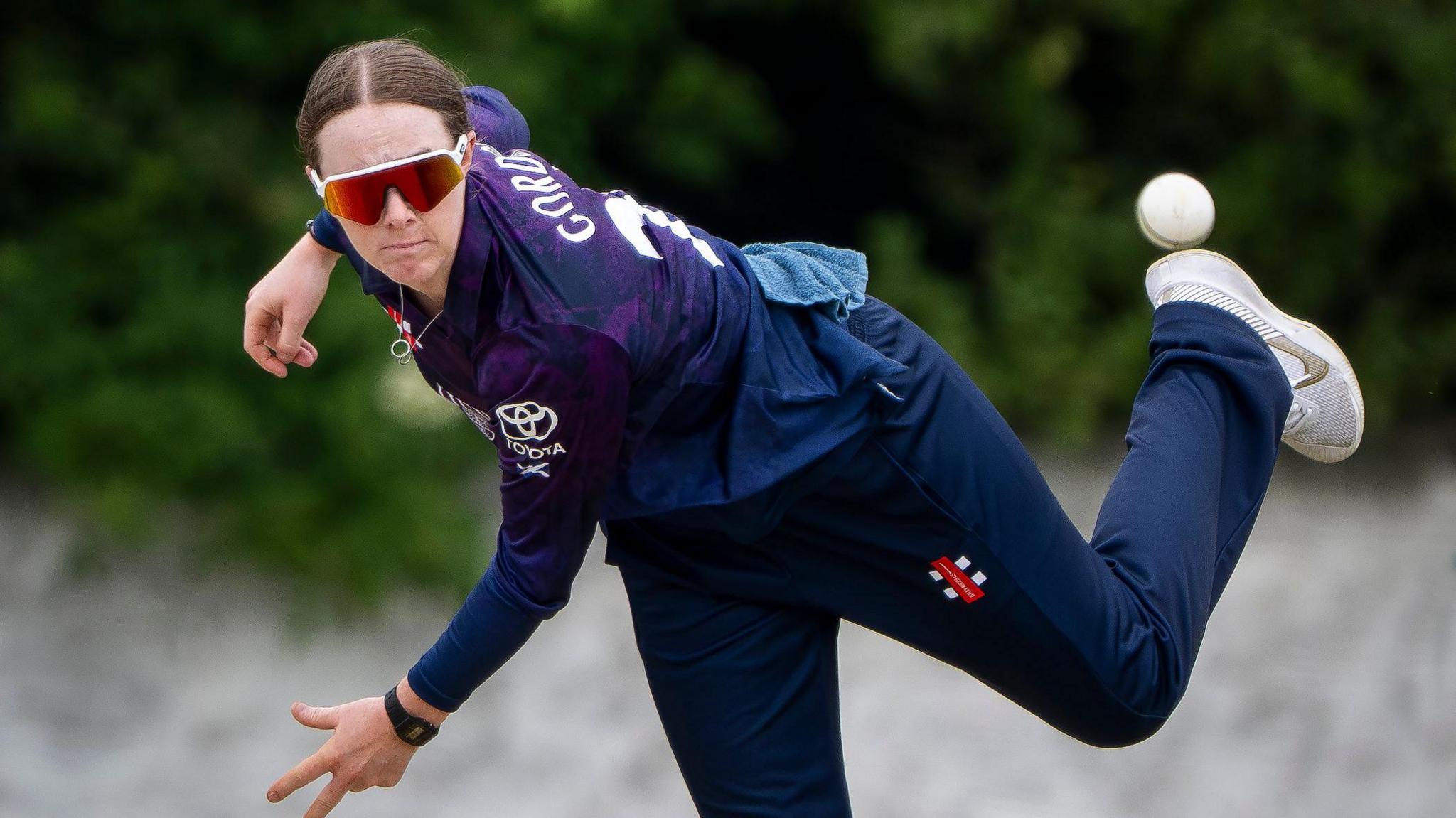
Kirstie Gordon sits on the steps of Edinburgh's Grange pavilion on a sun-soaked afternoon, seven years removed from the choice that nearly cost her international cricket. In 2018, the left-arm spinner made the difficult decision to pursue a full-time career with England's professional system, abandoning her Scotland eligibility to sign with Loughborough Lightning. It worked—she was called to the 2018 T20 World Cup, earned a Test cap against Australia in 2019, and represented one of England's brightest talents. Yet something was always pulling at her: the country of her birth, and the knowledge that she had walked away from a dream half-finished.
The landscape of women's cricket in Scotland has transformed so dramatically since Gordon's teenage years—when she would drive across the border in a minibus, skip school on Mondays, and play without professional contracts—that it made her reconsideration possible. In December 2023, the ECB changed its rules, allowing Scots to maintain professional contracts in England while playing international cricket for Scotland. That shift opened a door Gordon thought had closed. A back injury delayed her return, but by early 2025 she was ready. Now, at 28, she is preparing for her second T20 World Cup—this time with the country she never stopped thinking about.
"It feels like it's been a long time coming," Gordon said after starring in her Scotland comeback, taking 3-27 against the Netherlands in March 2025. The decision to return had been years in the making, she explained, and required "a number of years" of consideration before she felt the moment was truly right. Head coach Craig Wallace's passion for Scotland's cricket project became the final catalyst. "His passion shone through and I thought it was a project I want to be involved in," she reflected.
What makes Gordon's return so symbolically important is what it represents about the professionalization of women's cricket in Scotland. The majority of Scotland's squad now holds either central contracts with Cricket Scotland or deals with English counties—a seismic shift from the era of volunteer-driven operations. "It's chalk and cheese," Gordon said of the transformation. "The level of professionalism around this group is so good. It's credit to the people around it and the investment made."
Scotland's recent tri-series victory over Bangladesh and the Netherlands in Edinburgh suggested the investment is paying dividends. The squad, led by talismanic captain Kathryn Bryce and featuring exciting talents like Katherine Fraser and Gabriella Fontenla, looked well-coached and tightly knit. Gordon will compete in a World Cup group alongside hosts England, defending champions New Zealand, Ireland, Sri Lanka, and West Indies—starting her tournament against Ireland at Old Trafford on Saturday. The top two teams progress to the semi-finals.
What Gordon may not have anticipated when she left Scotland in 2018 was that her childhood friends Kathryn and Sarah Bryce would follow similar career paths, eventually ending up alongside her playing for England's Blaze and now reuniting with her in the Scotland setup. "To be back playing with two of my best mates was a huge driving force," she said. That reunion, combined with the tangible professionalism now surrounding Scottish women's cricket, suggests that Gordon's chapter with her native country is far from over—and that this time, Scotland has the resources to make it a triumphant one.