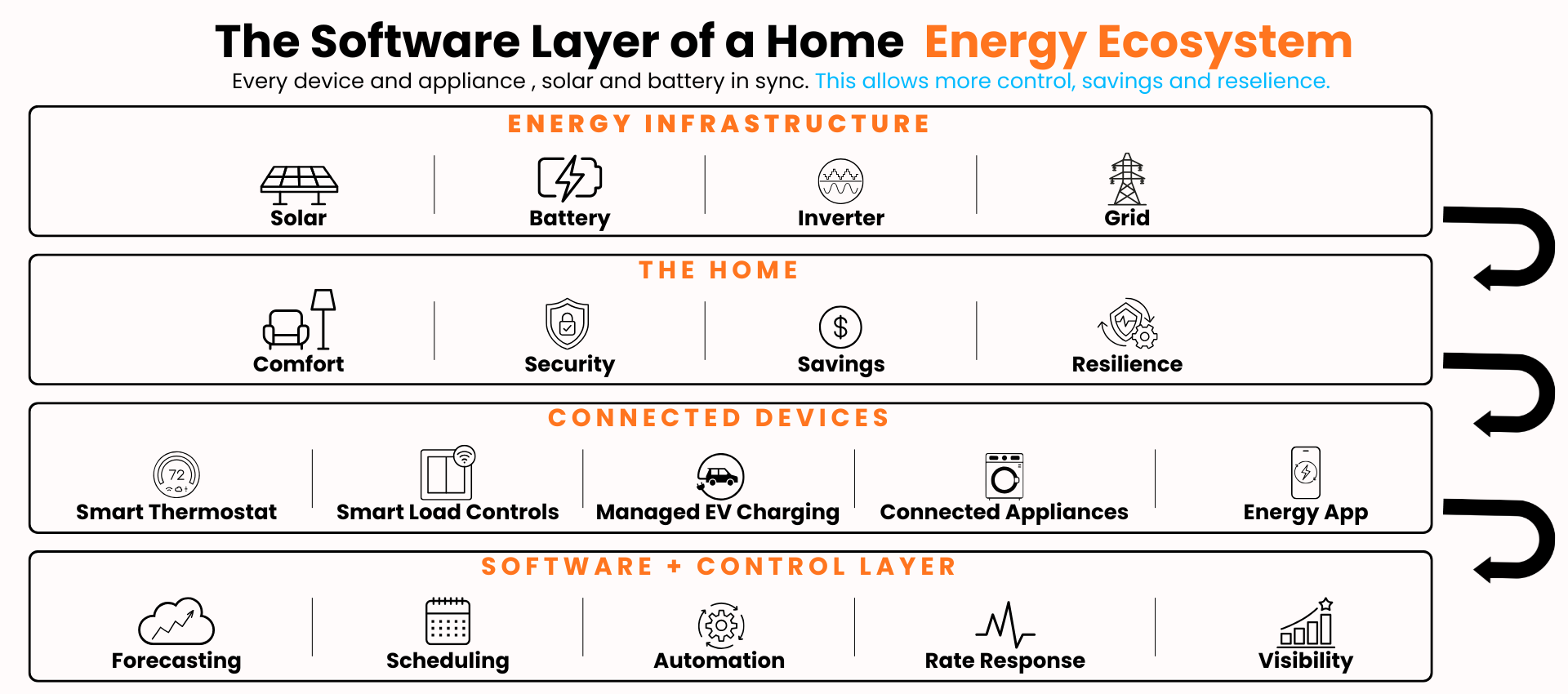
In garages and on rooftops across the country, individual energy upgrades are quietly merging into something far more powerful: intelligent, coordinated home ecosystems that think for themselves.
The shift marks a fundamental change in how American households approach electricity. Where once a homeowner might install solar panels or a smart thermostat as standalone improvements, the future demands they work together. Heat pumps replace furnaces while EV chargers sit in driveways. Induction ranges, connected appliances, and energy storage systems reshape daily electricity use. The magic happens not because of any single device, but because they communicate—solar generates power, batteries store it, and smart controls decide which loads deserve priority when energy is scarce.
This matters because the value of such a system transcends the sum of its parts. A well-designed home energy ecosystem can use more of the solar power generated on-site, protect the circuits that matter most during outages, extend battery runtime, manage large electric loads intelligently, and adapt as rates and grid conditions shift. The foundation, though, is not a product list. It begins with a single question: What does this home actually need to do?
For some households, the priority is lowering monthly bills. For others, it is keeping a refrigerator, internet connection, lights, heating, medical equipment, or water pump running when the grid fails. Some families want to store solar energy for evening use or prepare for time-of-use rates. Others anticipate adding an electric vehicle or heat pump in years to come. Once those priorities are clear, the building blocks fall into place: solar for generation, battery for storage, smart controls for orchestration, and sometimes a backup generator for an additional safety layer.
Large electric loads demand special attention within this ecosystem. Heat pumps, electric water heaters, induction ranges, dryers, and EV chargers can drain stored energy quickly. During an outage, protecting the circuits that keep a home safe, comfortable, and functional typically delivers more value than supporting every load simultaneously. A well-considered energy plan answers concrete questions upfront: What must stay on? What can wait? How long should backup power realistically last? Which large loads should respond automatically to changing conditions?
The real sophistication emerges in what experts call the software layer—the invisible intelligence that makes separate devices function as a unified system. A smart thermostat like Ecobee can preheat or precool a home when electricity rates drop, then adjust when rates climb, without homeowners managing every decision manually. Battery and inverter controls decide when to store energy and when to release it. Load controls can pause an EV charger or water heater when battery power runs low. An energy app gives homeowners visibility without requiring constant intervention.
This is where the home becomes genuinely intelligent without becoming complicated. The payoff arrives as true energy optionality—the ability to maneuver when rates spike, when outages strike, or when a household later adds an electric vehicle or heat pump. A home equipped with solar, batteries, smart controls, and connected loads is no longer trapped by a single energy strategy. It adapts.
For homeowners considering these upgrades, the message is clear: begin not with equipment, but with purpose. The future of home energy belongs to those who design systems around what their homes actually need to accomplish.