When 26-year-old ranger Shantie Ramdewar patrols the rainforest near her home in Suriname’s Central Suriname Nature Reserve, she moves quietly, eyes scanning for signs of illegal logging or gold mining. "This forest is our life," she says, "and we’re not ready to lose it." Her vigilance echoes across a country where more than 90% of the land remains cloaked in dense tropical forest — a rare and vital stronghold in the Amazon Basin. Suriname, a slender nation on the northeastern shoulder of South America, is one of the last places on Earth that absorbs more carbon dioxide than it emits, making it a true net carbon sink at a time when most countries are struggling to reduce emissions.
This ecological resilience is no accident. Suriname’s rainforests have been preserved in large part due to low population density, limited industrial development, and the stewardship of Indigenous and Maroon communities, descendants of escaped enslaved Africans who have lived in the interior for centuries. Yet, that balance is now under pressure. A surge of proposed development projects — including large-scale agriculture, new Mennonite farming settlements, and expanded gold and bauxite mining — has ignited fierce debate over the future of the country’s forests.
In 2023, the government advanced land-use plans that could open up thousands of hectares in the interior to agriculture and mining, drawing concern from environmental advocates. At the same time, Suriname has positioned itself at the forefront of carbon market initiatives, signing a $17.5 million agreement with the United States under the Amazon Fund to support forest conservation. While such programs promise financial incentives for keeping forests intact, critics warn they could sideline local communities if not implemented transparently.
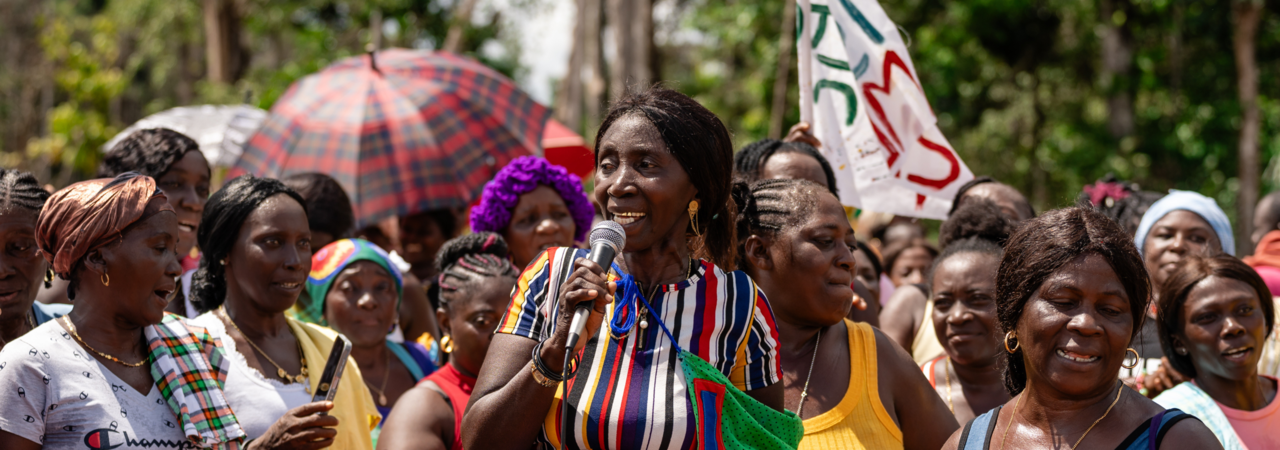
The heart of the resistance lies with groups like the Trio and Wayana Indigenous peoples in the south and the Aluku, Ndyuka, and Saramaccan Maroon communities along the forested interior rivers. Many of these communities have waited decades for formal recognition of their land rights. In 2021, the Supreme Court of Suriname ruled that Indigenous and Maroon territories must be legally recognized — a landmark decision still awaiting full implementation. "We’ve protected these forests for generations," says Bono Mansho, a Maroon community leader from Pikin Slee. "Now we’re demanding the government honor our role as guardians."
As global attention turns to nature-based climate solutions, Suriname stands at a crossroads. The choices it makes in the coming years — whether to prioritize short-term extraction or long-term stewardship — will not only shape its own future but could offer a model for forest conservation in an era of climate crisis. For now, the forest breathes deeply, its canopy rising like a green tide over the hills — a living shield against the warming world.