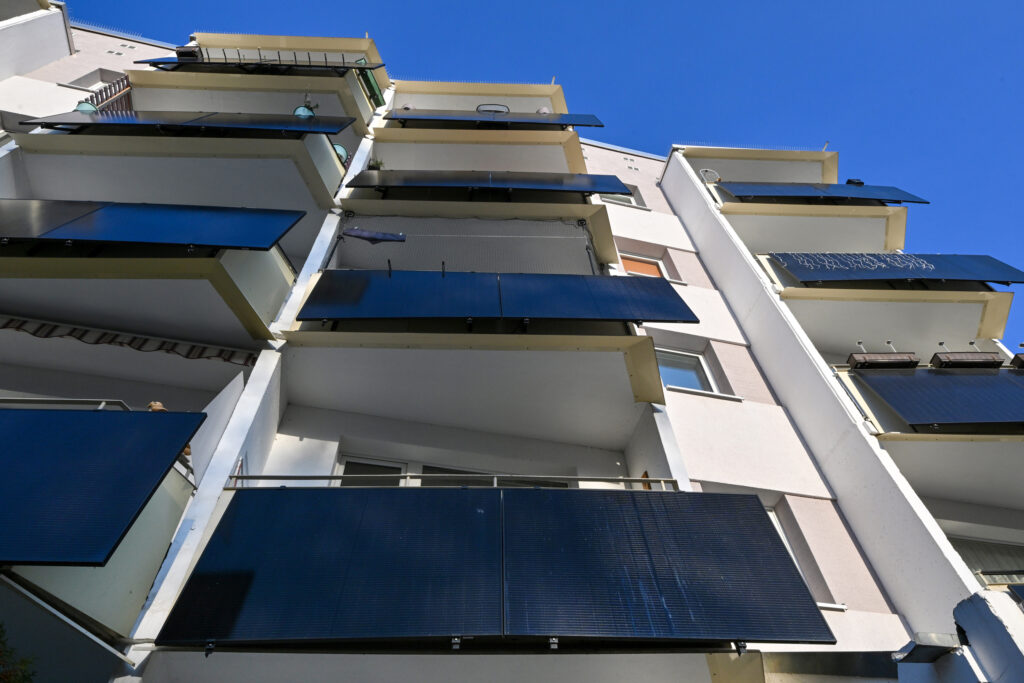
When Russia invaded Ukraine in 2022, electricity prices across Europe soared — and Germans began plugging in. Not metaphorical plugs, but literal ones: small, affordable solar panel systems that slide into standard wall outlets, bringing renewable energy to anyone who can afford a few hundred dollars and a sunny balcony.
Three years later, Germany has become the undisputed global leader in what advocates call "guerrilla solar" — roughly 1 million plug-in systems deployed across the country, with many more likely uncounted by utilities and local governments. The movement has grown so fast that regulators are scrambling to keep pace, while trade associations now push for continent-wide rules that would make plug-in solar legal from Portugal to Poland.
"The distinctive thing about this technology is it's so small that you don't need an electrician to plug it in," said Craig Morris, CEO of Bundesverband Steckersolar, Germany's plug-in solar trade association. The U.S. native has spent his adult life working as a clean energy advocate in Germany and took the helm of the association last year as the industry scaled from novelty to norm.
The economics are straightforward. An entry-level system costs between $500 and $1,000, and can be mounted in a backyard, on a balcony railing, or clipped to a rooftop. Electricity flows through a standard wall outlet, offsetting whatever you'd otherwise draw from the grid. For comparison, a professionally installed rooftop solar array can run $10,000 or more — putting the plug-in version within reach for renters, low-income households, and anyone who lacks the capital or roof space for a permanent system.
A new analysis from Morris's organization examined payback periods across six cities worldwide for a $570 system. Berlin leads at 4.26 years — driven by Germany's high electricity prices, which make generating your own power increasingly valuable. Kansas City, Missouri comes in fourth at 4.99 years, helped by the city's high household electricity consumption, which means nearly every watt the panels generate gets used onsite rather than exported.
The benefits extend beyond household finances. Morris sees plug-in solar as a way for everyday people to become participants in — rather than passive bystanders of — the clean energy transition. "This is about creating and maintaining political consensus that supports the transition, which is good for everyone," he said. When millions of Germans have a personal stake in solar, the politics of decarbonization become harder to reverse.
Germany and Belgium passed dedicated plug-in solar laws in 2024, and other nations are following. The EU is considering rules that would standardize permissions across all 27 member states, replacing today's patchwork of regulations. Even Hungary and Sweden, where restrictions remain, are watching Germany's experience.
No technology solves everything, and plug-in solar has real limits. Monthly savings in the United States average around $15 — modest compared to what insulation, air sealing, or energy-efficient appliances might deliver for the same investment. Systems with batteries cost more upfront but capture more value, especially in areas where net metering policies compensate users for excess electricity sent back to the grid.
But for millions of Germans, the point was never solely about the math. It's about owning a piece of the future — one backyard panel at a time.