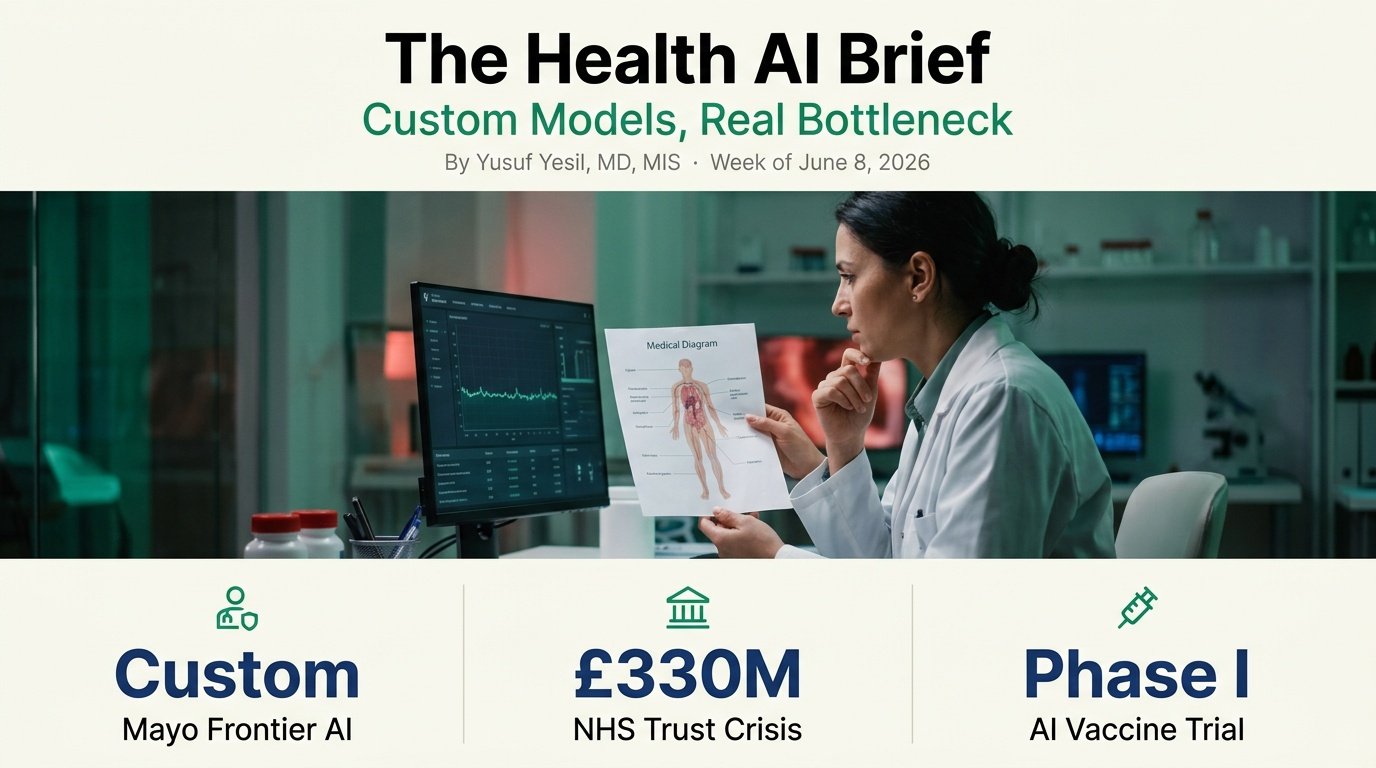
An AI-designed vaccine targeting multiple coronavirus strains has cleared early human trials, marking a fundamental shift in how the world approaches pandemic preparedness. Rather than chasing viral mutations with reactive booster campaigns, researchers are now using machine learning to anticipate threats by identifying the genetic regions that remain stable across different coronavirus variants.
This breakthrough matters because it reframes vaccine development from firefighting to foresight. For nearly four years, public health systems have operated in perpetual catch-up mode—releasing boosters designed for strains that were already spreading in real time. An AI-designed vaccine that works against multiple major coronavirus strains suggests a different future: one where broad-spectrum protection becomes the standard, not an afterthought.
The trial results come as a corrective to the broader hype surrounding AI in medicine. While algorithmic enthusiasm has swept through healthcare, real clinical implementation reveals harder truths. Generic off-the-shelf AI models routinely hallucinate medical details and fail at high-stakes decisions without deep clinical context. Mayo Clinic and Microsoft, recognizing this gap, are building custom, medically-tuned frontier models from scratch—an expensive approach, but the only safe path forward for clinical decision-making. Similarly, researchers pairing advanced language models with basic statistical methods are finding that simple regression models often outperform expensive AI where old-school clinical logic does the job better and cheaper.
The vaccine advancement uses a particularly elegant application of machine learning: computational biology identifying conserved viral regions—the parts of coronavirus genetics that mutation and evolution cannot easily change without the virus losing its ability to infect human cells. By designing a vaccine around these stable targets rather than chasing moving targets, researchers shift the entire paradigm from reactive booster development to proactive defense.
Yet the week also brought a cautionary tale about trust. A quiet shift in NHS data access permissions for Palantir's £330 million technology contract sparked a public trust crisis that threatens to paralyze the platform. The lesson is stark: even the most sophisticated predictive analytics become useless if patients and clinicians distrust how their data is handled. For builders in health AI, this is a brutal reminder that the technology is never the bottleneck—trust is.
The coronavirus vaccine trial is modest in scale, the kind of early-stage proof-of-concept that could still fail in larger populations. But it demonstrates something important about the next decade of medicine: computational biology working in service of prevention, not just treatment. When physicians see patients next week, research like this signals how AI and machine learning will reshape preventative medicine—not through generic algorithms deployed wholesale across healthcare systems, but through custom tools built for specific medical problems, paired with humility about what old-school approaches do better, and earned through absolute transparency about data stewardship. The shift from reactive boosters to proactive broad-spectrum defense, if it holds, is the kind of change that quietly saves millions of lives.