The two massive chimneys of Liddell, one of Australia's largest power stations, came crashing down in a carefully controlled demolition—a symbolic punctuation mark on the country's quiet revolution in home energy. While heatwaves bore down on Europe and Asia and oil markets convulsed around the world, Australia's energy minister stood before the cameras with news that felt almost mundane against such global turmoil: electricity prices in parts of the country had dropped by as much as 10%. But behind that measured announcement lies something far more significant: the world's most ambitious experiment in household battery power is proving that a different energy future is not just possible—it's already here.
Australia has captured nearly 60% of all household-scale battery capacity installed across almost 200 countries this financial year, according to analysis by Tristan Edis, a director with the consultancy Green Energy Markets. Since July, approximately 415,000 new units have been connected to Australian homes—roughly one battery for every 25 households. Industrial-scale batteries are proliferating just as rapidly, with Australia trailing only China and the United States in new capacity after connections more than doubled last year.
This battery surge is reshaping how electricity flows through Australia's sprawling power grid, a network spanning more than 40,000 kilometers of transmission lines stretching from tropical far-north Queensland to Tasmania. Where evening peak demand once meant firing up expensive gas-powered generators, batteries now surge into the market at six o'clock. Total gas-fired generation fell 24% across three months last summer compared with the year before—a drop that would have been unthinkable just years ago. Tennant Reed, the climate change and energy director with the Australian Industry Group representing more than 60,000 businesses, puts it plainly: batteries have "completely changed how electricity prices are formed."
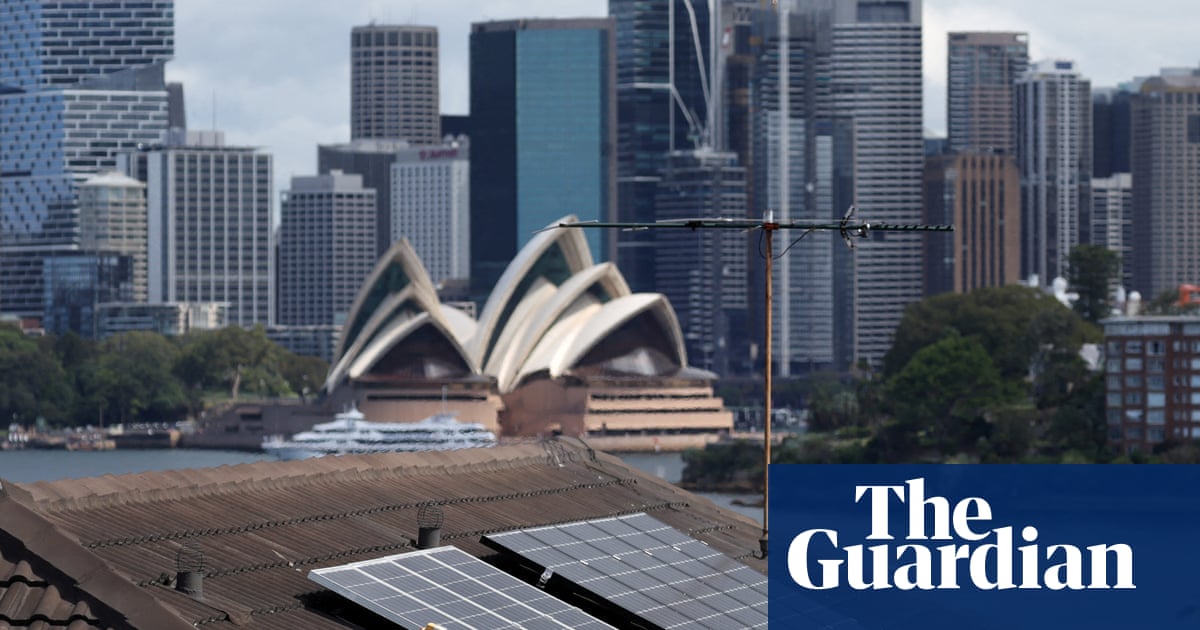
The transformation has been enabled by the pairing of two technologies. Australia was already a global leader in residential solar, with panels on one in three homes—a happy accident that emerged from simple permitting rules, uncoordinated policies, and strong public support rather than grand government planning. But solar's famous weakness is its intermittency; the sun sets, and power must come from somewhere. For decades, the answer was gas. Now, batteries allow homes to store the sun's energy and release it when the grid needs it most, solving the central criticism that has shadowed renewables since their inception.
What makes Australia's leap particularly striking is the speed at which battery costs have fallen alongside solar prices. Only in recent years have both technologies become affordable enough for mass adoption. The trajectory is clear: Edis notes that when countries commit fully to a technology and scale it aggressively from the start, "you can make a really significant difference." Battery manufacturers focused on residential installations worldwide, he adds, would be wise to watch Australia closely.
The country remains a major fossil fuel exporter and contributor to climate change—a contradiction that undercuts some of the symbolism in those falling Liddell chimneys. Yet the battery revolution demonstrates something undeniable: with the right policy environment, sufficient sunlight, and the will to embrace emerging technology, a nation can bend its energy system away from fossil fuels faster than most thought possible. The question now is whether other countries will follow Australia's lead, or whether this revolution will remain uniquely theirs.