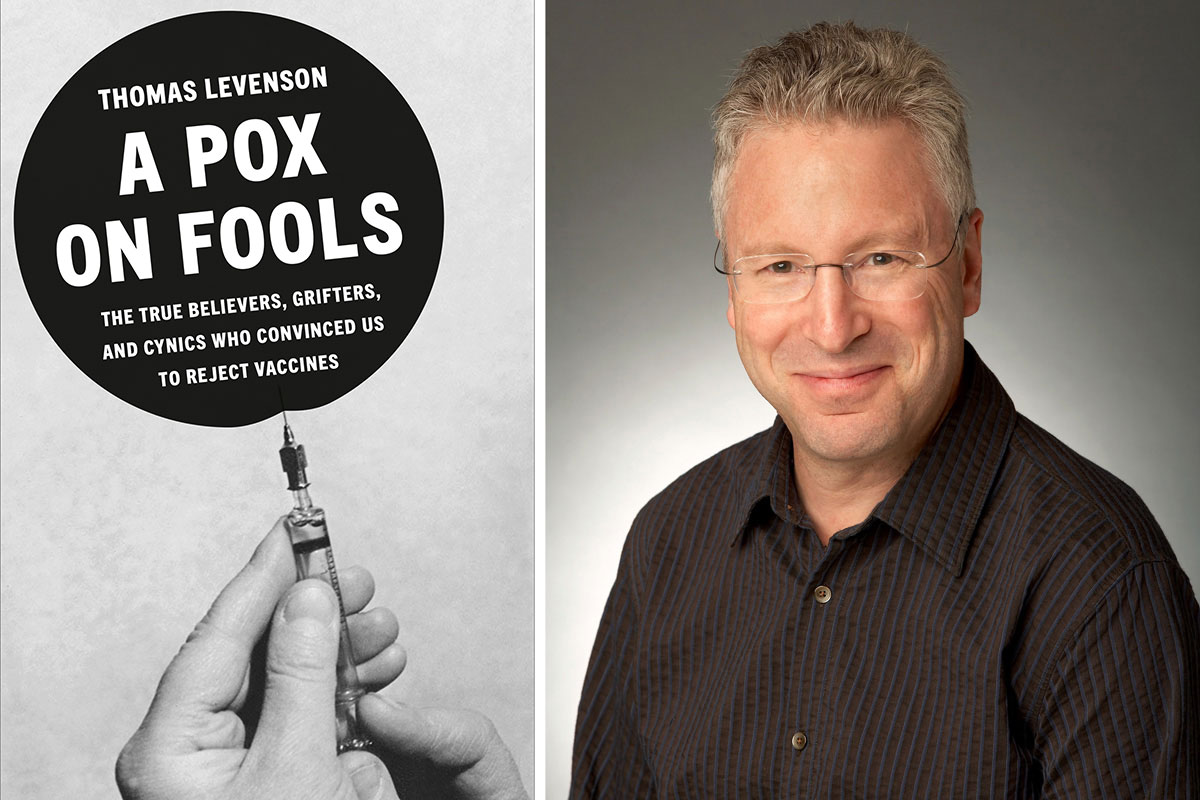
MIT professor Thomas Levenson has uncovered something surprising: the arguments people make against vaccines today aren't new at all—they echo debates that began more than 200 years ago, right when the first smallpox vaccine entered the world in 1798. His new book, "A Pox on Fools: The True Believers, Grifters, and Cynics Who Convinced Us to Reject Vaccines," traces a long genealogy of vaccine hesitancy that reveals how the same fundamental anxieties resurface across generations, even as the science improves.
Understanding this longer history matters because it shows us that vaccine skepticism isn't simply a product of modern misinformation or internet culture. Instead, Levenson identifies distinct types of arguments that have persisted and evolved since the vaccine era began. The earliest opposition centered on the idea that vaccination violated divine or natural order—a religious and philosophical objection rooted in the belief that human intervention in disease was blasphemous. When the first true smallpox vaccine used material from cowpox, a harmless related disease that conferred immunity, the focus shifted. Skeptics reframed the concern as one of contamination: introducing "cow-stuff" into people seemed to violate nature itself. That uneasiness has never fully disappeared; it simply evolved into modern arguments about aligning oneself with nature instead of medical intervention.
A second major category of opposition, equally persistent, has been the claim that vaccines are actively harmful. This accusation also dates to 1798 and the early days of vaccination. Some early concerns were grounded in real problems—early vaccines sometimes failed to confer lifelong immunity, and in a tragic mistake, some practitioners transmitted syphilis when they confused cowpox infections with syphilis, affecting perhaps 750 people across Europe. But Levenson emphasizes something crucial: when genuine problems emerged, the medical system found ways to address them. A contamination issue with diphtheria antitoxin at the turn of the 20th century led directly to the creation of the Division of Biological Controls, the first U.S. regulatory body for such products. When the polio vaccine was released in 1955, one manufacturer's shoddy production practices sickened thousands—about 100 died and some were paralyzed. The flawed vaccine was identified and pulled from shelves within two weeks. This failure prompted the development of a strengthened FDA vaccine division with real enforcement power. Modern manufacturing now involves extraordinarily tight controls; the most common side effect is a sore arm or feeling under the weather.
Levenson argues that the anti-vaccine movement displays particular rhetorical skill in exploiting a human tendency: we judge risk through anecdotes rather than statistics, and we struggle to weigh risk against benefit. Vaccines carry minuscule risks compared to the diseases they prevent, yet a single story of harm carries more psychological weight than millions of prevented cases. This connects to a paradox Levenson explored in his previous book: vaccines have worked so brilliantly that they've created a false sense of security. Life expectancy at the turn of the 20th century was just 47 years in the U.S., driven partly by infectious diseases that vaccines have since nearly eliminated. Because we no longer see the devastation these diseases once caused, it becomes easier to take vaccines for granted—and easier to argue against them. The greatest success of public health has inadvertently created space for its own skepticism.