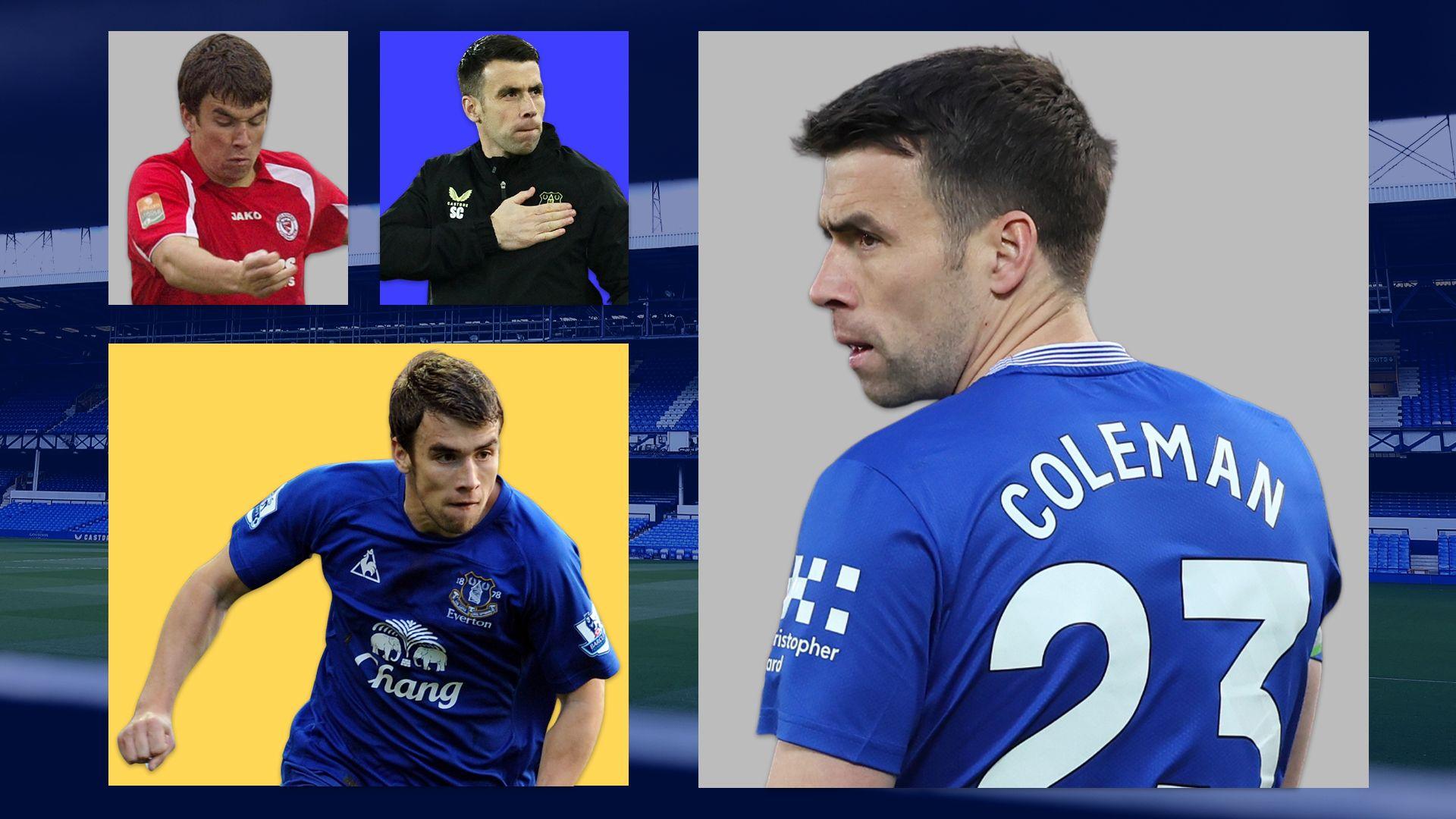
In a small fishing town on Ireland's Wild Atlantic Way, a young boy from Killybegs learned football on the streets of his estate—the kind of place where everyone knows everyone, and where matches between rival neighborhoods felt like wars. Seamus Coleman would become one of the Premier League's greatest bargains, and the song that echoes around Goodison Park still celebrates the moment that changed his life: "Sixty grand, sixty grand Seamus Coleman, playing football the Everton way."
It seems almost impossible to imagine now, but Coleman's path to legendary status was far from assured. Born in County Donegal, a rugged corner of the Republic of Ireland with a population barely over 1,250, he grew up in a world where football and Gaelic football dominated childhood. He played both sports with equal hunger, developing the mental toughness that would define his career. Brian Dorrian, the manager of St. Catherine's, the local club where Coleman began, remembers a player who was "small, tenacious and had a big heart"—but whose size counted against him in selection processes. County and school squads overlooked the young defender, yet his determination never wavered.
The turning point came through pure chance. In early 2006, Sligo Rovers manager Sean Connor was dating a Killybegs native and arranged a friendly with St. Catherine's. Coleman, raw but energetic, outplayed experienced forwards Paul McTiernan and Sean Flannery so decisively that Connor called him into the referee's changing room within hours of the final whistle to negotiate a deal. It was a moment when Coleman had to choose between two worlds: Donegal's minor Gaelic football team—an enormous honor—and full-time professional soccer. Dorrian recalled that everyone was pressuring Coleman to pursue Gaelic football, an amateur sport. But when he heard about the possibility of earning a wage and playing full-time, he jumped at the chance.
After 433 matches in an Everton shirt spanning 17 years, Coleman's £60,000 transfer fee works out to roughly £140 per game—one of the biggest bargains in Premier League history. His journey from the streets of Killybegs to becoming captain and a cornerstone of the club represents something rarer than any signing statistic: a player who proved wrong everyone who doubted him based on his size, who earned the unshakeable respect of teammates, and who remained rooted to his Irish roots even as he became a football legend.
Fellow defender Gavin Peers, who housed with Coleman when he first joined Sligo, recalled a quiet, shy teammate off the pitch but someone whose competitive fire burned relentlessly on it. "The three of us were all around the same age and got on really well," Peers said, noting that Coleman frequently traveled home to Donegal to see his girlfriend, now his wife. In the evenings, when not on the pitch, Coleman and his housemates played Pro Evolution soccer on video games—the beautiful game never leaving his thoughts.
As Coleman prepares to leave Everton this summer when his contract expires, his legacy transcends transfer fees and match statistics. He is a reminder that some of the greatest bargains in sport aren't measured in millions, but in the hunger and humility a player brings from a small town to a global stage.