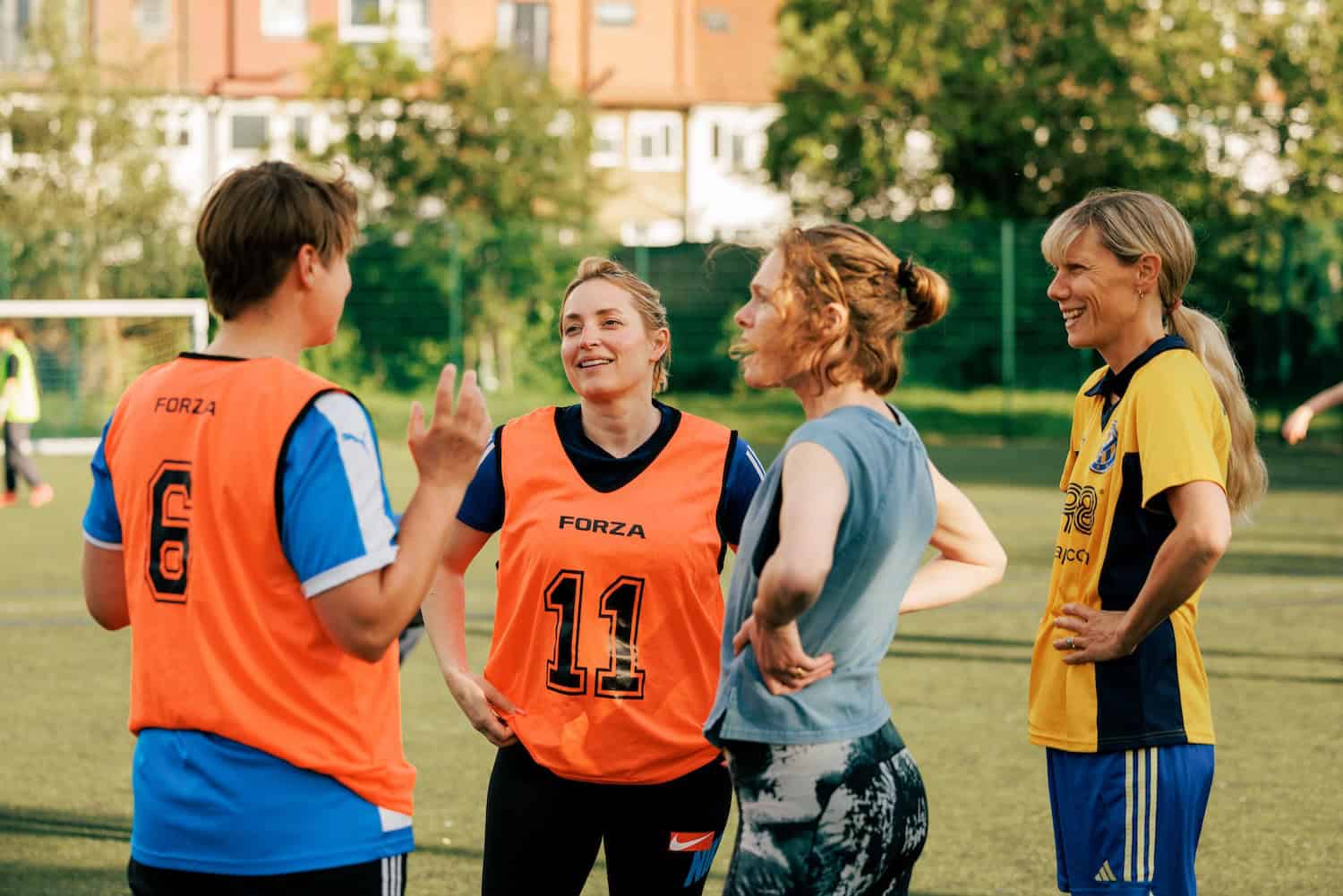
On a cold Wednesday evening in Peckham, south London, 22-year-old Farishta Karimi dribbles down the wing wearing a black hijab, lemon-colored Nike trainers, and a red bib. Two defenders charge toward her. She coolly backheels the ball to a teammate, who scores. It seems like a simple moment. But 18 months earlier, Farishta had never even run in public.
Growing up in Afghanistan, she and her friends could only watch as boys played football. When she fled the country with her mother during the U.S. withdrawal, she arrived in the UK with a lifetime of being told the sport wasn't for her. Then she found Athenlay FC.
"At first, I thought the club might not accept me," Farishta says softly. "I thought because I'd never kicked a ball, they'd laugh at me. But after two or three sessions, I found it really encouraging — so supportive and welcoming. Now Wednesday is my favourite day of the week. Football makes me feel really free."
At Athenlay FC, Farishta has found her people. They're twice her age and come from completely different backgrounds, but they share something important: until recently, they were all shut out of football in some way.
Veronica Lenz, 46, grew up in Venezuela surrounded by strict expectations about what girls and women could do. "When I played my first competitive match here about five years ago, I was absolutely terrified," she says. "But the comfort of knowing that all the women there were with me — we crossed a boundary that day that was so positive and uplifting." She hasn't stopped playing since.
Sian Elliot, 40, never had the chance to play despite growing up around the sport. Her brother played; her dad took her to matches. But it was only when her son joined a youth team that she got her shot — during a parents-versus-kids end-of-season game, she scored three goals. A fellow mum connected her with Athenlay.
These stories are multiplying across the UK. Women, LGBTQ+ players, disabled athletes, refugees, and people from disadvantaged backgrounds are fueling a quiet revolution in grassroots football — a movement that feels like a counterweight to what's happening at the top of the game.
While Premier League ticket prices have surged roughly 800% since the early 1990s, pushing many fans out of stadiums, grassroots clubs remain accessible. According to the Football Supporters' Association, connection and community often matter more than the sport itself. "People don't want to give their football up, but they're being priced out," says Darren Bernstein of the FSA. "Sometimes the most important thing is not always the football — it's about being part of that community."
At the professional level, discrimination has reached alarming highs. During the 2024-25 season, reports to anti-racism organization Kick It Out hit record levels: racist chanting rose nearly sixfold, and sexism in stadiums climbed 27%.
But on community pitches like the one in Peckham, the mood is different. Players like Shadia Edwards-Dashti of west London's Actonians play openly with pride flags and rainbow-striped socks, using the game to model the world they want to see. For thousands of people like Farishta, the pitch isn't just a place to play — it's a place to belong.