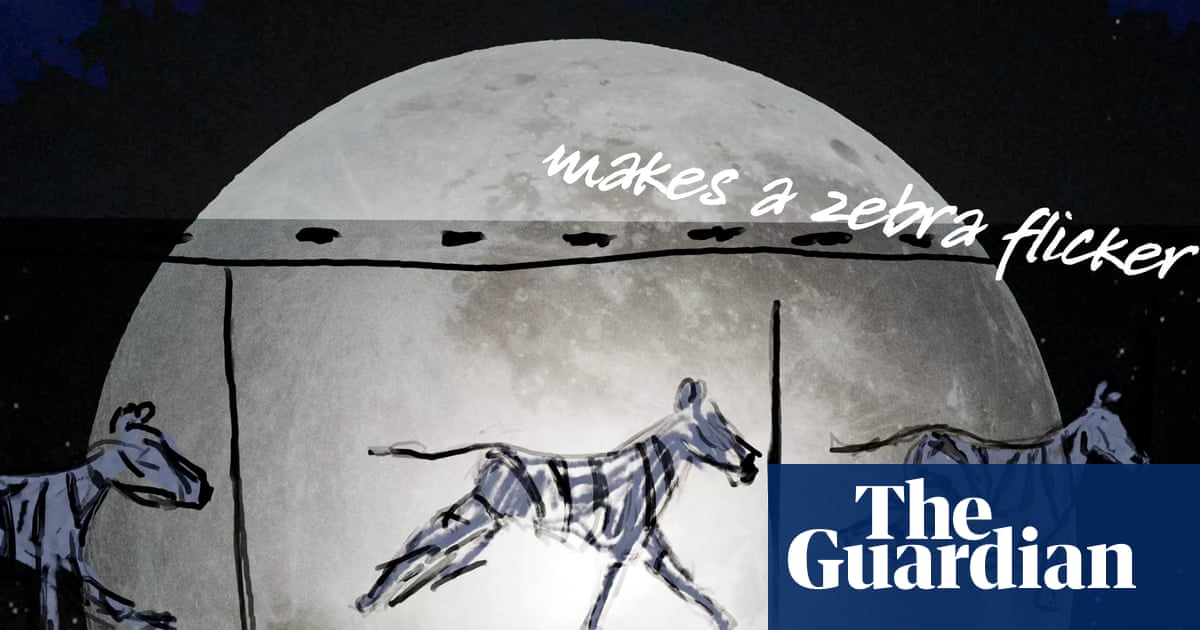
Simon Armitage, Britain's poet laureate, has written a dreamlike nocturnal journey through the animal world to mark the Zoological Society of London's 200th anniversary. Narrated by Armitage himself and illustrated in animation by Greg King, "The Moon and the Zoo" arrives as ZSL celebrates two centuries of advancing zoological science and connecting people with wildlife.
The poem is the latest entry in a distinguished literary tradition. London Zoo has long inspired writers and artists—Edwin Landseer painted its lions, AA Milne named Winnie the bear after the zoo's resident Winnipeg, and Sylvia Plath wrote her poem "Zoo Keeper's Wife" while there. Even Ted Hughes, who would later become poet laureate himself, worked briefly as a dishwasher at the zoo, an experience that reportedly fueled his imagination for "The Thought-Fox."
The 200-year-old institution itself has remarkable provenance. ZSL was founded in 1826 to advance zoological science and opened the world's first scientific zoo, London Zoo, in 1828—a place that welcomed zoologists including Charles Darwin. It opened to the public in 1847, becoming a beacon for both scientific inquiry and public wonder about the natural world.
Armitage's poem conjures the secret, nocturnal lives of the zoo's animals. The moon enters "under the turnstile after dark, moves in a silent arc at an ancient pace," tending to each creature with tender attention: dabbing its ointment on a gibbon's paw, smoothing a silverback gorilla's fur, putting a crystalline glint in a tiger's eye. The imagery is vivid and playful—a restless otter rolling "the ball of the moon in its feet," the moon offering an "ET" manicure to an aye-aye's delicate fingers, spreading its "milky smile on the lips of pups and kittens and cubs."
To craft the work, Armitage spent time at London Zoo with animals and staff. He met Katie, a Mexican red-kneed spider, watched Sumatran tigers, and ventured behind the scenes in the reptile house. He was captivated by what he calls "the mysterious aspects of their existence which we never really get to see—their thoughts and dreams, which we can only imagine and guess at."
The poem uses the moon as a deliberate metaphor on multiple levels. For Armitage, the night represents the unknown, while the moon is "an eternal watch and witness" over animal lives. But the moon also symbolizes ZSL's own work—the keeping, caring, and important research that happens away from public view. As darkness gives way to dawn, the poem reaches its culmination with a moment of human reckoning: "the moon hands over the keys of the world and trusts them to us."
This final image carries weight. Armitage wanted the poem to express both "the wonder of the natural world" and humanity's obligation to protect it. "Daylight brings the human world out of its bed," he noted, but with that daylight comes responsibility. The poem aims to inspire what ZSL has pursued for 200 years—bringing people closer to wildlife and sparking the action needed to protect it.
ZSL CEO Kathryn England reflected on the milestone: "For 200 years, ZSL has worked to bring people closer to wildlife and inspire action to protect it. Simon's poem captures both the wonder of those encounters and the responsibility that comes with them." As the organisation enters its third century, Armitage's words offer a poetic reminder that humanity's relationship with nature need not be one of dominion, but of trust and care.