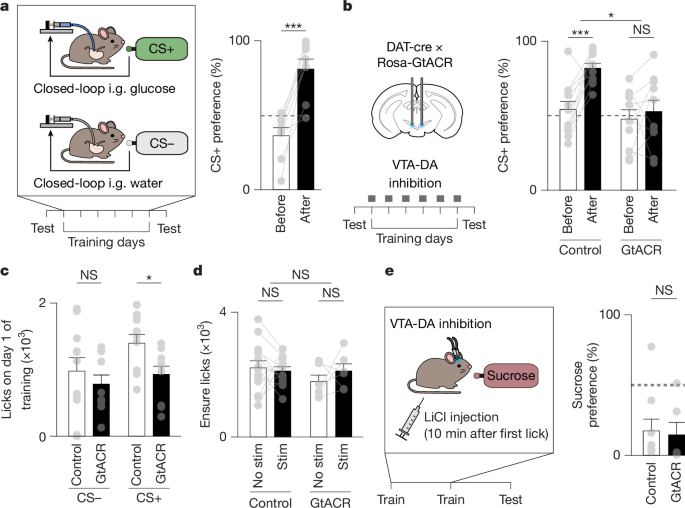
A rat can learn that one taste comes with a useful nutrient, and researchers have traced part of that learning to a dopamine pathway reaching a region called the basolateral amygdala. The finding offers a closer look at how the brain builds food preferences from what happens after a meal begins.
Flavour is more than the taste of a bite. Nutrients arriving in the body can provide feedback that helps an animal learn which flavours are worth choosing again. That learning can happen even when the nutrient’s benefit is not obvious from taste alone. Understanding the brain circuits involved may help explain how food choices take shape, beyond an immediate reaction to sweetness or other flavours.
The study’s central finding, as reported in its summary, is that dopamine signals sent to the basolateral amygdala help rats connect flavours with nutrients. Dopamine is a brain chemical involved in learning and motivation. The basolateral amygdala is a part of the brain that helps process experiences and their significance. Together, the pathway appears to contribute to forming an association between a flavour and a nutrient’s value.
That connection matters because a learned preference is different from simply liking a taste at first. If a flavour becomes linked with a beneficial nutrient, an animal may come to seek it out later. The research therefore points to a process in which the brain uses internal feedback from food to shape future choices. It adds a specific brain route to a wider scientific effort to understand how eating, reward and learning fit together.
Earlier studies cited by the researchers have explored dopamine’s role in nutrient-conditioned flavour preferences in rats. Those studies examined dopamine receptors in areas including the medial prefrontal cortex, the nucleus accumbens and the amygdala. The new finding focuses attention on a dopamine pathway to the basolateral amygdala, helping refine the picture of how flavour–nutrient learning is supported in the brain. It does not mean that one pathway alone determines what an animal eats; rather, it identifies a part of the machinery involved in learning from food.
The researchers have made the data behind the study’s main findings publicly available through Dryad, with the DOI 10.5061/dryad.h9w0vt4x2. They also report that they developed no custom software or original algorithms, so the findings can be checked using established tools and the deposited data. Making those materials accessible gives other researchers a way to examine and build on the work.
The result is a step toward understanding how the brain turns a meal into a lesson. Further research can test how this pathway works alongside other brain regions and whether similar learning processes apply beyond rats. For now, the finding highlights a simple but important idea: food preferences can be learned from what nutrients do inside the body, not just from how food tastes.