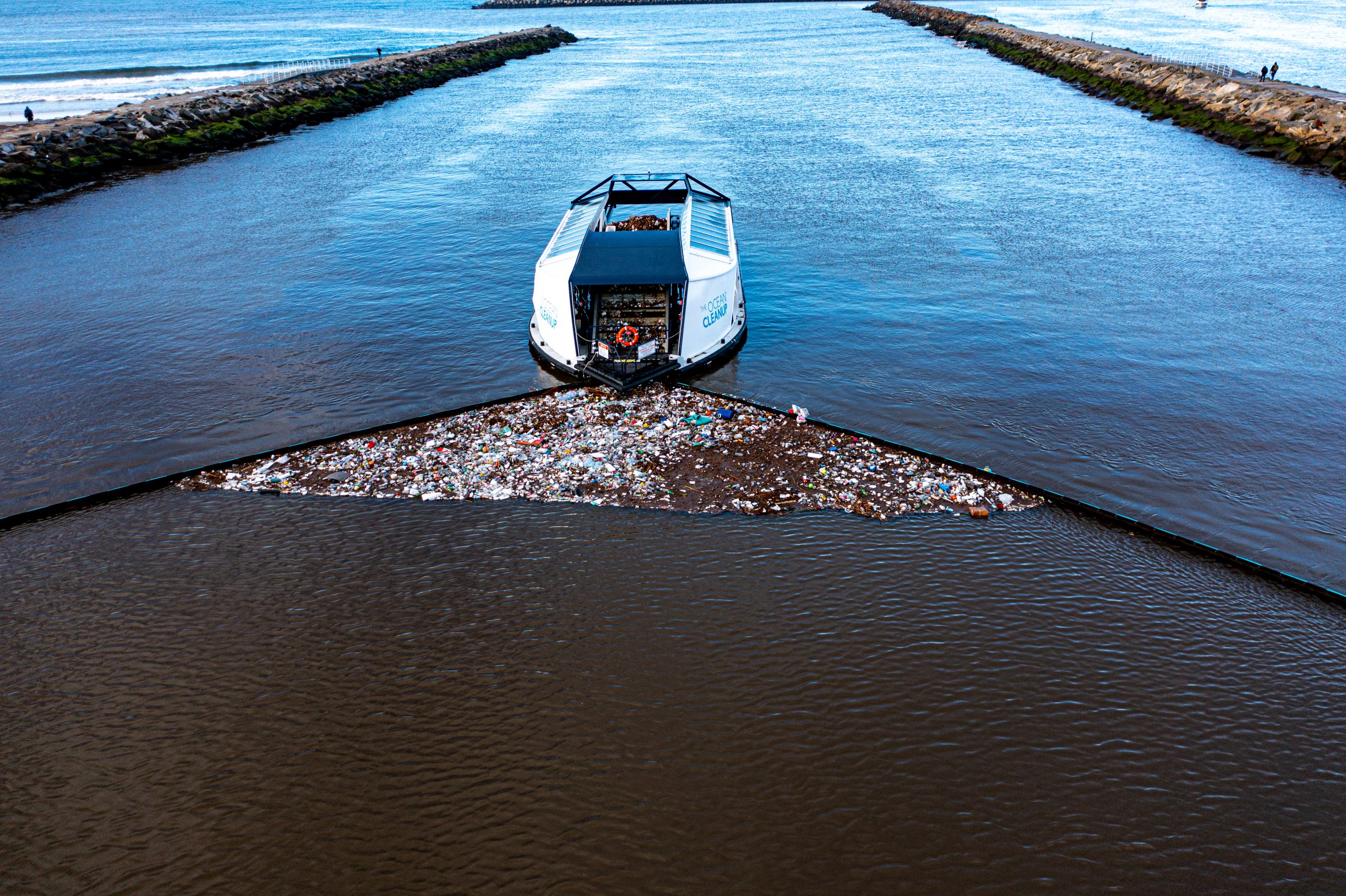
LA County Supervisor Janice Hahn stood alongside innovators and city leaders in 2022 to watch something ordinary stop flowing into the Pacific: trash. That was when the Interceptor 007 began operating in Ballona Creek, and since then, it has blocked over 193.5 tons of plastic waste from reaching the ocean and local beaches. Now, The Ocean Cleanup is doubling down on the work that proved it could actually work, announcing plans to expand operations across Los Angeles by installing innovative Interceptor barriers in two more of the region's major rivers.
The plastic crisis in urban waterways is invisible until it isn't. People come to Southern California's coastline by the millions each year—to surf, to swim, to sail. Long Beach will host sailing and rowing events during the LA28 Olympic Games. Yet the Los Angeles and San Gabriel Rivers funnel between 410 and 628 tons of plastic into the Pacific annually, a staggering volume that threatens coastal ecosystems and biodiversity. Millions of pieces flow downriver after storms, tangled in debris and seasonal runoff, eventually reaching the beaches that tourists and residents depend on.
What makes this expansion different is its scientific precision. The Ocean Cleanup conducted what they call a "Smart Rivers Survey," deploying drones, AI-enhanced remote-sensing cameras, and GPS drifters to map exactly where and how much plastic each river carries. The result is a tailor-made solution rather than a one-size-fits-all approach. Working with LA County Supervisor Janice Hahn and representatives from Seal Beach and Long Beach, the organization will install Interceptor barriers in both the LA and San Gabriel Rivers—complementing the proven Interceptor 007 already running in Ballona Creek. Independent feasibility studies commissioned by the cities themselves assessed hydraulics, trash volumes, and permitting pathways, ensuring the deployments are engineered for the specific conditions of each waterway.
The timing matters. All three deployments are expected to be operational ahead of the LA28 Olympic Games, creating a moment of symbolic weight: as the world watches athletes compete on clean waters, Los Angeles will have moved upstream to stop the pollution before it starts. Boyan Slat, founder and CEO of The Ocean Cleanup, framed it plainly: "By working with county and city partners to deploy Interceptors in the LA and San Gabriel Rivers, alongside our ongoing work in Ballona Creek, we're making real progress toward a cleaner Pacific."
The real testament to this work's legitimacy comes from the numbers already on the board. Interceptor 007 has operated for over three years, and the data is clear—it works. Last year alone, Seal Beach collected approximately 500 tons of trash from its waters. The Ballona Creek deployment, now in its permanent operating phase following unanimous approval by the LA County Board of Supervisors in 2024, has proven that you can catch plastic before it becomes someone else's environmental disaster. As Supervisor Hahn put it: "It's never been fair that one city's trash has become another city's problem."
This expansion is part of The Ocean Cleanup's 30 Cities Program, a decade-long initiative designed to stop one-third of all plastic flowing from rivers into the world's oceans by 2030. The numbers behind this goal are staggering—just 1,000 of the world's three million rivers are responsible for nearly 80 percent of ocean plastic emissions. Los Angeles is proving that upstream intervention works, and that when city and county leaders choose to focus on ocean health, the results flow downstream.