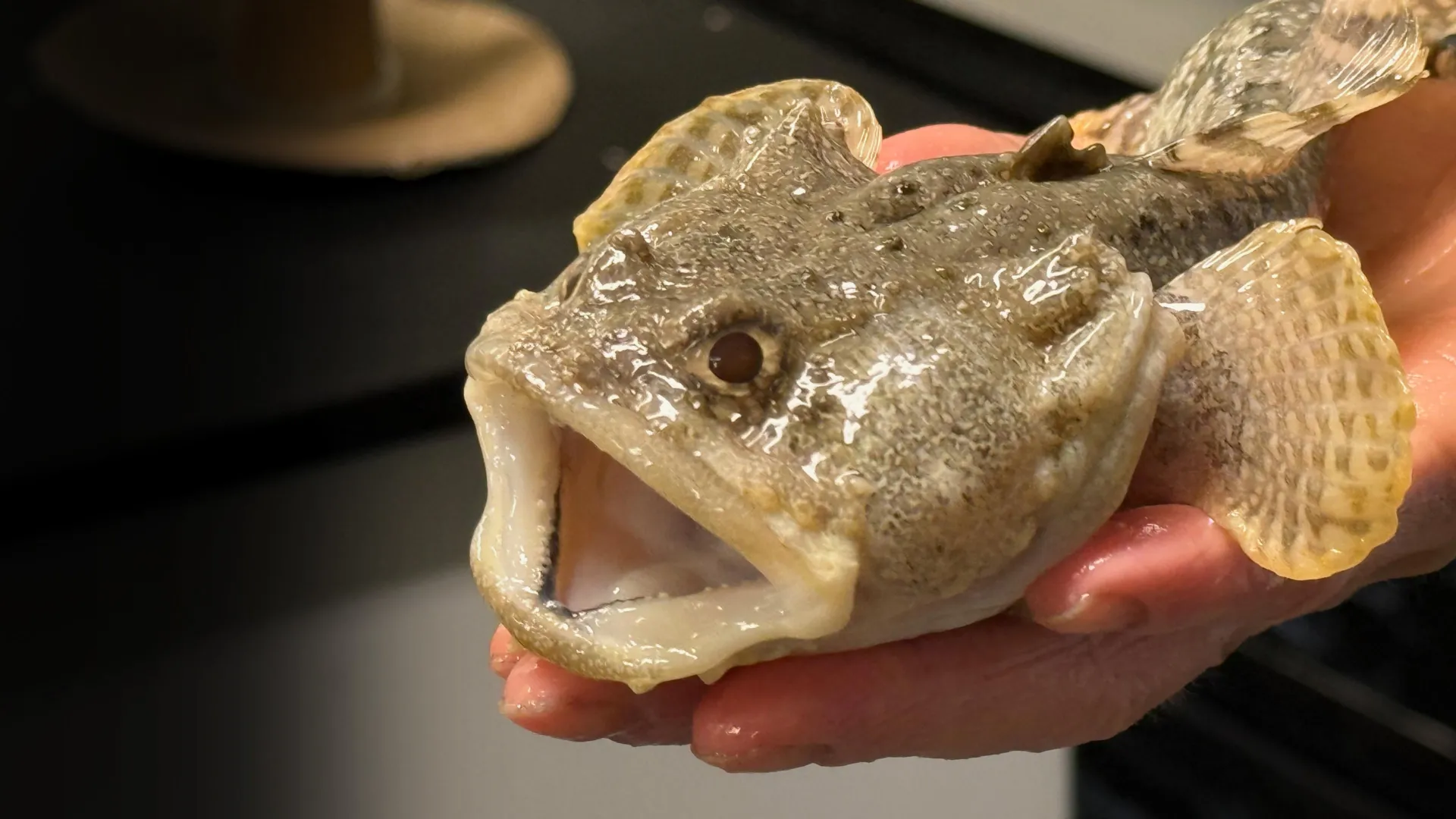
When Anthony Bonacolta peered into the microscopic world inside a Gulf toadfish's gut, he discovered something that fundamentally reshapes how scientists understand ocean chemistry: the fish weren't working alone. Billions of bacteria—particularly a species called Photobacterium damselae subsp. damselae—were collaborating with their hosts to produce calcium carbonate, the mineral that keeps oceans chemically balanced and stores carbon away from the atmosphere. It's a partnership so invisible that marine biologists had missed it entirely, assuming fish alone controlled this crucial process.
The finding matters far more than its microscopic scale might suggest. Calcium carbonate production by fish influences ocean carbon cycling, the global process that helps regulate Earth's climate. If microbes play as significant a role as this University of Miami research suggests, then understanding ocean health means understanding these hidden partnerships between animals and the bacteria living inside them. For decades, scientists believed the fish were simply processing seawater and excreting excess minerals. Now they know the story is more intricate.
The research team, led by Martin Grosell—the Maytag Professor of Ichthyology at the University of Miami—tested Gulf toadfish in three different water environments to isolate what was happening. In brackish water with low salt content (9 parts per thousand), the fish produced no calcium carbonate at all. In normal seawater (35 ppt), production began. And in hypersaline water (60 ppt), production accelerated dramatically. This gradient gave Grosell and his colleagues a clear signal: salinity triggered the process, and something biological must be responding to that trigger.
They collected samples from the fish intestines, from the mineral pellets themselves—called ichthyocarbonates—and from the surrounding water. Using DNA sequencing and gene expression studies, they mapped the microbial communities present and identified which genes were active during mineral formation. The vibrio bacteria showed up everywhere: abundant in the intestinal tract and embedded within the calcium carbonate itself. The genetic evidence suggested these microbes possessed the biological machinery to manufacture minerals, indicating they were direct participants, not passive passengers.
"What was previously thought to be a process driven solely by the fish may actually reflect a close symbiosis between the fish and its gut microbial community," Grosell explained. The implication is staggering. If this partnership holds true across marine fish species—and there's reason to suspect it does—then the invisible microbial world is actively shaping ocean chemistry at a scale we're only beginning to measure.
This discovery belongs to a larger scientific awakening: the recognition that most life on Earth is microbial, and that the planet's biggest cycles flow through these hidden partnerships. Oceans, Grosell notes, are "especially rich" in such symbiosis. A toadfish and its vibrio bacteria, working in tandem to crystallize minerals into the sea—it's a stunning reminder that the smallest organisms can wield the largest influence on the systems that sustain us all. As researchers continue investigating how widespread this pattern might be, the implications for understanding ocean health, carbon storage, and climate regulation could prove profound.