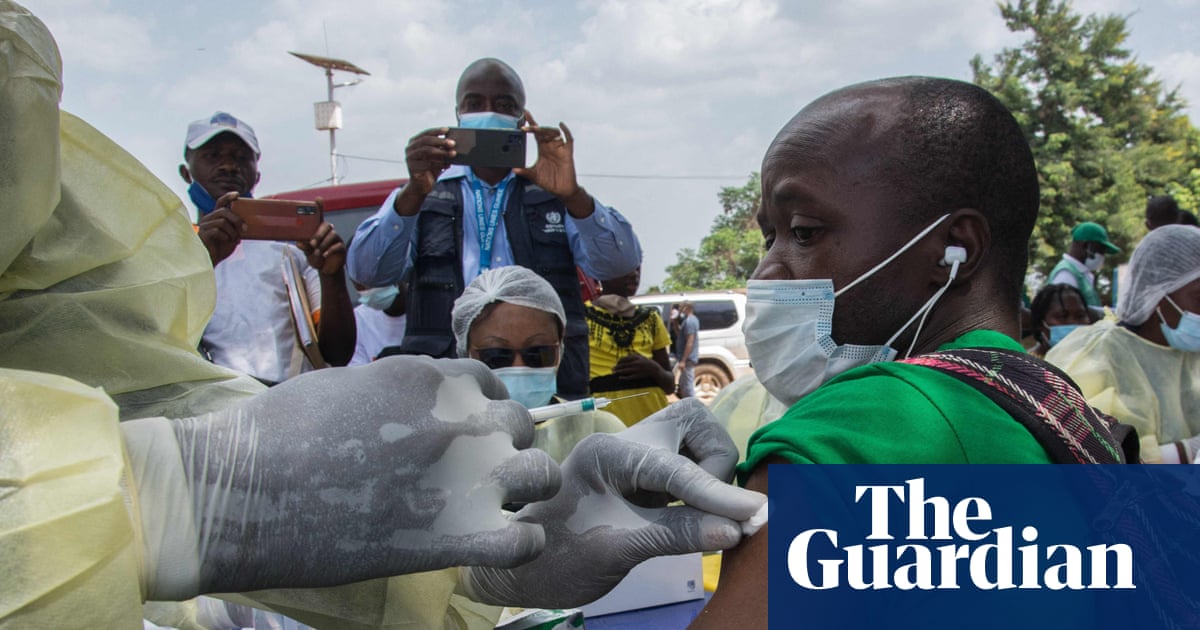
Three vaccine developers received $60 million in emergency funding this week as the global health community mobilized to combat a strain of Ebola with no existing vaccine or treatment. The Bundibugyo Ebola outbreak, spreading across the Democratic Republic of the Congo and Uganda, has triggered a coordinated race to develop countermeasures—a race complicated by conflict, displaced populations, and attacks on treatment centres in the affected region.
"Every day counts in the race against this deadly disease," said Dr Richard Hatchett, chief executive of the Coalition for Epidemic Preparedness Innovations (CEPI), which announced the funding on Monday. The urgency reflects a hard lesson from history: after the 2014-16 west African Ebola outbreak killed thousands, the global health community talked about preparing and stockpiling vaccines for future outbreaks but failed to take comprehensive action. This time, the response is different.
The International Aids Vaccine Initiative (IAVI) is developing what the WHO considers the "most promising candidate vaccine." The rVSV Bundibugyo vaccine uses the same proven technology as Ervebo, an existing vaccine that targets the more common Zaire strain of Ebola. The WHO expects it will take seven to nine months before doses are ready for clinical trials, though IAVI's president Mark Feinberg said the team is working to accelerate that timeline. "The technologies to make an efficacious Bundibugyo vaccine are available to us, but we need to do the work to demonstrate that they do work," Feinberg said.
Oxford University and the Serum Institute of India are moving faster with the ChAdOx1 Bundibugyo vaccine, potentially ready for trials within two or three months. The same technology underpinned the Oxford/AstraZeneca Covid-19 vaccine. Prof Teresa Lambe of the Oxford Vaccine Group said the team is "progressing with partners around the world" to initiate animal studies rapidly. The Serum Institute committed to manufacturing as many doses as needed once approval is secured.
Moderna, using mRNA technology prominent during the Covid pandemic, is also pursuing a vaccine candidate and received up to $50 million in CEPI funding to support preclinical development and early clinical testing. The company said it hopes to have a vaccine ready for trials within months, moving with what CEO Stéphane Bancel called "urgency and scientific rigour."
Beyond vaccines, three existing medicines show promise as potential treatments. MBP134 and Maftivimab are monoclonal antibodies that mimic the immune system's effects, while remdesivir is an antiviral drug. The Partners trial, designed to find the most effective treatment, is seeking regulatory approval from authorities in the DRC and Uganda. Amanda Rojek, associate professor of health emergencies at the UK's Pandemic Sciences Institute, noted that investigators are "effectively close to ready to go," but emphasized the critical importance of proper safety protocols in a challenging security environment. "Properly assessing that drugs are safe and effective is vital," Rojek said.
In a historic first for an Ebola outbreak, doctors will also test a prevention drug—giving it to contacts of cases to stop them from developing the disease. The antiviral obdeldesivir showed up to 100 percent protection in animal studies, offering hope for breaking chains of transmission. Security challenges remain daunting, with militias operating in affected areas and some treatment centres attacked, but researchers say they are ready to begin trials as soon as conditions allow.