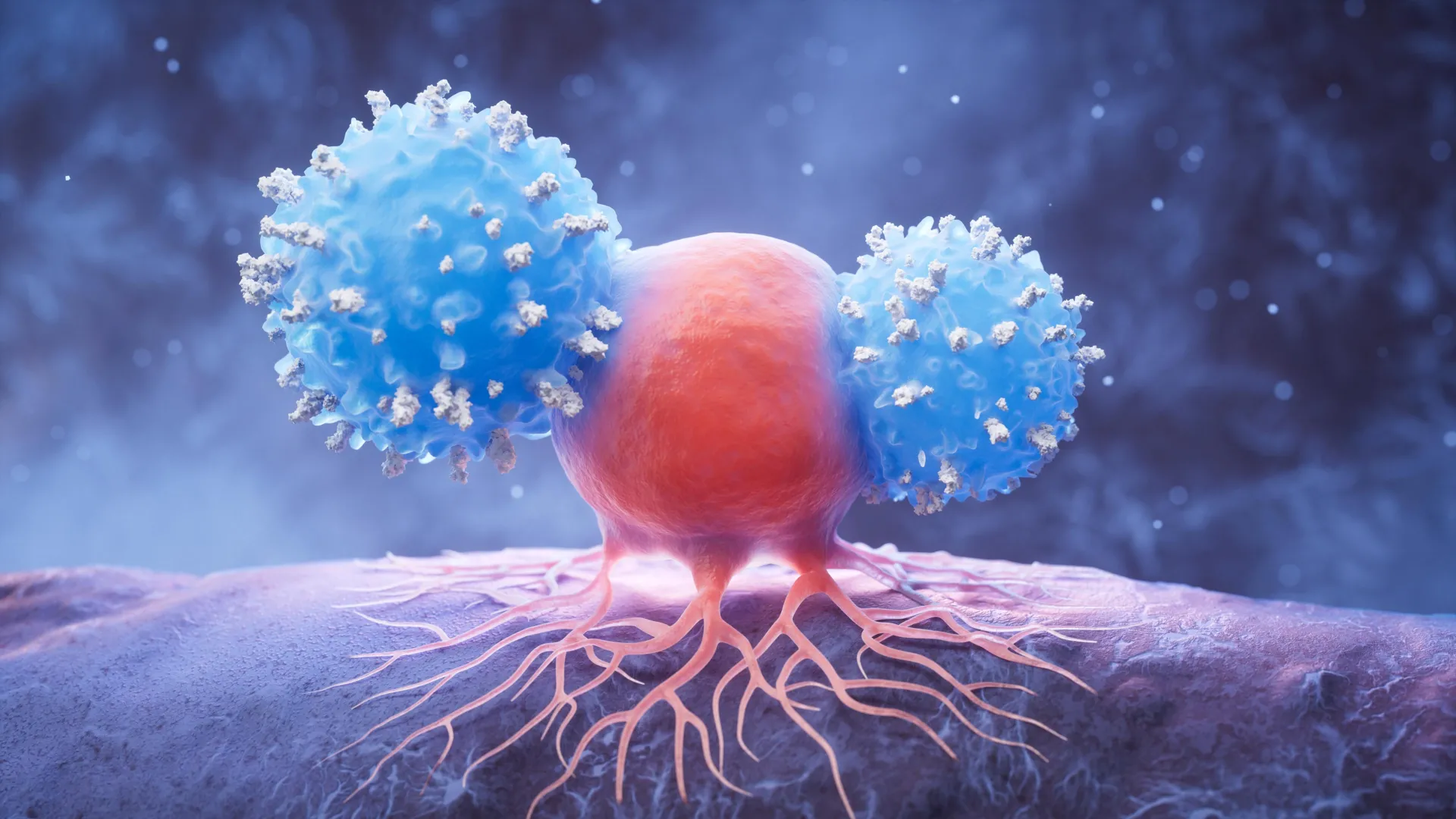
In a cancer cell's cunning bid to survive, it has learned to flip a hidden switch on immune cells themselves. Scientists at Montreal's Clinical Research Institute (IRCM) have discovered SLAMF6, a molecule sitting on the surface of T cells that acts as an internal brake, preventing them from mounting an effective attack against tumors. The finding, published in Nature by a team led by Dr. André Veillette at the Université de Montréal, reveals why some cancers manage to slip past our body's defenses—and offers a potential new way to free those defenses.
The discovery matters because current immunotherapies, while life-changing for many patients, hit a wall. PD1 and PDL1 inhibitors have helped countless people, but a significant number either fail to respond or eventually become resistant. Scientists have long understood that tumors release molecules that suppress immune responses, but SLAMF6 works differently. It doesn't need a tumor to activate—it can switch itself on directly within T cells. When it does, the consequences cascade: T cells lose their ability to attack cancer, the production of durable immune cells drops, and T cells accelerate into exhaustion, becoming ineffective against the very threat they should be fighting.
What makes Veillette's discovery particularly elegant is not just identifying the brake, but finding a way to release it. His team developed monoclonal antibodies designed to stop SLAMF6 from binding to itself and triggering its suppressive signals. In laboratory testing, the results were striking. When the antibodies blocked SLAMF6, human T cells became significantly more activated, immune cells persisted longer and stronger, exhausted T cells dwindled, and mice showed robust anti-tumor responses. According to the researchers, these newly developed antibodies outperform any existing approach to targeting SLAMF6.
The potential ripples outward are significant. These antibodies could form the foundation of an entirely new class of cancer immunotherapy—one that might help patients who no longer respond to current treatments. They could be used alone or combined with other immune-boosting therapies, offering oncologists a new tool for a disease that still kills millions. Early-stage clinical trials in people with solid tumors and blood cancers are the logical next step, moving this laboratory breakthrough toward real patients.
"By identifying an internal brake that had until now gone unrecognized and by developing antibodies capable of neutralizing it, our researchers are offering an innovative solution to the limitations of current treatments," said IRCM president and scientific director Dr. Jean-François Côté. The research itself was supported by the Canadian Institutes of Health Research, the Terry Fox Research Institute, BioCanRx, Québec's Ministry of Economy, Innovation and Energy, and the Canadian Foundation for Innovation—a testament to the collaborative, multi-sector effort now essential to breakthrough science.
What makes this moment hopeful is not just the science itself, but what it signals about our growing understanding of cancer's evasion tactics. Each hidden mechanism we uncover is another opportunity to outmaneuver it. Veillette's team has found one such mechanism and already begun dismantling it. For patients waiting for the next breakthrough in immunotherapy, that internal brake may soon become the key to freedom.