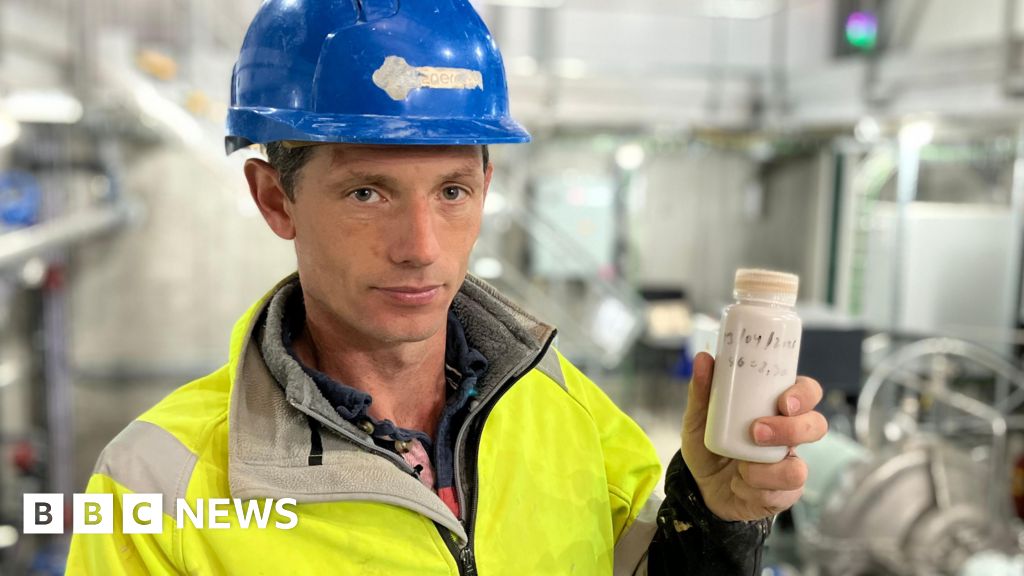
Peter Hawkins holds up a bottle of thick, milky fluid in a small industrial unit on the edge of Cornwood, Devon—a liquid so dense it feels like syrup, and so powerful it could help reshape how the UK stores renewable energy. This is the "secret sauce" behind RheEnergise’s pioneering high-density hydro storage project, a system that’s turning modest hills into energy vaults capable of powering 400 homes for a year. At just 100 metres high, the kind of terrain once considered useless for hydropower is now at the heart of a quiet revolution in clean energy storage.
As the UK grapples with volatile energy prices and the urgent need to move beyond fossil fuels, the challenge isn’t just generating renewable power—it’s storing it for when the wind doesn’t blow and the sun doesn’t shine. That’s where this Cornwood demonstrator comes in. Inspired by century-old pumped hydro technology, RheEnergise has reimagined the system by replacing water with a mineral-enhanced fluid 2.5 times denser. The result? A 500kW powerhouse that fits on a hillside, not a mountain, and operates with remarkable efficiency.
The science is elegant in its simplicity. When electricity is abundant and cheap—often from wind or solar farms—it pumps the dense fluid uphill to a reservoir. When demand spikes, the liquid flows back down, spinning turbines to generate power. Because the fluid is so much heavier than water, it carries far more potential energy, even over short vertical distances. That means sites like Cornwood, with elevations as low as 100 metres, can now host grid-scale storage—opening up thousands of new locations across the UK and beyond.
Funded with an £8.25 million government grant through the Net Zero Innovation Portfolio, the project is the first of its kind to operate successfully at this scale. For CEO Stephen Crosher, it’s a milestone in the race to decarbonise the grid. "We can see huge volatility in fossil fuel prices which is causing huge pain for consumers," he said, "but it’s also about the decarbonisation journey." Lizzi Gold, the company’s business development manager, called it a transformation of old technology for modern needs: "This project takes 100-year-old technology—pumped hydro—and makes it work for the modern day."
Experts agree. Professor Peter Connor from the University of Exeter notes that unlike coal or gas, renewables can’t be switched on at will. Storage solutions like this are essential to balance the grid. With over 100 potential sites already identified across the UK, and global interest growing, RheEnergise’s vision could scale far beyond Devon. The little bottle of dense fluid in Hawkins’ hand might just be the key to unlocking a more stable, sustainable energy future.