On the evening of June 22nd, 2025, as the sun dipped over the Mesoamerican Reef in Honduras, something extraordinary happened: three thousand baby corals came to life. These weren't born on a tropical reef, but in a shipping container lab on the coast—the result of meticulous human intervention by scientists who had spent days waiting in the water for the precise moment when wild corals would spawn. It was a milestone that proves one of the world's most critical ecosystems can be saved, not despite human interference, but because of it.
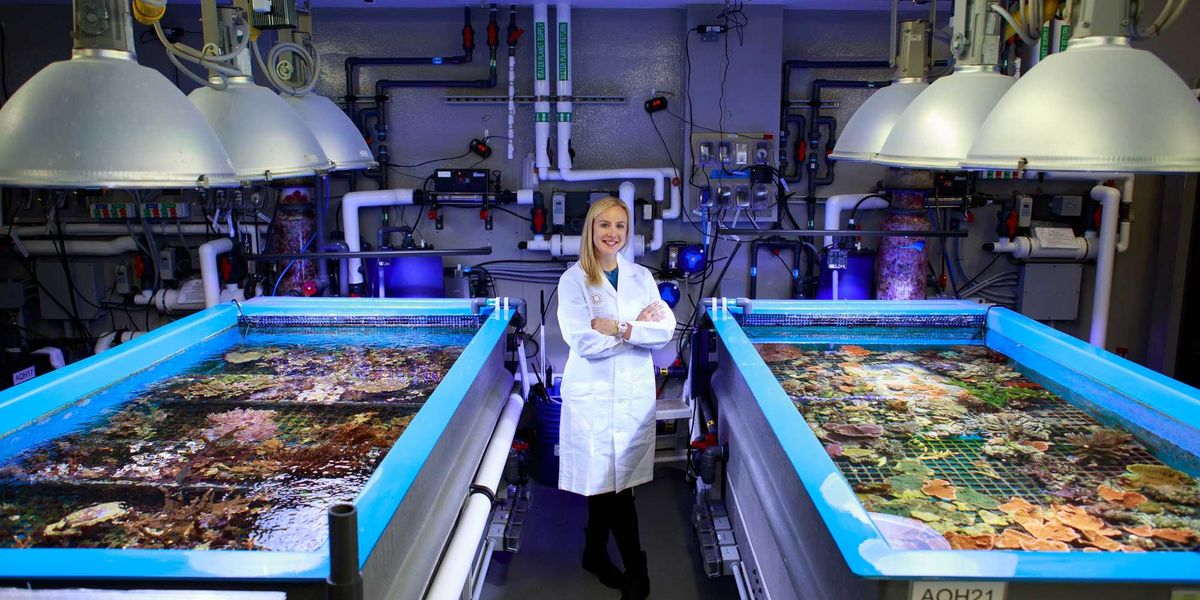
The team behind this breakthrough is led by women researchers at the California Academy of Sciences in San Francisco, a place so far from coral reefs that it might seem an unlikely hub for saving them. Yet the Bay Area's concentration of academic and technical expertise—spanning Berkeley, Stanford, and NASA Ames—has become invaluable. Since 2018, the Academy's Coral Regeneration Lab has perfected techniques to reproduce endangered corals in controlled settings, essentially performing IVF for corals. Dr. Elora López-Nandam, senior research scientist at the Academy, explains the advantage: "We have collaborators at Berkeley, we have collaborators at Stanford, we have collaborators at NASA Ames. It's really elevated the level of the coral science that we can do."
The stakes could hardly be higher. Coral reefs occupy just one percent of the ocean's surface, yet more than a quarter of all marine species depend on them at some point in their lives. These ecosystems protect coastlines, support global fisheries worth billions of dollars, and maintain the health of the ocean itself. Yet bleaching-level heat stress has already damaged 84 percent of the world's coral reefs according to NOAA data, slashing the odds that sperm and eggs will find each other in the vast ocean—a natural challenge that the team addresses through careful intervention.
The California Academy scientists begin by replicating reef conditions in their San Francisco facility, adjusting water temperature and lighting to convince corals they're home. When residents spawn, it happens in a controlled environment. But the real innovation emerged when the team partnered with Roatán Marine Park to establish the Coral Restoration Center Roatán (CRCR), a land-based facility housed in a shipping container on the coast. There, scientific divers wait for wild spawning events, then collect sperm and eggs to fertilize in the lab—exactly what López-Nandam describes as coral IVF. Those three thousand corals produced from a single wild spawning event in June have already been transplanted back to the reef.
The accomplishment offers a scalable model for coral regeneration globally, yet López-Nandam tempers optimism with scientific realism. Survival rates for coral larvae remain historically low, between one and five percent. Months and years of monitoring lie ahead. Still, she notes, "those corals would not have been on the reef without our efforts—and that we're only going to get better at this with time." It's a vision of hope grounded in data: not a fantasy of effortless restoration, but the steady, hard-won progress of innovation meeting urgency, in a San Francisco lab and a Honduran shipping container alike.