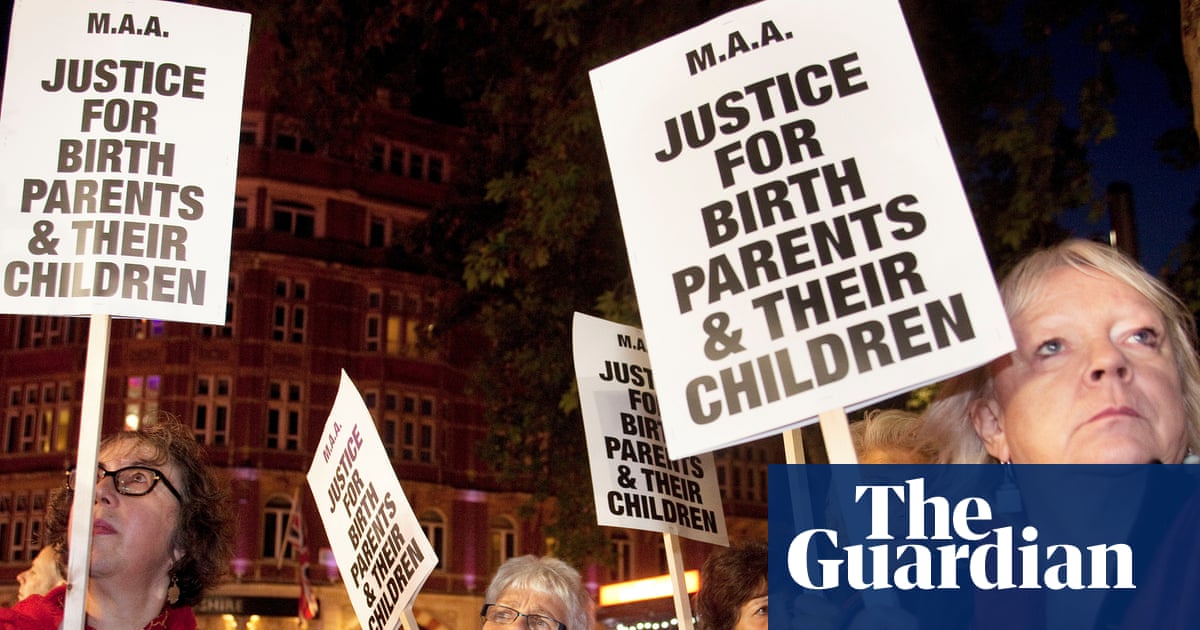
For decades, thousands of women in Britain lived with a secret that was never theirs to carry. On Thursday, the UK government finally said so out loud.
Prime Minister Keir Starmer stood in the House of Commons and issued a formal state apology for one of Britain's most painful hidden histories: the forced adoptions of roughly 185,000 mothers and their children between 1949 and 1976.
"The shame was never yours. The shame is ours," Starmer said, looking up at the public gallery where surviving mothers and adopted adults had come to watch. "You should not have had to fight so hard for this day to come."
The women had been young, often unmarried, and pressured by doctors, social workers, and religious institutions to give up their babies. Many were separated from their families, made to feel worthless, and kept in harsh conditions while pregnant. Some were told their children would be better off without them. Many grew up never knowing where they came from.
Campaigners had been asking for this apology for more than fifty years. Several mothers have since died without ever hearing it. But survivors in the gallery wiped away tears as Starmer spoke, and advocacy groups called it a turning point.
"This apology acknowledges a profound injustice that should never have happened," said Emily Frith, chief executive of Adoption UK, a charity that supports adopted people and their families. She added, though, that words alone cannot heal decades of loss.
Along with the apology, the government announced it would spend £4 million to help people find their adoption records, reconnect with biological family members, and share their stories through testimonial projects. The money will also fund better mental health support and a lived experience reference group to track whether the government's promises actually help.
"The measure of this apology will not be the words spoken today, but the actions taken tomorrow," said the Adult Adoptee Movement, one of the groups that pushed hardest for recognition.
The British government's apology follows similar ones from the Church of England, the Catholic church in England and Wales, and the governments of Wales and Scotland. In Northern Ireland, officials are now setting up a formal inquiry and financial compensation scheme for people who suffered in mother-and-baby institutions.
Starmer acknowledged that the state had not just failed to prevent the harm — it had paid for and legitimized the systems that caused it. "The state did not do enough to protect mothers, children and families from harm," he said. "For this systemic failure, I am truly sorry."
For many families still searching for answers, the apology is just the beginning. But for the first time, the British state has named the wrong it committed and committed to try to make amends.