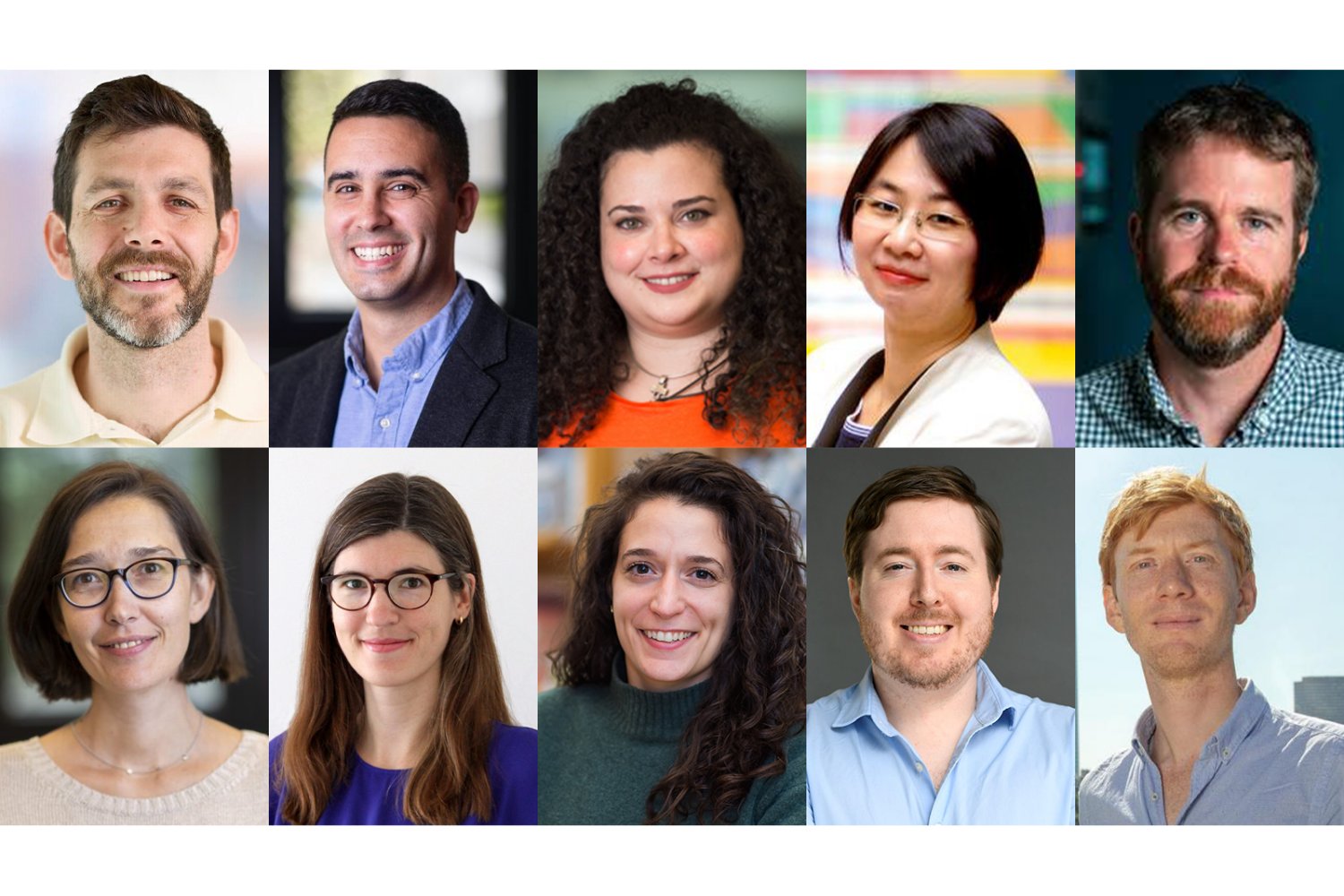
Jacob Andreas can now walk into any lab at MIT and know his place there is secure—not because of grants or accolades, but because his work has earned the quiet permanence of tenure. In 2026, MIT granted this distinction to 10 rising stars across its School of Engineering, a recognition that honors not just groundbreaking research but a lasting commitment to teaching and mentorship. These scholars, now tenured, represent fields as diverse as quantum computing, climate-resilient energy systems, and the hidden ecosystems within the human body. Their promotion is more than a personal milestone—it signals where engineering is headed: toward intelligent systems that learn from humans, aircraft that fly cleaner and safer, and machines that can finally glimpse the brain’s fastest rhythms.
Among them is Christina Delimitrou, the KDD Career Development Professor in EECS, who has pioneered the use of machine learning to optimize cloud computing systems—work that could slash energy use in data centers worldwide. Sili Deng, the Doherty Career Development Professor in Mechanical Engineering, leads a team building scientific machine learning models to engineer cleaner combustion and sustainable manufacturing processes. Meanwhile, Carmen Guerra-Garcia, now the Esther and Harold E. Edgerton Associate Professor, is tackling aviation’s twin challenges of emissions and safety by harnessing plasma physics to improve combustion and protect aircraft from lightning.
The impact stretches beyond technology. Laura Lewis, the Athinoula A. Martinos Associate Professor in EECS and IMES, has developed neuroimaging tools that capture brain activity during sleep with unprecedented clarity—opening doors to understanding memory, mental health, and neurological disorders. Tami Lieberman, in Civil and Environmental Engineering and IMES, studies how each person’s microbiome evolves uniquely, shaping health in ways science is only beginning to map. And David Des Marais, the Amgen Career Development Professor, investigates how plants sense and adapt to environmental stress, research that could help secure food systems in a changing climate.
From the skies to the human body, from quantum circuits to city-scale infrastructure, these tenured faculty are stitching innovation into the fabric of everyday resilience. Their work doesn’t just answer today’s questions—it builds the tools to ask better ones. As Dean Paula T. Hammond ’84, PhD ’93, put it: “I am so excited to see what new developments, innovations, and technologies will come next from this incredibly accomplished group.” At MIT, the future of engineering isn’t just being imagined. It’s being tenured.